
Every state runs at least one program that can pay you for caring for your aging parent, disabled spouse, or another family member — but the funding source, pay rate, and eligibility rules differ wildly depending on which program you're in. If you're sorting through family caregiver payment programs in 2026, the list below covers the major categories worth knowing, ranked by how many caregivers they reach and how accessible they are right now.
Most of these programs are funded through Medicaid, the VA, or state general funds. A few overlap, meaning you might qualify for more than one. The goal here is to give you a clear picture of each program type, who it's built for, and what to expect if you apply.
1. Medicaid HCBS Waiver Programs
Home and Community-Based Services (HCBS) waivers are the single largest funding source for family caregiver payment programs in 2026. They exist in every state, though the specific waiver names and structures vary. Indiana calls theirs the program. Michigan runs the MI Choice waiver. Illinois operates the Community Care Program. The mechanics differ, but the core idea is the same: Medicaid pays for care delivered at home instead of in a nursing facility, and in many states, a family member can be the one providing (and getting paid for) that care.
How Pay Works Under HCBS Waivers
Your loved one applies for the waiver through their state Medicaid agency. Once approved, a care plan gets built around their specific needs. Things like bathing, dressing, meal prep, medication reminders, and mobility support. The number of approved hours depends on the care assessment, and pay rates are set by the state. Hourly rates range from around $12 in lower-paying states to over $20 in states with higher reimbursement schedules. In Michigan's Home Help program , for example, family members are hired directly as caregivers. Indiana's Structured Family Caregiving program pays a daily stipend rather than an hourly rate, which can work out to more stable income if your loved one needs round-the-clock support.
Waitlists are the biggest obstacle. Some states have thousands of people waiting for waiver slots. Indiana's waiver waiting list has historically been long, though the transition to the program has shifted how slots open up. If you're considering this route, apply as early as possible; the clock starts when the application goes in, not when you decide you need help.
2. Structured Family Caregiving (SFC) Programs
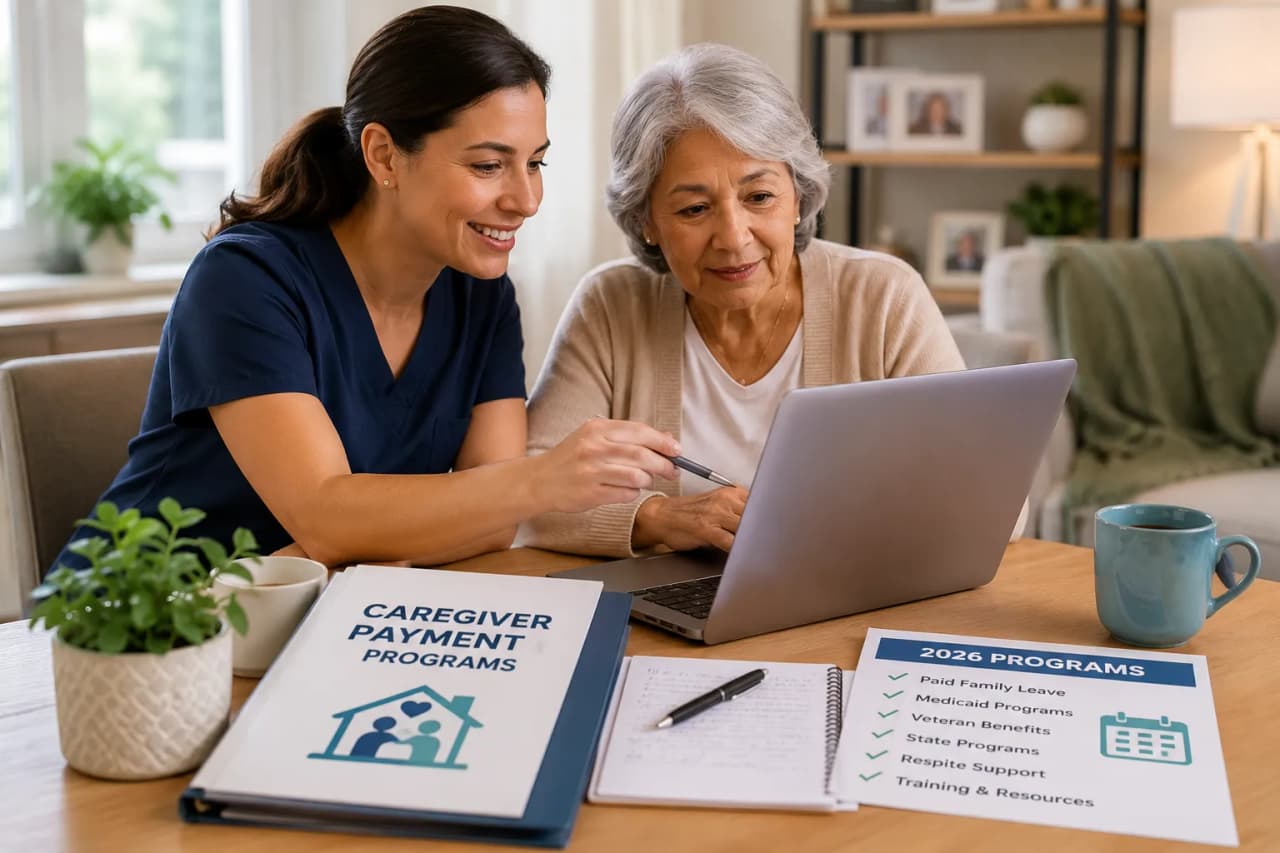
Structured Family Caregiving is a specific model within some states' Medicaid programs, and it's worth calling out separately because the pay structure and support system look different from standard HCBS waivers. SFC programs pair the family caregiver with a licensed agency that provides oversight, training, and care coaching. In return, the caregiver receives a daily stipend, often somewhere between $77 and $133 per day in Indiana, depending on the care recipient's acuity level.
What makes SFC distinctive is the wraparound support. You're not just getting a check. You get a care coach who helps with care planning, documentation, and problem-solving. You get training on topics like fall prevention, medication management, and emergency response. And because the agency handles the Medicaid billing and compliance, you spend less time on paperwork and more time on actual caregiving. If your loved one qualifies for Medicaid Structured Family Caregiving , this model tends to offer the most consistent income and the strongest support structure of any program on this list.
SFC programs operate in a growing number of states, including Indiana, Georgia, and South Dakota. Each state sets its own rates and eligibility criteria, so the specifics depend on where you live.
3. Consumer-Directed Care Programs
Consumer-directed care (sometimes called self-directed care or participant-directed services) flips the traditional home care model. Instead of an agency choosing and managing the caregiver, the care recipient controls the budget. They hire who they want, including family members, set the schedule, and direct the care. New York's CDPAP is probably the most well-known example, but versions of consumer-directed care exist in dozens of states under different names.
The appeal is flexibility. Your mom picks you as her caregiver. She decides what hours you work. The Medicaid-funded budget pays you directly (usually through a fiscal intermediary that handles payroll and taxes). Pay rates under consumer-directed programs tend to track close to the state's HCBS reimbursement rate, though in some states they're slightly lower because the administrative overhead is handled differently.
One thing to watch: not every consumer-directed program allows spouses or parents as paid caregivers. Some states restrict which family relationships qualify. Illinois, for instance, has specific rules about whether a spouse can serve as a paid caregiver through its programs. Check your state's rules before assuming you're eligible.
4. VA Caregiver Support Programs
If your family member is a veteran, two VA programs can put money in your pocket for the care you provide. The Program of Complete Assistance for Family Caregivers (PCAFC) is the bigger one. It pays a monthly stipend based on the veteran's disability rating and the level of care needed. For 2026, stipends range from roughly $1,000 to over $3,000 per month depending on the tier. You also get access to health insurance through CHAMPVA, mental health counseling, and respite care, at least 30 days per year.
To qualify for PCAFC, the veteran generally needs a service-connected disability rating of 70% or higher and must need personal care services. The application goes through VA Form 10-10CG, and approval can take several months. It's worth the wait if you qualify, because the benefit package is among the most generous of any family caregiver payment program in the country.
The second option is the Veteran Directed Care (VDC) program , which works more like the consumer-directed Medicaid model. The veteran receives a budget and hires their own caregiver, family included. VDC is administered through local Area Agencies on Aging and funded by the VA, so it doesn't require Medicaid eligibility. Pay rates vary by region but typically fall in the $12–$20 per hour range.
5. State-Funded Caregiver Payment Programs
A handful of states fund caregiver payment programs out of their own budgets, separate from Medicaid. These tend to be smaller and more limited, but they can fill gaps for families who don't qualify for Medicaid-based programs — maybe because the care recipient's income is slightly too high, or because the state's Medicaid waiver has a long waitlist.
California's In-Home Supportive Services (IHSS) program is the largest state-funded example, covering hundreds of thousands of recipients. Other states run caregiver stipend programs, caregiver allowance funds, or grant programs targeted at specific populations (like grandparents raising grandchildren, or parents of children with disabilities ). The caregiver stipend landscape keeps shifting as states adjust budgets, so what's available in 2026 may look different from last year.
Pay rates and hours are usually more modest under state-funded programs compared to Medicaid waivers. But if Medicaid isn't an option for your family, these programs are worth investigating. Your state's Area Agency on Aging is the best starting point for finding what's available locally.
6. Medicaid Personal Care Assistance (PCA) Programs
Personal Care Assistance is a Medicaid benefit (not a waiver) available in many states. It covers help with activities of daily living: bathing, grooming, toileting, transferring, eating, delivered in the home. Some states allow family members to serve as the PCA provider, while others restrict it to non-relatives or agency-employed aides.
The distinction between PCA programs and HCBS waivers matters because PCA is a state plan benefit, meaning it doesn't have the same waitlist problem that waivers do. If your loved one qualifies for Medicaid and meets the functional need criteria, they can often access PCA services without waiting for a waiver slot to open. Michigan's Home Help program is a good example of a PCA-style program that allows family members as caregivers.
Hourly rates for PCA programs tend to cluster near the lower end of the caregiver pay spectrum — think $10 to $16 per hour in most states. But combined with the lack of a waitlist, PCA programs can be the fastest path from unpaid caregiver to paid caregiver for many families.
7. Private Pay and Long-Term Care Insurance Options
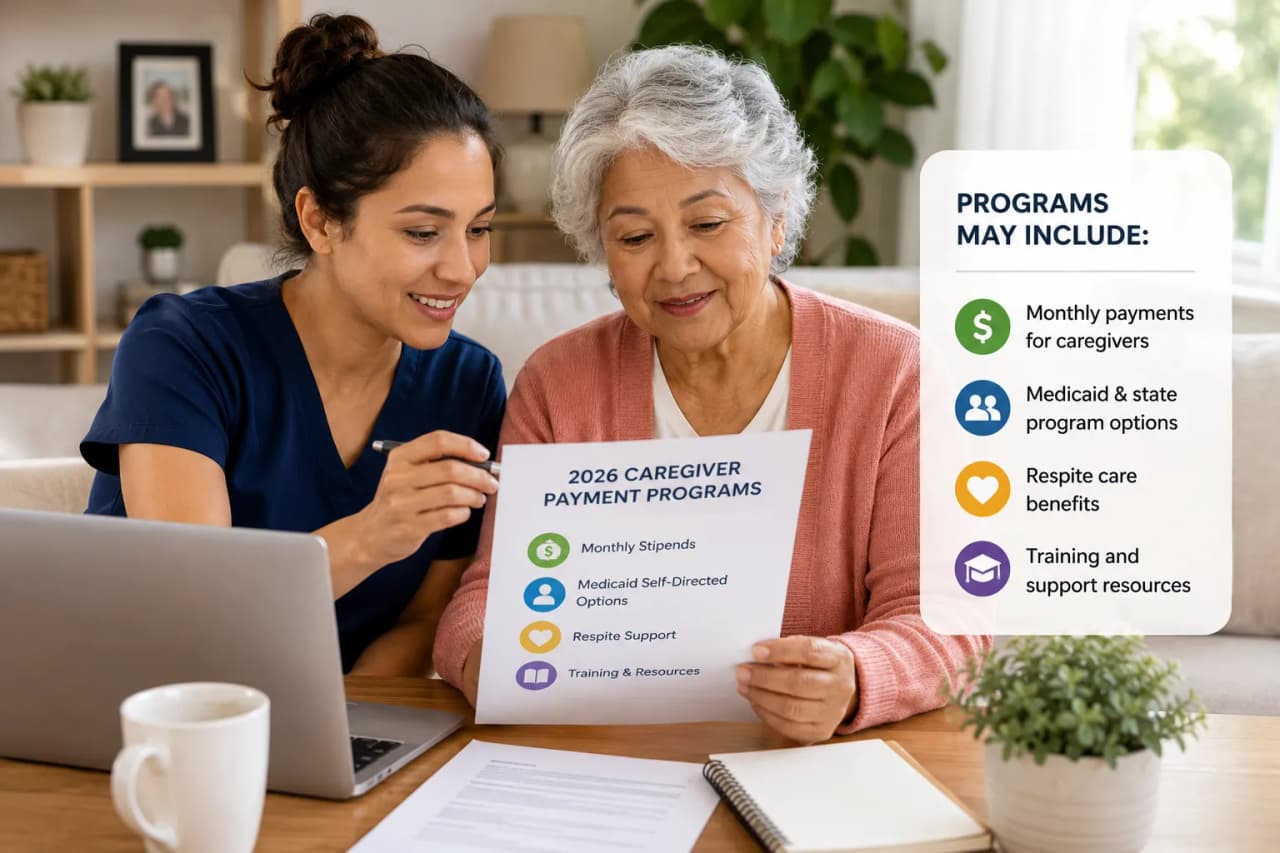
Not every family caregiver payment program runs through the government. If your loved one has a long-term care insurance policy, many policies allow family members to be paid as caregivers — sometimes at rates higher than Medicaid programs offer. The catch is that the policy has to explicitly cover family caregivers (not all do), and there's usually a waiting period before benefits kick in.
Private pay arrangements, where a family directly pays you for caregiving, are another option, though they come with real tax and legal considerations . Setting up a formal caregiver agreement is important for protecting both sides, especially if Medicaid planning is involved down the road. A written agreement establishes that the payment is compensation for services — which matters for Medicaid estate recovery and spend-down calculations.
If you're exploring long-term care insurance as a payment source , read the policy carefully. Look at the daily or monthly benefit amount, the elimination period, and whether the insurer requires a licensed agency or will pay a family caregiver directly.
Choosing the Right Program for Your Family
With this many family caregiver payment programs available in 2026, the right choice depends on a few variables: your loved one's insurance status (Medicaid, VA, private), which state you live in, what level of care your loved one needs, and how quickly you need to start getting paid.
For most families, Medicaid-based programs, whether HCBS waivers, SFC, consumer-directed, or PCA, will be the primary path. The Medicaid caregiver program framework covers the broadest population and offers the most structured pathway from unpaid family member to paid caregiver. If your loved one is a veteran, the VA programs can supplement or even replace Medicaid funding entirely.
Don't overlook the financial side effects of getting paid, either. Caregiver income can affect your own Medicaid eligibility , your disability benefits , and your tax situation . Understanding those interactions before you enroll saves headaches later.
If you're in Indiana, Michigan, or Illinois and want to figure out which program fits your situation, Paid.care walks you through the qualification process and handles enrollment, training, and weekly payment so you can focus on the person you're caring for.
Frequently Asked Questions
What is the most common way to get paid as a family caregiver in 2026?
Medicaid-funded family caregiver payment programs are the most widely available option across all states. HCBS waivers and state plan PCA programs cover the largest number of caregivers nationally. Your loved one needs to qualify for Medicaid and meet functional need criteria — typically requiring help with activities of daily living like bathing, dressing, or eating. From there, the specific program name and structure depends on your state. You can explore a full breakdown of caregiver pay rates by state to see what's available where you live.
Can I get paid to care for a family member if they aren't on Medicaid?
Yes, though your options are narrower. VA programs cover eligible veterans regardless of Medicaid status. Long-term care insurance policies may pay family caregivers directly. Some states also run small caregiver stipend or grant programs funded outside of Medicaid. Private pay arrangements are always an option if your family can afford it, but you'll want a formal caregiver employment agreement to keep things clean for taxes and any future Medicaid applications.
How long does it take to start getting paid through these programs?
It varies widely. PCA programs without waitlists can sometimes process applications in four to eight weeks. HCBS waivers with long waitlists might take months or even years. VA PCAFC applications typically take three to six months for approval. Structured Family Caregiving through an agency like Paid.care tends to move faster than applying on your own, because the agency handles most of the paperwork and compliance steps.
Will getting paid as a caregiver affect my own benefits?
It can. Caregiver income counts as earned income for SSI purposes, which could reduce your payment or affect eligibility. SSDI has different rules — you generally keep full benefits as long as you stay under the substantial gainful activity threshold. Medicaid waiver payments may be excludable from federal income taxes under IRS Notice 2014-7 if you live with the care recipient. The details matter, so read up on financial benefits and considerations for paid family caregivers before you commit.
Can I be enrolled in more than one caregiver payment program at the same time?
In some cases, yes. A veteran on Medicaid might receive services through both a VA program and a Medicaid waiver, though the hours and services typically can't overlap for the same time period. Some states coordinate benefits between programs to maximize the total support available. The key is that you can't bill two programs for the same hour of care — but you can sometimes combine programs to cover different types of support or different parts of the day.