
Getting Paid by Long-Term Care Insurance: A Step-by-Step Guide to Family Caregiver Compensation

Navigating the complexities of long-term care insurance can be daunting for family caregivers seeking compensation for their services. This comprehensive guide will provide you with essential insights into the eligibility criteria, documentation processes, and strategies to maximize your benefits. Understanding how to effectively utilize long-term care insurance can significantly ease the financial burden of caregiving, allowing you to focus on providing quality care to your loved ones. In this article, we will explore who is eligible for payment under long-term care insurance, how to document activities of daily living (ADLs), the impact of the elimination period, the step-by-step processes for filing claims, and how Medicaid and veteran-directed care programs can supplement your payments.
Who Is Eligible for Payment Under Long-Term Care Insurance and Government Programs?
Eligibility for payment under long-term care insurance and government programs is crucial for family caregivers. Understanding the criteria can help you determine if you qualify for compensation.
What Are the Key Eligibility Criteria for Family Caregiver Compensation?
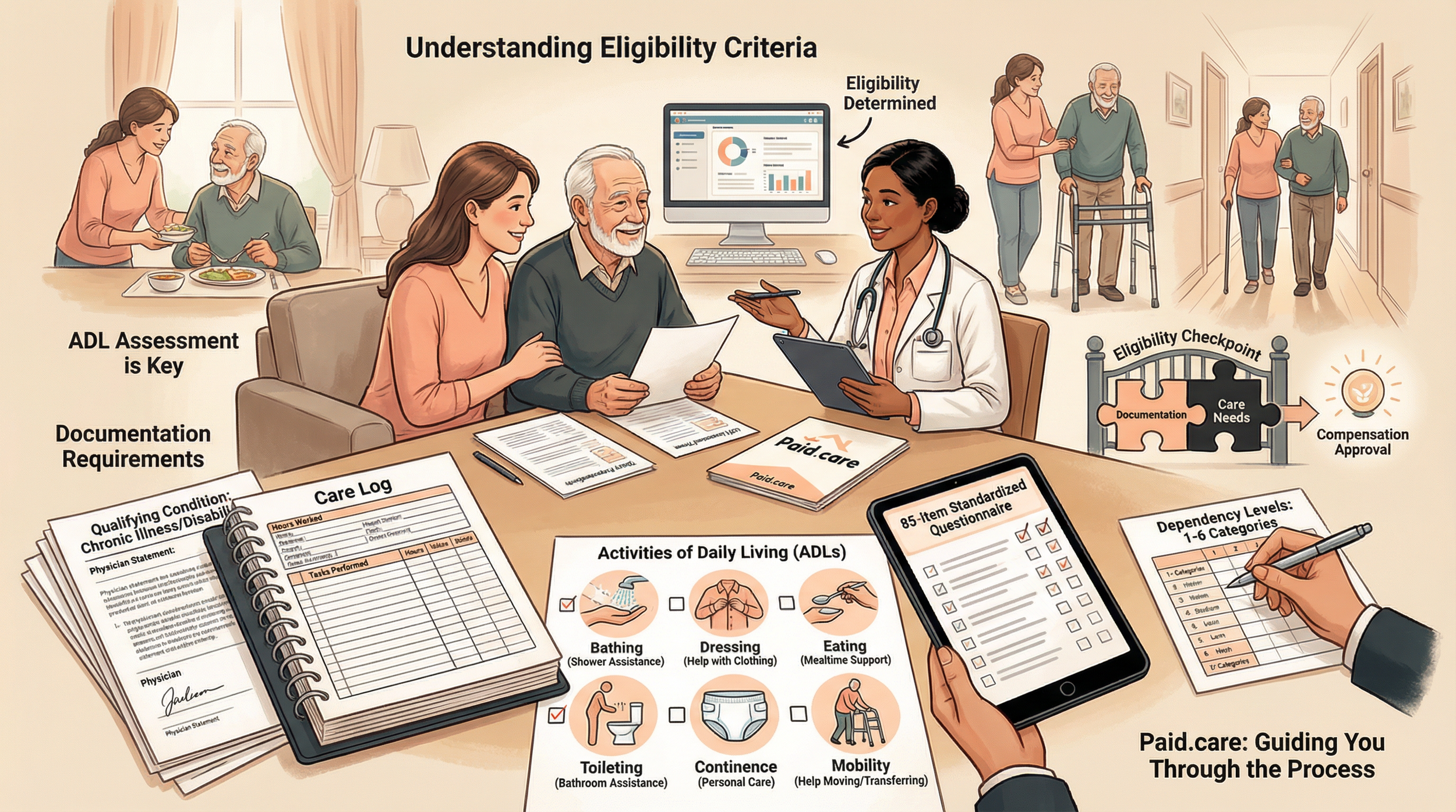
To qualify for family caregiver compensation, several key eligibility criteria must be met. Typically, the care recipient must have a qualifying condition that necessitates assistance with daily activities. This often includes chronic illnesses, disabilities, or cognitive impairments. Additionally, caregivers must provide documented proof of care, which may include logs of hours worked and specific tasks performed. It is essential to understand the documentation requirements and ensure that all necessary paperwork is completed accurately to avoid delays in payment.
How Do Activities of Daily Living Affect Eligibility?
Activities of Daily Living (ADLs) play a significant role in determining eligibility for long-term care insurance benefits. ADLs include essential tasks such as bathing, dressing, eating, toileting, continence, and mobility. Insurance providers often assess the level of assistance required for these activities to establish eligibility. For instance, if a care recipient needs help with multiple ADLs, they are more likely to qualify for benefits. Understanding how ADLs are evaluated can help caregivers better prepare their claims and ensure they meet the necessary criteria.
Further illustrating the structured nature of eligibility determination, some systems employ a detailed assessment process to categorize dependency levels.
Long-Term Care Insurance Eligibility & Assessment The eligibility process begins with the individual or his/her family applying to the insurer (usually municipal government). A two-step assessment process to determine the limit of benefit follows this. The first step is an on-site assessment using a standardised questionnaire comprising 85 items. These items are analysed by an official computer program in order to determine either the applicant's eligibility or not. If the applicant is eligible it determines which of 6 levels of dependency is applicable. Long-term care insurance and integrated care for the aged in Japan, 2001
How Do You Document ADLs and IADLs for Long-Term Care Insurance Claims?
Proper documentation of ADLs and Instrumental Activities of Daily Living (IADLs) is vital for successful long-term care insurance claims.
What Is ADL Documentation and Why Is It Essential?
ADL documentation refers to the detailed recording of the assistance provided to a care recipient in performing daily activities. This documentation is essential because it serves as evidence for insurance claims, demonstrating the level of care required. Accurate records can prevent disputes with insurance providers and ensure timely payments. Caregivers should maintain a daily log that includes the date, time spent on each activity, and specific tasks performed to support their claims effectively.
How to Accurately Record Care Recipient’s Daily Living Activities
To accurately record a care recipient's daily living activities, caregivers should adopt a systematic approach. Start by creating a daily log that includes the following:
Date and Time: Record when each activity occurs.
Activity Description: Clearly describe the tasks performed, such as bathing, meal preparation, or medication management.
Duration: Note how long each activity takes to provide a comprehensive overview of care provided.
Using a digital app or a simple spreadsheet can streamline this process, making it easier to track and report activities consistently.
What Is the Elimination Period in Long-Term Care Insurance and How Does It Impact Payment?
How Does the Elimination Period Work in LTC Insurance Policies?
The elimination period, often referred to as the waiting period or deductible period, is the time frame during which the policyholder must pay for care out-of-pocket before the insurance benefits begin. This period can range from 0 to 180 days, depending on the policy. Understanding the specifics of your policy's elimination period is essential, as it directly impacts your financial planning and the timing of compensation for caregiving services.
What Strategies Help Manage the Elimination Period?
Managing the elimination period effectively can alleviate financial strain during the waiting period. Here are some strategies to consider:
Budgeting: Plan for out-of-pocket expenses during the elimination period by creating a budget that accounts for caregiving costs.
Utilizing Savings: Consider using personal savings or other financial resources to cover expenses until the insurance benefits begin.
Exploring Alternative Funding: Investigate other funding sources, such as Medicaid or veteran-directed care programs, that may provide assistance during this period.
By proactively managing the elimination period, caregivers can ensure they are prepared for the financial implications of their caregiving responsibilities.
What Are the Step-by-Step Processes to File a Long-Term Care Insurance Claim?
Filing a long-term care insurance claim involves several critical steps that caregivers must follow to ensure a smooth process.
How to Prepare and Submit LTC Insurance Claim Forms
To prepare and submit long-term care insurance claim forms, follow these steps:
Gather Documentation: Collect all necessary documents, including ADL logs, medical records, and proof of expenses.
Complete Claim Forms: Fill out the insurance claim forms accurately, ensuring all information is correct and complete.
Submit the Claim: Send the completed forms and supporting documentation to the insurance provider, either electronically or via mail.
Following these steps can help streamline the claims process and reduce the likelihood of delays.
What Documentation and Medical Records Are Required?
When filing a long-term care insurance claim, specific documentation and medical records are typically required. These may include:
Proof of Care: Detailed logs of caregiving activities and hours worked.
Medical Records: Documentation from healthcare providers confirming the care recipient's condition and need for assistance.
Financial Records: Receipts and invoices for any out-of-pocket expenses related to caregiving.
Ensuring that all required documentation is complete and accurate is crucial for a successful claim.

How Can Medicaid and Veteran-Directed Care Programs Supplement LTC Insurance Payments?
Medicaid and veteran-directed care programs can provide additional financial support for caregivers, enhancing the overall compensation received.
What Are Medicaid Waivers for Family Caregiver Payment?
Medicaid waivers allow states to provide funding for family caregivers who assist individuals with disabilities or chronic illnesses. These waivers can cover various services, including personal care and homemaker services. Eligibility for Medicaid waivers typically depends on the care recipient's income and asset levels, as well as their need for assistance with daily activities. Understanding the application process and requirements for Medicaid waivers can help caregivers access additional financial support.
How Do Veteran-Directed Care Programs Support Paid Family Caregivers?
Veteran-directed care programs offer support for family caregivers of veterans, providing them with the resources needed to deliver care. These programs often allow veterans to direct their own care, including hiring family members as caregivers. Benefits may include financial compensation for caregiving services, training, and support resources. Caregivers should explore these programs to determine eligibility and maximize their compensation opportunities.
How Does Paid.care Support Family Caregivers in Getting Paid for Long-Term Care?
Paid.care is dedicated to helping family caregivers navigate the complexities of long-term care insurance and government programs to receive payment for their services.
What Services Does Paid.care Offer to Maximize Caregiver Compensation?
Paid.care provides a range of services designed to assist family caregivers in maximizing their compensation. These services include:
Eligibility Assessments: Helping caregivers determine their eligibility for various compensation programs.
Documentation Support: Assisting with the preparation and submission of necessary documentation for claims.
Training Resources: Offering training for caregivers to enhance their skills and improve care quality.
By leveraging these services, caregivers can better navigate the complexities of long-term care insurance and government programs.
How to Use the Paid.care App for Eligibility Checks and Hour Tracking
The Paid.care app is a valuable tool for family caregivers, providing features that simplify the process of tracking hours worked and checking eligibility for compensation. Users can log their caregiving hours, document activities, and access resources to understand their eligibility for various programs. This app streamlines the documentation process, making it easier for caregivers to manage their responsibilities and ensure they receive the compensation they deserve.
FAQs
-
Sometimes, yes—but it depends on the policy. Some long-term care insurance plans may reimburse care provided by a family caregiver, while others only pay for licensed home care agencies or approved professional caregivers. Coverage rules can vary based on the policy language, benefit triggers, elimination period, and documentation requirements, so families should review the plan carefully before assuming family caregiving will be covered.
-
The first step is to review the long-term care insurance policy and confirm exactly what types of caregivers are eligible for payment. Families should look for details about covered services, provider qualifications, daily or monthly benefit limits, and whether care must be part of an approved care plan. It is also a good idea to contact the insurance company directly and ask specific questions about family caregiver reimbursement so there is clear guidance in writing.
-
Most policies require detailed records, which may include a care plan, proof that the care recipient meets benefit eligibility requirements, and ongoing documentation of caregiving tasks and hours. Families may also need physician forms, claim forms, invoices, or care notes showing what support was provided and when. Keeping accurate records is important because incomplete documentation is one of the most common reasons claims are delayed or denied.
-
Claims may be delayed or denied if the policy’s benefit trigger has not been met, the elimination period is still in effect, required forms are missing, or the caregiver/provider does not meet policy requirements. Problems can also happen when care documentation is inconsistent or when families assume a service is covered without confirming it first. Reviewing the policy rules early and staying organized throughout the claims process can help reduce these issues.

