
Medicaid Structured Family Caregiving Eligibility: How to Get Paid for Family Care

Structured Family Caregiving (SFC) is an innovative approach that allows family members to receive financial compensation for providing care to their elderly or disabled loved ones. This article will explore the eligibility requirements for Medicaid's Structured Family Caregiving programs, how they differ from traditional waiver programs, and the application process for family caregivers. Many families face the challenge of balancing caregiving responsibilities with financial stability, and SFC offers a viable solution by compensating caregivers for their essential work. We will delve into the specifics of who qualifies, the requirements across different states, and the benefits available to caregivers.
What is Structured Family Caregiving and How Does It Work?
Structured Family Caregiving is a Medicaid program designed to provide financial support to family members who act as caregivers for their loved ones. This program operates under the premise that family members are often the best caregivers, providing personalized and compassionate care. Unlike traditional waiver programs, SFC allows for a more flexible approach, enabling caregivers to receive compensation for their time and effort. This model not only supports the caregiver but also enhances the quality of care provided to the care recipient.
How Does Structured Family Caregiving Differ from Traditional Waiver Programs?
Structured Family Caregiving differs significantly from traditional waiver programs in several key areas. First, SFC offers a more personalized approach, allowing caregivers to tailor their services to the specific needs of their loved ones. In contrast, traditional waivers often have rigid guidelines and limited flexibility. Additionally, SFC programs typically provide direct financial compensation to caregivers, whereas traditional waivers may only cover specific services or expenses. This financial support can alleviate the burden on families, making it easier for them to provide care without sacrificing their financial stability.
Who Qualifies as a Family Caregiver and Care Recipient?
To qualify for Structured Family Caregiving, both the caregiver and the care recipient must meet specific criteria. The caregiver must be a family member, which can include parents, siblings, children, or other relatives. The care recipient typically needs to be an adult who requires assistance with activities of daily living (ADLs) due to age or disability. Additionally, both parties often must reside in the same household, depending on the state, and the care recipient must meet the eligibility requirements set by Medicaid, including income and asset limits.

What Are the Medicaid Structured Family Caregiving Eligibility Requirements?
Understanding the eligibility requirements for Medicaid's Structured Family Caregiving is crucial for families considering this option. The requirements can vary by state, but generally include income and asset limits, as well as specific needs related to activities of daily living.
Indeed, Medicaid's support for family caregivers is rooted in specific eligibility criteria that ensure enrollees receive necessary care while meeting financial and functional requirements.
Medicaid Eligibility & Support for Family Caregivers Family caregivers help Medicaid enrollees safely stay in their homes and communities. They provide personal care services that Medicaid agencies would otherwise pay for. Enrollees must meet both financial and functional criteria to qualify for Medicaid. Medicaid supports for family caregivers, 2020
What Income and Asset Limits Apply for SFC Eligibility?
The income and asset limits for Structured Family Caregiving eligibility are determined by Medicaid guidelines, which can differ from state to state. Typically, the care recipient's income must fall below a certain threshold, and their assets must also be limited to qualify for assistance. For example, in many states, the income limit is set at 300% of the Federal Benefit Rate (FBR), while asset limits may be around $2,000 for individuals.
These limits ensure that assistance is directed toward those who need it most, allowing families to receive the support necessary for caregiving.
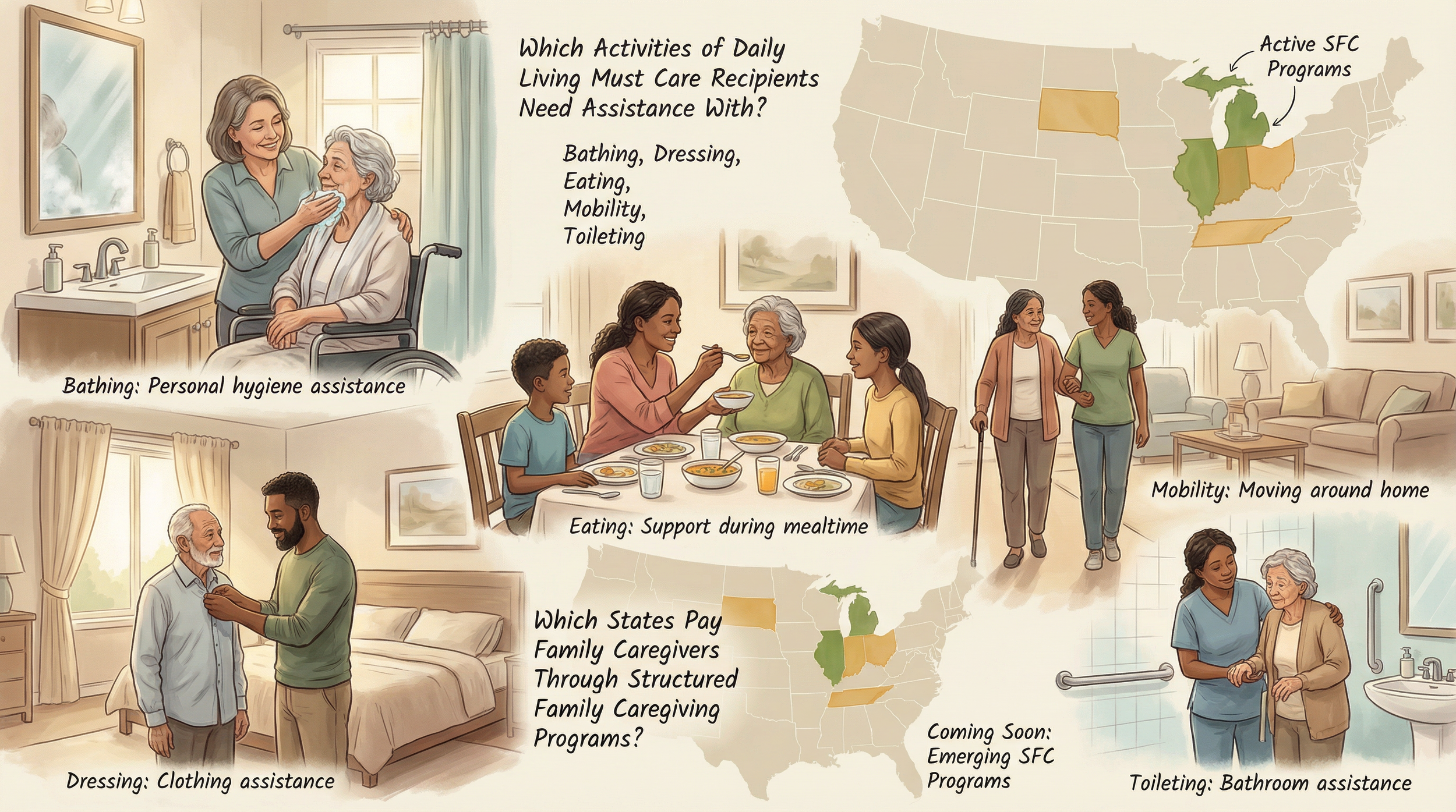
Which Activities of Daily Living Must Care Recipients Need Assistance With?
To qualify for Structured Family Caregiving, care recipients must require assistance with at least one of the activities of daily living (ADLs). These activities typically include:
Bathing: Assistance with personal hygiene and bathing routines.
Dressing: Help with putting on and taking off clothing.
Eating: Support with feeding (meal preparation is generally not included).
Mobility: Assistance with moving around the home or transferring from one location to another.
Toileting: Help with using the bathroom and maintaining hygiene.
These criteria ensure that the program supports those who genuinely need help with essential daily tasks.
Which States Pay Family Caregivers Through Structured Family Caregiving Programs?
Several states have implemented Structured Family Caregiving programs, each with unique requirements and benefits. Understanding these differences is essential for families considering this option.
What Are the Unique SFC Program Requirements in Indiana, Michigan, and Illinois?
In Indiana, Michigan, and Illinois, the Structured Family Caregiving programs have specific eligibility criteria and application processes. For instance, Indiana requires caregivers to complete a training program, while Michigan emphasizes the need for a care plan that outlines the services provided. Illinois has a streamlined application process that allows for quicker access to benefits.
How Will Tennessee, Ohio, and South Dakota Implement SFC Programs?
Tennessee, Ohio, and South Dakota are in the process of implementing Structured Family Caregiving programs, with anticipated changes in eligibility criteria and application processes. Tennessee plans to introduce a pilot program that will allow for more flexible caregiver arrangements, while Ohio is expected to adopt similar guidelines to those in Indiana. South Dakota is focusing on outreach to ensure that families are aware of the new benefits available to them.
How Can Family Caregivers Apply and Get Paid for Their Care?
Applying for Structured Family Caregiving benefits involves several steps, including gathering necessary documentation and understanding the application process.
What Documentation and Support Does Paid.care Provide During Application?
Paid.care offers comprehensive support to family caregivers throughout the application process. This includes assistance with gathering required documentation, such as proof of income, residency, and the care recipient's medical needs. Additionally, Paid.care provides eligibility checks to help families understand their options before applying. This support can significantly streamline the process, making it easier for caregivers to receive the compensation they deserve.
How Are Payments Processed and What Are Typical Payment Rates?
Payments for caregivers under the Structured Family Caregiving program are typically processed on a biweekly or monthly basis, depending on the state. The rates can vary depending on the state and the specific needs of the care recipient. On average, caregivers can expect to receive between $10 to $15 per hour for their services, which can provide substantial financial relief for families managing caregiving responsibilities.
What Are the Benefits and Support Services Available for Paid Family Caregivers?
Family caregivers not only receive financial compensation but also access various support services designed to enhance their caregiving experience.
How Does Paid.care’s Mobile App Facilitate Caregiving and Payment Management?
Paid.care offers a user-friendly mobile app that facilitates caregiving and payment management. The app allows caregivers to track their hours, manage payments, and access resources related to caregiving. This technology ensures that caregivers can focus on providing quality care while efficiently managing their financial compensation.
What Training, Respite Care, and Financial Coaching Are Offered?
In addition to financial compensation, Paid.care provides training programs for caregivers, respite care options, and financial coaching. These services are designed to support caregivers in their roles, helping them develop the skills necessary to provide high-quality care while also managing their own well-being. Respite care options allow caregivers to take breaks, ensuring they do not experience burnout.
What Frequently Asked Questions Do Family Caregivers Have About SFC?
Family caregivers often have questions regarding the Structured Family Caregiving program, particularly about eligibility and application processes.
How Do I Check My Eligibility for Medicaid Structured Family Caregiving?
To check eligibility for Medicaid's Structured Family Caregiving, caregivers can utilize resources provided by Paid.care, which offers eligibility checks and guidance on the necessary documentation. This proactive approach can help families determine their options before formally applying.
What Alternatives Exist Beyond Waiver Programs for Caregiver Payment?
In addition to Structured Family Caregiving, there are various alternatives for caregiver payment, including private pay options and other state-funded programs. Families should explore all available resources to ensure they receive the support they need.
FAQs
-
Eligibility for Medicaid Structured Family Caregiving depends on the state and the individual’s Medicaid status. In most cases, the care recipient must qualify for Medicaid and need help with daily activities such as bathing, dressing, or medication support. The caregiver is often a family member who lives with or regularly supports the Medicaid recipient.
-
Yes, Structured Family Caregiving programs allow certain family members to receive pay for providing care. Eligible caregivers may include adult children, siblings, or other relatives. Spouses are sometimes excluded, depending on state rules. Caregivers usually must complete enrollment steps, background checks, and basic training.
-
Payment amounts vary by state and program. Most Structured Family Caregiving programs provide a monthly stipend rather than an hourly wage. The stipend is based on the level of care needed and may range from several hundred to a few thousand dollars per month.
-
To get paid, the care recipient must apply for Medicaid and be approved for a qualifying program. Next, the family caregiver enrolls through a state-approved agency or provider. This process often includes an assessment of care needs, documentation, and ongoing care monitoring to maintain eligibility.

