
How Caregiver Pay Programs Are Changing in 2026 and What It Means for Your Family
Several states raised their Medicaid HCBS reimbursement rates this year, new federal guidance reshaped how consumer-directed programs handle overtime, and at least three states expanded which family members qualify as paid caregivers. If you're caring for an aging parent or disabled family member, these caregiver pay program changes in 2026 directly affect how much you can earn, how many hours you're approved for, and whether your state even lets you get paid at all.
Here's what's shifting, what it means for families in the Midwest and beyond, and what you should do about it now.
HCBS Rate Increases Are Real — But Uneven
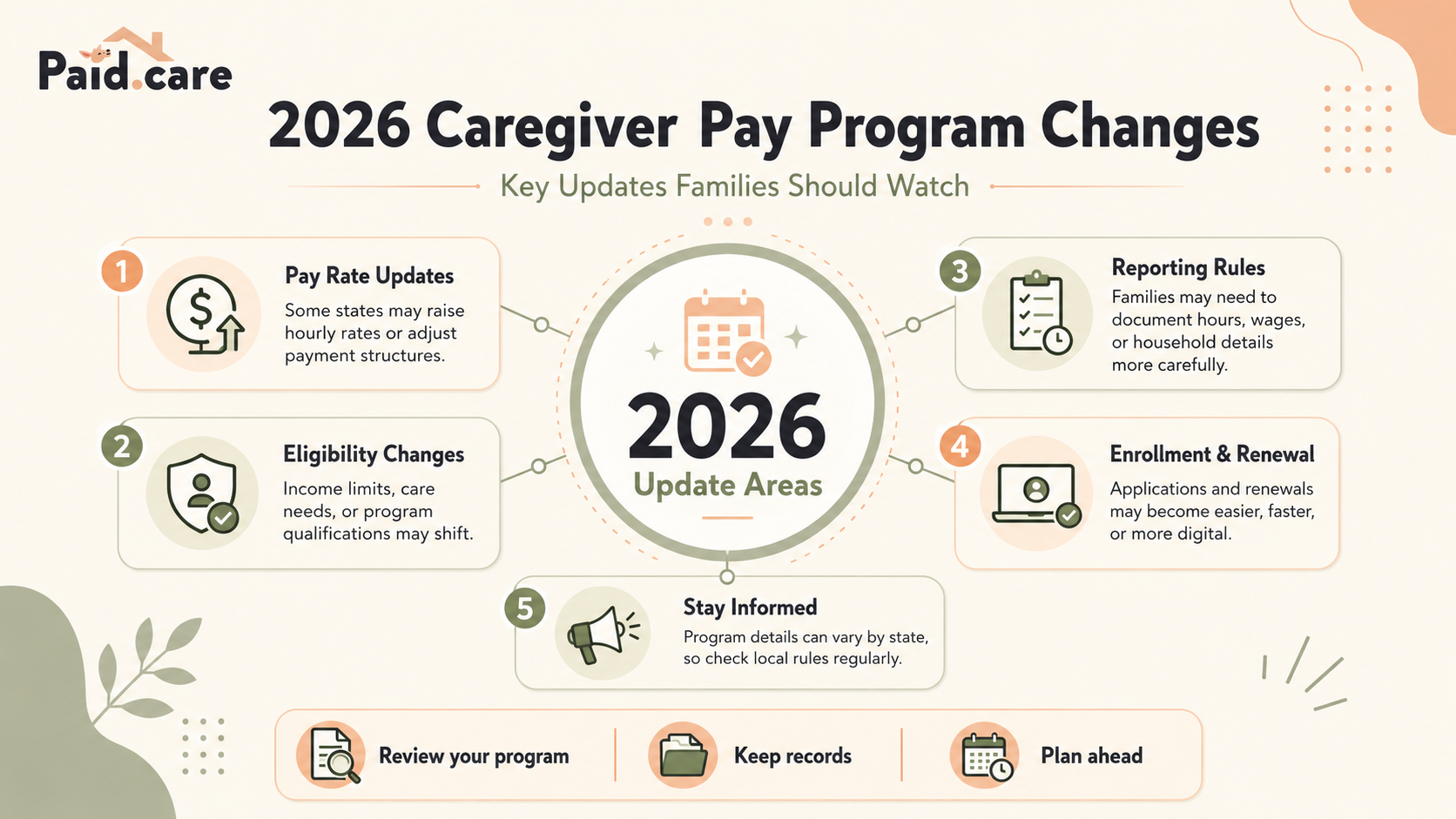
The biggest story in caregiver pay program changes for 2026 is the wave of Home and Community-Based Services (HCBS) rate adjustments rolling out across the country. After years of pandemic-era federal funding propped up pay rates, states are now setting their own course. Some have locked in permanent increases. Others have let temporary bumps expire.
Indiana, for example, updated its Medicaid waiver reimbursement rates to reflect higher costs of care, and the Structured Family Caregiving daily stipend has been adjusted upward. Michigan's Home Help program saw hourly rate changes tied to the state's minimum wage increases, which you can track through the 2026 minimum wage impact guide. Illinois made smaller adjustments to its Community Care Program rates, though advocates continue pushing for more.
The pattern is clear: states that invested their American Rescue Plan Act (ARPA) funds into permanent rate structures are holding steady. States that treated ARPA dollars as a temporary patch are now scrambling. If you're in a state where rates dropped back after ARPA funding expired, you're probably feeling that squeeze right now.
Overtime Rules for Consumer-Directed Care Got Tighter
Federal guidance issued earlier this year clarified how overtime applies to family caregivers working under consumer-directed Medicaid programs. The short version: if you're a W-2 employee of a fiscal intermediary and you work more than 40 hours a week, overtime rules apply. Some states had been loosely enforcing this; that era appears to be ending.
For families, this creates an awkward math problem. Your loved one might need 50 or 60 hours of care per week, but the program may now cap your paid hours at 40 to avoid overtime liability. The care need doesn't shrink just because the budget does.
One workaround gaining traction is splitting hours between two family caregivers. If you have a sibling, spouse, or adult child who can share the load, some Medicaid waiver programs allow multiple paid family caregivers on a single care plan. It takes coordination, but it keeps total hours covered without triggering overtime caps.

More States Now Allow Spouses and Parents as Paid Caregivers
Historically, many Medicaid programs excluded spouses from getting paid as caregivers. The logic was that spouses have a "legal obligation" to care for each other, so the state shouldn't pay for it. That reasoning has been eroding for years, and 2026 accelerated the trend.
Several states expanded eligibility to include spouses under their HCBS waiver programs. Illinois already had provisions for this through its Community Care Program, but the rules got clearer this year. If you're caring for your husband or wife and didn't think you could get paid, it's worth checking the updated Illinois spouse caregiver rules.
Parents caring for disabled children are also seeing expanded access. More states now allow parents to be paid caregivers under HCBS waivers for children with intellectual or developmental disabilities. The state-by-state guide to parent caregiver programs covers which programs apply, though eligibility criteria vary widely.
Caregiver Pay Program Changes in 2026: The Tax Side
Any conversation about caregiver pay program changes in 2026 has to include taxes. IRS Notice 2014-7, which excludes certain Medicaid waiver payments from federal taxable income, remains in effect. But state-level tax treatment is less uniform, and a few states adjusted how they handle caregiver stipends on state returns this year.
If you're earning income through a Medicaid waiver program, your 2026 tax deductions and credits might look different than last year's. The federal dependent care credit and medical expense deduction thresholds haven't changed, but some state caregiver tax credits have expanded. It's worth reviewing what's available before you file.
One area that catches people off guard: earning caregiver pay can affect your own benefits. If you receive SSI or Medicaid yourself, the income from a paid caregiving role counts differently depending on the program and your state. The details matter, and getting them wrong can cost you coverage. Take a look at how caregiver pay interacts with disability benefits and SSI before you assume everything will stay the same.
What These Changes Mean If You're Currently Unpaid
Here's the practical question: if you're providing care right now without getting paid, do these 2026 changes help you?
Probably yes, but only if you take action. Rate increases don't matter if you're not enrolled in a program. Expanded eligibility doesn't help if you haven't applied. And the bureaucratic reality is that Medicaid programs don't come find you.
The path from unpaid to paid caregiver typically looks like this: confirm your loved one's Medicaid eligibility, identify which HCBS waiver or state program covers family caregivers in your state, complete any required training, and get formally enrolled. In Indiana, that might mean the Structured Family Caregiving program. In Michigan, the Home Help program. In Illinois, the Community Care Program.
Each state has its own enrollment process, its own timelines, and its own quirks. Some have waiting lists. Some require a specific assessment before you can start. The transition guide from unpaid to paid caregiver walks through the general steps, but your state program will dictate the specifics.
Looking Ahead: What to Watch for the Rest of 2026
Two trends are worth monitoring through the back half of the year. First, CMS (the Centers for Medicare & Medicaid Services) is expected to finalize rules around HCBS access guarantees that could require states to maintain minimum service levels. If those rules stick, it would be harder for states to cut caregiver hours or freeze enrollment during budget shortfalls.
Second, several states are running pilot programs that test higher pay rates tied to caregiver training levels. The idea is simple: caregivers who complete advanced training (medication management, dementia care, chronic disease monitoring) would earn a higher hourly rate. If these pilots show results, they could become standard across more programs in 2027 and beyond.
For now, the most important thing you can do is understand what's available in your state today. Caregiver pay programs aren't static, and the families who stay informed are the ones who benefit when rates go up or eligibility expands.
If you're not sure where to start, Paid.care's step-by-step process walks you through qualifying, enrolling, and getting your first paycheck as a family caregiver. The programs exist. The rates are improving. The only piece missing might be your application.
Frequently Asked Questions
Are caregiver pay rates going up in 2026?
Yes, in many states. Multiple states increased their HCBS Medicaid reimbursement rates for 2026, including adjustments to programs like Indiana's Structured Family Caregiving and Michigan's Home Help. However, the size of the increase varies significantly by state. Some states locked in permanent rate bumps, while others saw temporary ARPA-funded rates expire. Check your state's specific family caregiver pay rates for current numbers.
Can a spouse get paid as a caregiver through Medicaid in 2026?
In a growing number of states, yes. Several states expanded their HCBS waiver rules this year to allow spouses as paid caregivers. Illinois, for instance, has clearer provisions under its Community Care Program. Each state sets its own rules, so eligibility depends on your specific Medicaid waiver program and where you live.
How do caregiver pay program changes in 2026 affect my taxes?
IRS Notice 2014-7 still excludes qualifying Medicaid waiver payments from federal taxable income, which means many family caregivers owe no federal tax on their caregiver earnings. State tax treatment varies, though, and some states changed how they handle caregiver stipends this year. Review the 2026 guide to federal and state caregiver tax credits for a full breakdown.
What should I do if my paid caregiver hours were reduced this year?
Start by requesting a written explanation from your state's Medicaid program or managed care entity. You have the right to appeal reductions in authorized hours. The appeal guide for paid family care hours covers the process, timelines, and what documentation you'll need.

