
The 2026 Guide to Federal and State Caregiver Tax Credits: How to Maximize Your Tax Benefits
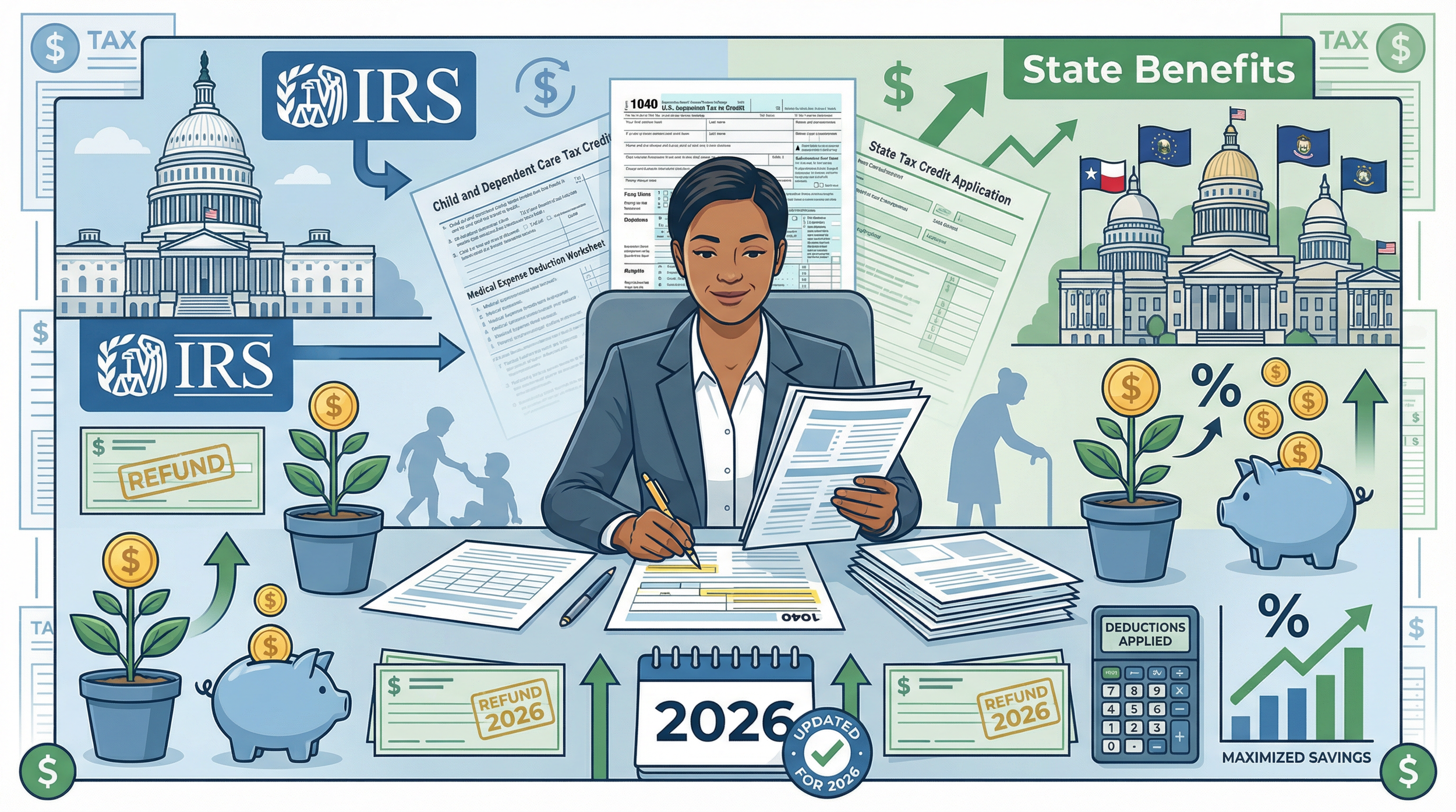
Navigating the complexities of caregiver tax credits can be daunting for many families. In 2026, understanding the available federal and state tax credits is crucial for maximizing financial benefits. This guide will provide a comprehensive overview of the key caregiver tax credits, eligibility requirements, and strategies for claiming these benefits. Many caregivers face financial strain while providing essential support to elderly or disabled loved ones, and these tax credits can offer significant relief. We will explore federal credits, state-specific benefits in Indiana, Michigan, and Illinois, and how to effectively prepare for tax filing.
What Are the Key Federal Caregiver Tax Credits Available in 2026?
In 2026, several federal tax credits are available to caregivers, providing essential financial support. These credits include the Child and Dependent Care Credit and the Credit for Other Dependents. Understanding these credits is vital for caregivers looking to reduce their tax burden.
How Does the Child and Dependent Care Credit Work for Elderly or Disabled Dependents?
The Child and Dependent Care Credit allows caregivers to claim expenses incurred while caring for a qualifying individual, including elderly or disabled dependents. To qualify, caregivers must have incurred these expenses to enable them to work or look for work. The maximum credit amount is based on the amount spent on care, with a maximum of $3,000 of expenses for one qualifying individual and $6,000 for two or more. Caregivers can claim between 20% and 35% of qualifying expenses, depending on their income level, making this credit a valuable resource for many families.
Who Qualifies for the Credit for Other Dependents in 2026?
The Credit for Other Dependents is available for caregivers who support relatives that do not qualify for the Child and Dependent Care Credit. To qualify, the dependent must be a qualifying relative who meets specific criteria, including living with the caregiver for more than half the year and having a gross income below $4,700 in 2026. This credit can provide up to $500 per dependent, offering additional financial relief for caregivers supporting family members.

Which State Caregiver Tax Credits and Deductions Apply in Indiana, Michigan, and Illinois?
State-specific caregiver tax credits and deductions can significantly impact a caregiver's financial situation. In 2026, Indiana, Michigan, and Illinois offer various benefits tailored to support caregivers.
What Are Indiana’s Caregiver Tax Benefits and Eligibility Criteria?
Indiana provides several caregiver tax benefits, including a deduction for caregiving expenses. Caregivers can deduct up to $1,500 for expenses incurred while caring for a qualifying relative. To be eligible, caregivers must provide more than half of the dependent's support and meet specific income requirements. This deduction can help alleviate some of the financial burdens associated with caregiving.
How Do Michigan and Illinois Caregiver Tax Credits Differ in 2026?
Michigan and Illinois have distinct caregiver tax credits that reflect their unique approaches to supporting caregivers. Michigan does not currently offer a specific caregiver tax credit for in-home care expenses but does allow certain medical expense deductions related to caregiving. Illinois does not have a specific caregiver tax credit but allows deductions for medical expenses related to caregiving on state returns. Understanding these differences is crucial for caregivers in these states to maximize their benefits.
How Are Caregiver Payments from Medicaid and VA Programs Taxed in 2026?
Payments received by caregivers from Medicaid and VA programs can have significant tax implications. Understanding how these payments are taxed is essential for caregivers managing their finances.
Is Income from Medicaid Waiver Payments Taxable for Caregivers?
In 2026, income from Medicaid Waiver Payments is generally considered taxable income for caregivers. While these payments are intended to support caregivers providing in-home care, the IRS treats them as taxable compensation. Caregivers should keep accurate records of these payments and report them as income on their tax filings.
What Are the Tax Implications of VA Caregiver Stipends?
VA caregiver stipends are generally not taxable, providing financial support to those caring for veterans. Caregivers receiving these stipends should be aware of any reporting requirements, but they typically do not need to include these payments as income on their tax returns. This tax-exempt status can significantly ease the financial burden on caregivers.

Who Qualifies as a Dependent for Caregiver Tax Credits in 2026?
Determining who qualifies as a dependent is crucial for caregivers seeking tax credits. The IRS has specific criteria that must be met to claim a dependent.
What Are the IRS Criteria for Claiming an Elderly Parent as a Dependent?
To claim an elderly parent as a dependent, caregivers must meet the IRS criteria, which include the support test, gross income test, and relationship test. The caregiver must provide more than half of the parent's support, the parent must have a gross income below $4,700 in 2026, and the caregiver must be related to the parent. Meeting these criteria allows caregivers to access valuable tax credits.
What Documentation Is Required to Support Caregiver Tax Claims?
Caregivers must maintain thorough documentation to support their tax claims. This includes records of expenses incurred, proof of relationship to the dependent, and any relevant financial statements. Proper documentation is essential for substantiating claims and ensuring compliance with IRS regulations.
How Can Caregivers Maximize Tax Deductions and Prepare for Filing in 2026?
Maximizing tax deductions requires careful planning and understanding of available options. Caregivers can take several steps to ensure they are fully benefiting from tax credits.
Which Medical Expenses Are Deductible for Family Caregivers?
Family caregivers can deduct various medical expenses related to their dependents. These expenses may include costs for medical care, transportation to medical appointments, and necessary medical equipment. Caregivers should keep detailed records of these expenses to maximize their deductions.
What Tax Forms and Filing Steps Should Caregivers Follow?
Caregivers should familiarize themselves with the necessary tax forms, such as IRS Form 2441 for the Child and Dependent Care Credit. Additionally, they should follow a systematic approach to filing, including gathering documentation, calculating deductions, and ensuring all forms are completed accurately. Seeking assistance from tax professionals can also be beneficial in navigating the complexities of tax filing.
Caregivers play a vital role in supporting their loved ones, and understanding the available tax credits can significantly ease their financial burden. By staying informed about federal and state tax benefits, caregivers can ensure they are maximizing their potential tax savings.
FAQs
-
Yes, but you have to do the math. The IRS requires you to provide more than 50% of your parent's total financial support to claim them. If their Social Security check covers most of their rent and food, you likely won't qualify. However, if you are paying for expensive medical care, assisted living costs, or home aides, your contribution often quickly outweighs their Social Security income, allowing you to claim them.
-
Generally, no—you cannot "double dip" using the same dollar for both benefits. If you use the full $7,500 FSA allowance, you usually cannot claim the tax credit on top of it unless your care costs are significantly higher than the FSA limit (and even then, specific intricate rules apply). For high earners, the FSA is almost always the mathematically superior choice because it saves you money at your top marginal tax rate.
-
It depends on the specific benefit.
For the Child and Dependent Care Credit (CDCC): Yes, they generally must live with you for more than half the year.
For the Credit for Other Dependents (ODC): No, they do not have to live with you, as long as they qualify as your dependent.
For Head of Household status: No, they can live in a separate home (or facility) as long as you pay more than half the cost of maintaining that household.
-
The IRS has strict rules here. You usually cannot claim the credit if you pay a person who is your dependent, or your child who is under age 19. However, you can potentially claim the credit if you pay a sibling (who is not your dependent) to provide care, provided you report the payments, issue them a W-2, and pay the necessary employment taxes. It must be a legitimate employment relationship, not just "cash under the table."
-
You need a paper trail that proves the care was necessary for you to work. Keep the following:
Invoices from the care provider (adult day care center or home care agency).
If employing an individual: Copies of the W-2 you issued them and your Schedule H (Household Employment Taxes).
The provider's Taxpayer Identification Number (TIN) or Social Security Number (SSN)—you cannot file for the credit without this.
A doctor's letter certifying your parent is "physically or mentally incapable of self-care" (the standard requirement for the CDCC).

