
VA Aid and Attendance vs PCAFC: Which VA Caregiver Program Fits Your Family?
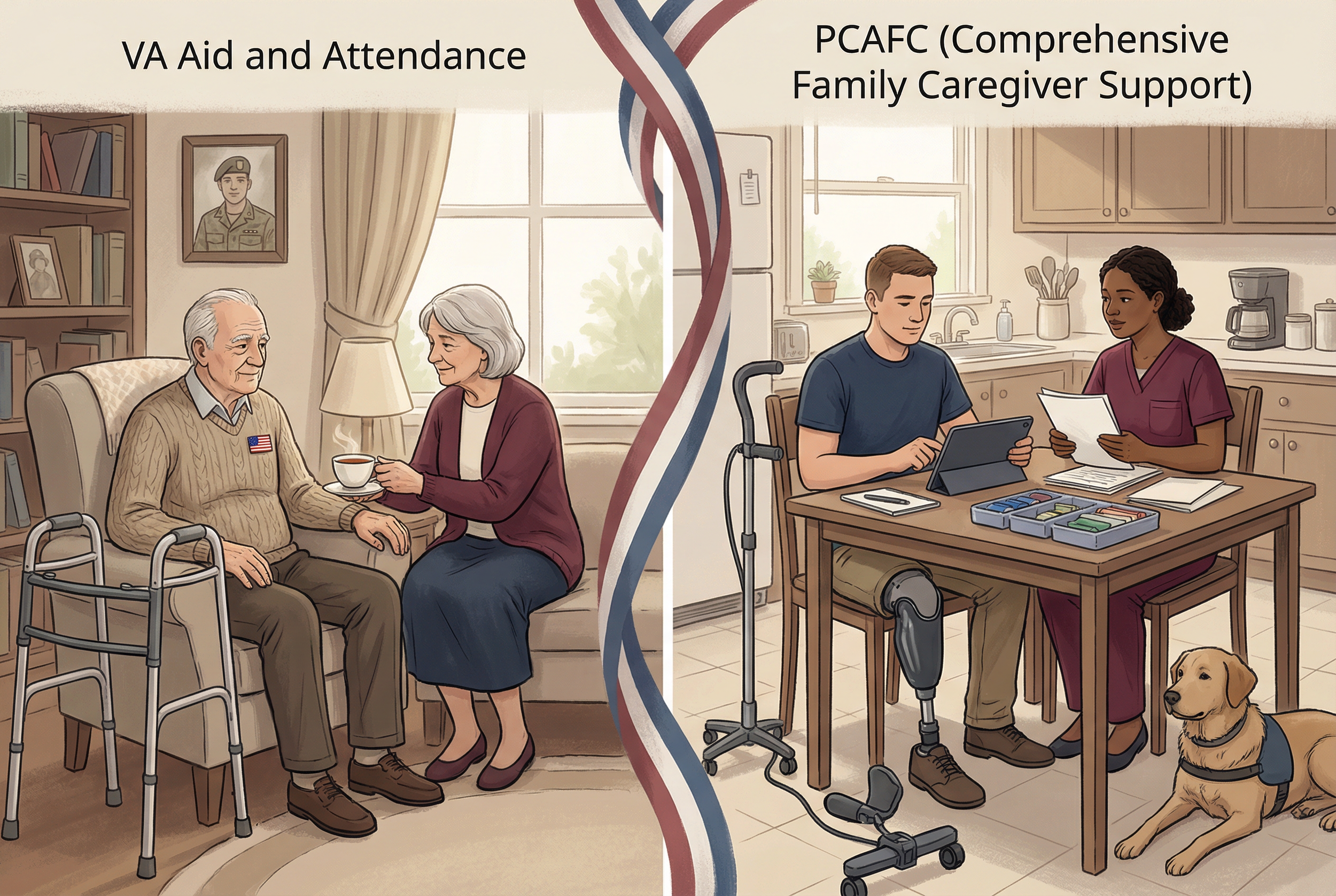
Veterans and their family caregivers often face a choice between two federal supports that can help pay for in-home care: VA Aid and Attendance and the Program of Comprehensive Assistance for Family Caregivers (PCAFC). This article defines both programs, explains eligibility rules, compares financial and nonfinancial benefits, and maps practical next steps so families can decide which path fits their circumstances. You will learn how service history, medical need, and financial thresholds interact with caregiver-focused supports like training, respite, and stipends. The guide also outlines application steps, key VA forms (including VA Form 21-2680 and VA Form 10-10CG), and real-world examples to illustrate common outcomes. For hands-on help applying or managing payments, this page points readers to a dedicated section explaining Paid.care’s services; Educate family caregivers on eligibility and process for getting paid, and guide them to apply for Paid.care's services.
What Is VA Aid and Attendance and Who Is Eligible?
VA Aid and Attendance is a pension benefit that increases a veteran’s monthly pension when they need regular help with daily living activities or are bedridden, and the veteran’s medical need and financial situation meet VA thresholds. The program works by adding an allowance to an existing VA pension to offset costs of assistance with activities of daily living (ADLs) and certain long-term care expenses. Qualifying typically requires wartime service, documentation of medical need, and evaluation of income and assets; the benefit is financial rather than a caregiver-training program. Understanding Aid and Attendance’s eligibility pillars helps families quickly assess whether it should be their first application step.
Understanding VA Aid and Attendance Benefits Veterans Administration Aid and Attendance Benefits Veterans Administration Aid and Attendance Benefits, 2010
What Are the Key Eligibility Requirements for VA Aid and Attendance?
Aid and Attendance eligibility hinges on three main pillars: service record, medical need, and financial assessment. Service history requires qualifying wartime service and discharge under conditions other than dishonorable, while medical need is documented by clinicians showing assistance is required for ADLs like bathing, dressing, or medication management. Financial eligibility examines countable income and assets against VA-prescribed thresholds; excess assets can reduce or disqualify pension amounts. VA Form 21-2680 is the medical assessment form commonly used to document the veteran’s need for Aid and Attendance and should be completed by a qualified clinician. Families should gather medical records, bank statements, and service documents early to streamline review and reduce processing delays.
Key eligibility documents include service records, clinician statements, and financial records.
Medical evidence should describe inability or frequent need for help with ADLs.
Financial review considers income and countable assets against VA limits.
These eligibility elements determine whether Aid and Attendance increases the veteran’s pension and can influence whether a family pursues PCAFC as an additional or alternative path.
Intro to the eligibility table below explains how attributes map to requirements and helps readers scan core thresholds before moving to program benefits analysis.
How Does VA Aid and Attendance Support Veterans and Their Families?
Aid and Attendance provides direct financial relief by increasing a veteran’s pension, which families commonly use to pay for caregiver hours, home modifications, or assisted living costs. Because payments go to the veteran’s pension account, they are flexible and can offset private-pay in-home care provided by family caregivers, paid aides, or agencies. Limitations include that the program does not supply caregiver training, guaranteed paid caregiver positions, or regular caregiver stipends; its primary function is pension augmentation based on need and financial eligibility. Families often pair Aid and Attendance with other supports—like Medicaid HCBS or CHAMPVA medical coverage—when available to build a comprehensive care plan.
Aid and Attendance’s financial focus contrasts with caregiver-centric programs that offer training and systemic supports, which leads many families to evaluate PCAFC when caregiver payment, training, and respite are primary goals.
What Is the PCAFC Program and Who Qualifies for It?
The Program of Comprehensive Assistance for Family Caregivers (PCAFC) is a VA initiative designed to support eligible family caregivers of seriously injured or ill veterans by providing caregiver-focused services such as monthly stipends, training, counseling, and access to healthcare benefits in some cases. PCAFC’s eligibility is dual: the veteran must meet clinical criteria showing serious injury or illness that requires personal care, and the caregiver must meet relationship and participation criteria, including completion of required training and enrollment steps. The program emphasizes caregiver capacity-building and sustained support, with benefits targeted at enabling safe, effective in-home care rather than acting primarily as a pension adjustment. Families should compare PCAFC’s caregiver-centric services against Aid and Attendance’s financial relief to choose the best fit.
What Are the Eligibility Criteria for Veterans and Caregivers in PCAFC?
PCAFC eligibility separates veteran clinical requirements from caregiver qualifications. For veterans, eligibility centers on service-connected or service-related injury/illness that creates the need for personal care or supervision; program expansions as of 2025 broadened some qualifying diagnoses and pathways. For caregivers, eligibility typically requires being designated by the veteran (or surrogate), meeting basic age and background checks, and completing mandatory training modules that prepare the caregiver for clinical and administrative responsibilities. Enrollment involves documentation of clinical need and completion of VA caregiver assessments; VA Form 10-10CG is frequently used to capture caregiver and veteran information. Families should review the veteran’s clinical records and be prepared to document both the veteran’s care needs and the caregiver’s willingness to participate in training and programs.
Veteran eligibility focuses on injury/illness severity and need for personal care.
Caregiver eligibility includes relationship to veteran, training completion, and enrollment.
Enrollment requires clinical documentation and caregiver assessments (VA Form 10-10CG).
These criteria make PCAFC especially suitable where a caregiver will provide ongoing hands-on care and will benefit from structured supports and training.
What Benefits Does PCAFC Provide to Family Caregivers and Veterans?
PCAFC delivers a mix of financial and nonfinancial supports centered on sustaining family caregiving. The program commonly provides a monthly caregiver stipend (paid directly to the caregiver), access to healthcare benefits in certain cases (such as CHAMPVA), structured training and counseling, and short-term respite services to prevent caregiver burnout. The stipend amount is variable and often tied to the veteran’s level of care needs and geographic factors; the program also integrates with other VA services like the Caregiver Support Line for ongoing counseling. PCAFC’s combined package helps caregivers maintain employment or reduce private-pay care costs while improving the veteran’s continuity of care at home.

How Do VA Aid and Attendance and PCAFC Compare?
Aid and Attendance and PCAFC serve overlapping but distinct purposes: Aid and Attendance adjusts a veteran’s pension to help cover care costs, while PCAFC invests in the caregiver through stipends, training, and healthcare access. The comparison axis includes payment recipient, eligibility triggers, support scope, and how each interacts with other benefits like Medicaid HCBS or CHAMPVA. Families often discover that one program addresses immediate financial gaps while the other builds long-term caregiver capacity; in some cases, veterans and caregivers can pursue both pathways concurrently if eligibility criteria are met. To decide, comparing financial mechanics and support services side-by-side clarifies tradeoffs and complementary uses.
What Are the Financial Support Differences Between Aid and Attendance and PCAFC?
Financially, Aid and Attendance increases the veteran’s pension, sending funds to the veteran or their representative to offset care costs, while PCAFC typically issues a stipend directly to the enrolled family caregiver as compensation for care provided. Aid and Attendance amounts are constrained by pension rules and income/assets tests, whereas PCAFC stipends hinge on assessed care level and VA stipend schedules. Payment cadence is monthly for both, but recipients differ: Aid and Attendance augments the veteran’s monthly benefit; PCAFC’s stipend remunerates the caregiver. These distinctions affect tax treatment, budgeting, and how funds are allocated for hiring supplemental care or paying family caregivers.
How Do Eligibility Requirements Differ Between the Two VA Caregiver Programs?
Eligibility for Aid and Attendance emphasizes wartime service, medical need for assistance with ADLs, and a means test for income/assets, creating a financial-need axis. PCAFC eligibility leans on injury/illness severity and caregiver role, requiring clinical evidence of sustained personal care needs and caregiver enrollment/training. Overlap can occur: a veteran may qualify for Aid and Attendance on financial grounds and their caregiver may qualify for PCAFC stipend and supports; however, each program has separate application processes and documentation expectations. A short decision flow helps families decide which to pursue first: if primary concern is immediate household cash flow despite assets, Aid and Attendance may be prioritized; if sustaining a trained caregiver with ongoing supports is crucial, PCAFC likely fits best.
Which Program Offers More Comprehensive Caregiver Support Services?
PCAFC clearly offers more comprehensive caregiver-focused services—training, counseling, respite, and direct stipends—because the program was built around enabling family caregivers to provide safe, ongoing care. Aid and Attendance is more narrowly focused on financial relief through pension augmentation and does not include structured caregiver training or dedicated counseling services. Families seeking broad caregiver capacity-building will usually find PCAFC’s package more robust, while Aid and Attendance is a powerful tool for reducing out-of-pocket care expenses. When eligible for both, combining Aid and Attendance’s pension increase with PCAFC’s caregiver supports can provide a fuller support system that covers finances and caregiver wellbeing.
How Can You Decide Which VA Caregiver Program Fits Your Family’s Needs?
Deciding between Aid and Attendance and PCAFC requires a structured look at medical need, service history, household finances, and caregiver availability. Start by cataloging the veteran’s service record, current ADL needs, and recent medical assessments, then run a basic count of household income and assets to screen for Aid and Attendance thresholds. Consider whether the family caregiver can and will complete PCAFC training and whether the family needs recurring caregiver stipends or one-time pension relief. This decision framework turns abstract criteria into actionable steps families can follow before applying.
What Factors Should You Consider When Choosing Between Aid and Attendance and PCAFC?
Family decision-making should prioritize four factors: the veteran’s service history and clinical diagnosis, the frequency and intensity of personal care needed, household income and asset position, and the caregiver’s capacity and willingness to enroll in training and administrative tasks. Service history determines Aid and Attendance eligibility while clinical severity steers PCAFC assessment; income/assets primarily affect pension calculations. Also consider interaction with other programs like Medicaid HCBS or Veteran-Directed Care which can supplement either option. A prioritized checklist helps families quickly triage which applications to prepare and which documentation to gather first.
Service history and discharge status affect Aid and Attendance eligibility.
Clinical severity and care frequency influence PCAFC suitability.
Income and assets determine pension amounts and potential Aid and Attendance eligibility.
Caregiver readiness (training, time, willingness) determines PCAFC enrollment feasibility.
These factors guide clear next steps: document service records, obtain clinician assessments, gather financial records, and decide who will lead the application process.
Are There Case Studies or Examples of Families Using These VA Programs?
Consider three anonymized scenarios that illustrate typical pathways: First, a wartime-era veteran with limited assets who needs help with bathing and medication receives Aid and Attendance to increase pension and pays a family caregiver from those funds. Second, a younger veteran with a service-connected traumatic injury enrolls in PCAFC so a spouse caregiver receives a monthly stipend, training, and respite, enabling sustained home care. Third, a family combines both: the veteran qualifies for Aid and Attendance pension augmentation while the caregiver enrolls in PCAFC to receive training and a stipend, reducing reliance on private agencies. These vignettes show how different needs produce different program choices and how combining supports often yields the most resilient care plan.
Understanding these examples makes it easier to map your household to a likely path and prepare the specific documentation required for each program.
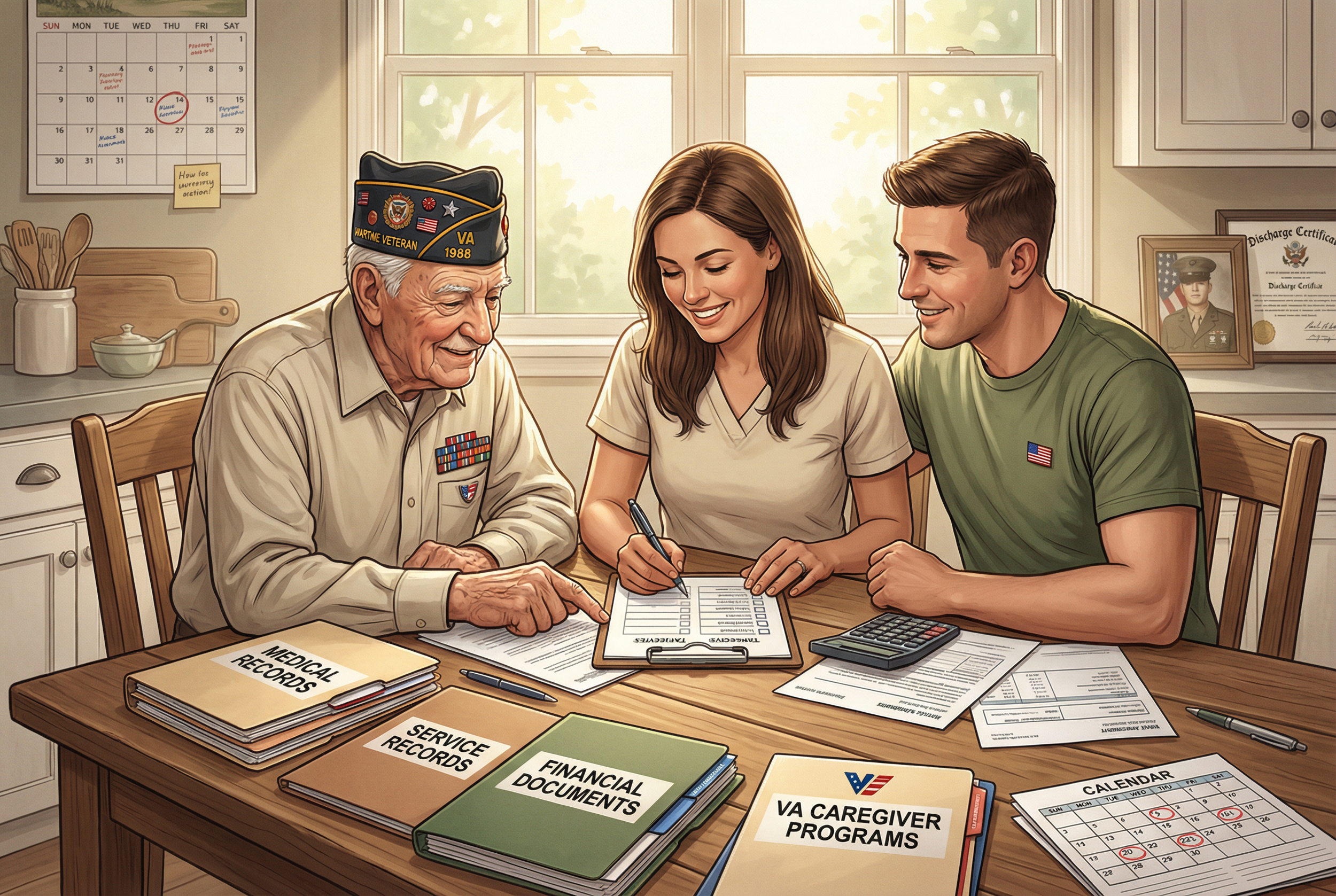
How Does Paid.care Help Family Caregivers Navigate VA Aid and Attendance and PCAFC?
Paid.care is a lead generation and information hub that assists family caregivers in getting paid for providing in-home care and helps families navigate public programs and payment pathways. Paid.care operates in Indiana, Michigan, and Illinois and assists caregivers through state Medicaid programs, Home and Community Based Services (HCBS), consumer-directed programs, and veteran-directed care programs. Paid.care provides support, training, and facilitates weekly payments, and they emphasize high pay rates, free care coaching, 24/7 support, and a mobile app for managing caregiving. Educate family caregivers on eligibility and process for getting paid, and guide them to apply for Paid.care's services.
What Services Does Paid.care Offer to Support VA Caregiver Program Applications?
Paid.care offers eligibility screening to determine whether families should pursue Aid and Attendance, PCAFC, or state-directed caregiver payment programs, and they assist with assembling documentation and completing applications. Their service model includes care coaching that helps caregivers understand forms like VA Form 21-2680 and VA Form 10-10CG, administrative follow-up during application processing, and coordination with state HCBS or veteran-directed programs when appropriate. Paid.care’s “How We Help” approach focuses on translating program eligibility into actionable paperwork and timelines so families can move from assessment to payments with fewer administrative hurdles.
These services are designed to reduce the time families spend navigating forms and to increase the likelihood of correct, timely submissions that align with program requirements.
How Does Paid.care Facilitate Payment and Manage Caregiving for Veterans?
Paid.care facilitates payment flows by enabling weekly payments to caregivers and handling payroll administration so families do not manage wage disbursement themselves. Their mobile app supports scheduling, shift tracking, and documentation of care provided, while ongoing coaching and 24/7 support help caregivers resolve questions about compliance and benefits coordination. Paid.care’s model integrates training and administrative relief—so caregivers receive compensation, coaching, and digital tools that streamline recordkeeping and reduce the paperwork burden on families. For families using veteran-directed or consumer-directed programs, this operational support can be the difference between successful, sustainable in-home care and caregiver burnout.
These operational features position Paid.care as a practical bridge between program approval and day-to-day caregiving management while preserving program eligibility and documentation integrity.
What Are the Most Common Questions About VA Aid and Attendance and PCAFC?
Families commonly ask whether caregivers can receive financial support, which forms are required, and how long approval takes; clear, stepwise answers help reduce uncertainty and speed action. Short Q&A responses below address the top PAA-style questions and provide direct steps for next actions, referencing VA forms and administrative checkpoints families need to gather. These answers also remind readers where to find assistance for complex cases and how Paid.care can fit into the application and payment flow.
Can Family Caregivers Receive Financial Support Through These VA Programs?
Yes — but who receives payment depends on the program: Aid and Attendance increases the veteran’s pension, which the veteran or their representative controls and can use to compensate family caregivers, while PCAFC issues stipends directly to enrolled caregivers as compensation for providing care. Some caregivers may also gain access to CHAMPVA or other healthcare supports through PCAFC eligibility. Families should determine whether direct caregiver payment (PCAFC) or enhanced veteran pension (Aid and Attendance) better meets their household needs and consult program documentation or assistance services to explore coordination with Medicaid HCBS and other state programs.
This distinction clarifies why program selection depends on whether direct caregiver pay or veteran-level financial relief is the priority.
How Do You Apply for VA Caregiver Pay Through Aid and Attendance or PCAFC?
Begin by gathering core documents: veteran service records, recent clinician assessments detailing ADLs or care needs, proof of income/assets, and caregiver identification and relationship documentation. Then follow these streamlined steps to apply:
Screen eligibility: Confirm wartime service and financial thresholds for Aid and Attendance or clinical criteria for PCAFC.
Collect medical evidence: Ask clinicians to complete VA Form 21-2680 for Aid and Attendance and submit supporting medical records for PCAFC.
Complete caregiver forms: Fill out VA Form 10-10CG and any PCAFC enrollment paperwork for caregiver designation and assessments.
Submit applications: Send completed forms to the VA through the appropriate channels and retain copies for follow-up.
Track and follow up: Monitor application status, supply any requested additional records, and consult support lines for processing questions.
Coordinate benefits: If approved, reconcile payments with other benefits like Medicaid HCBS, CHAMPVA, or Paid.care payment facilitation if using third-party services.
These steps provide a practical pathway; families who prefer assistance with paperwork, follow-up, and payment facilitation can consider service partners that specialize in translating program approval into stable caregiver compensation.
FAQs
-
VA Aid and Attendance is a cash benefit added to a veteran’s VA pension to help pay for long-term care needs (including paying a family caregiver, if the family handles it privately). PCAFC (Program of Comprehensive Assistance for Family Caregivers) is not a pension add-on; it’s a caregiver support program that provides a monthly stipend to an approved family caregiver, plus training, respite care, and other benefits. In short: Aid and Attendance centers on extra money for the veteran, while PCAFC centers on direct support and pay for the caregiver.
-
For VA Aid and Attendance, the veteran must generally:
Already receive a VA pension
Need help with activities of daily living (ADLs), be largely housebound, or be in a nursing facility
Meet income and asset limits
For PCAFC, eligibility typically requires:
A qualifying service-connected disability that was aggravated or incurred in the line of duty
A need for ongoing personal care services for at least 6 months
An eligible family caregiver (spouse, child, parent, or other close relative) who agrees to take on the role and complete training
Aid and Attendance is need-based and pension-related; PCAFC is tied to service-connected disability and caregiving needs.
-
It’s possible in some situations, but it’s not automatic and must be handled very carefully. Aid and Attendance funds are paid to the veteran and can help pay for care, including private payments to a family caregiver. PCAFC pays a stipend directly to the caregiver through VA and includes additional supports. However, double-counting income or misreporting how care is financed can create problems. Families should work with a VA social worker, VA caregiver support coordinator, or accredited VA benefits representative to make sure the two benefits are coordinated correctly.
-
If your primary goal is direct financial support and benefits for the caregiver, PCAFC is usually more focused on that need. PCAFC provides:
A monthly caregiver stipend based on the veteran’s care level
Training and education for the caregiver
Respite care and access to VA health care for the caregiver (in some cases)
Aid and Attendance can still help, but the money is paid to the veteran, not labeled as “caregiver pay,” and must be budgeted carefully alongside other expenses. Many families use Aid and Attendance to help cover care costs broadly, while PCAFC is more of a structured caregiver support and payment program.
-
Ask yourself a few key questions:
Is the veteran on a VA pension and struggling with daily activities?
If yes, Aid and Attendance might be a strong fit.
Is the veteran’s disability service-connected and fairly serious or long-term?
If yes, PCAFC may offer more robust caregiver support.
Do we need structured caregiver benefits, training, and respite care, not just extra money?
PCAFC is designed for that.
Most families benefit from talking with:
A VA Caregiver Support Coordinator
A VA social worker
An accredited VA claims agent or Veteran Service Organization (VSO)
They can review your specific situation and help you understand which program—or combination of programs—best matches your veteran’s needs and your caregiving role.

