
Tribal and IHS Programs That Pay Family Caregivers: How to Get Paid for Caring for Native American Elders
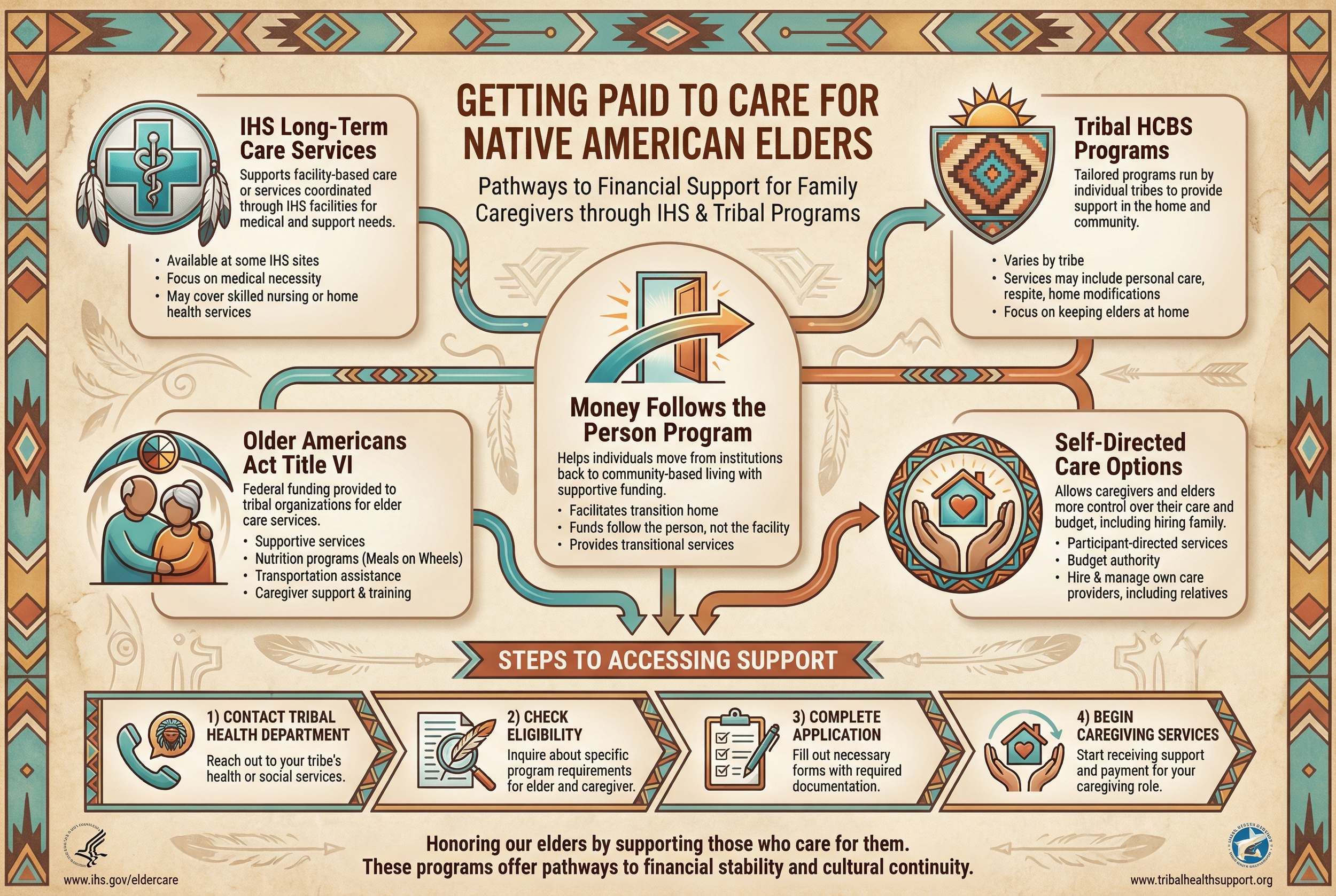
Paid family caregiving programs allow relatives to receive compensation for providing hands-on support to elders and people with disabilities; in tribal and IHS contexts these programs combine tribal funds, federal partnerships, and state Medicaid mechanisms to authorize payment for care. This article explains who pays, which programs enable paid caregiving, and how Native American caregivers can navigate tribal, IHS, Medicaid waiver, and VA pathways to receive compensation for in-home care. Many caregivers face unclear eligibility rules, inconsistent documentation requirements, and fragmented application channels; this guide breaks those obstacles into practical steps to help caregivers gather proofs, get clinical assessments, and file applications that result in payments. You will find clear definitions of tribal program types, an overview of IHS roles in long-term services and supports, a comparison of Medicaid waivers that permit family pay, veteran benefit pathways like Aid and Attendance, and a detailed eligibility checklist for tribal affiliation, residency, and medical necessity. The sections include comparison tables, step-by-step lists for applications, common document checklists, and targeted explanations of how assistance services can support tribal and IHS caregivers in completing applications and receiving payment.
What Are Tribal Caregiver Payment Programs and How Do They Work?
Tribal caregiver payment programs are locally run or tribal-facilitated initiatives that authorize direct payments or stipends to family members who provide hands-on long-term services and supports for elders and people with disabilities. These programs work by establishing eligibility rules (tribal affiliation and medical need), defining allowable caregiver activities (ADLs, medication assistance, supervision), and setting payment mechanics (tribal payroll, stipends, or reimbursement), often in partnership with state Medicaid or federal grants. Tribal administration varies: some tribes operate payroll systems and hire caregivers as tribal employees, while others use grant-funded stipends or contract with state Medicaid self-direction programs to permit family pay. Understanding these administrative differences helps caregivers identify whether their tribe, IHS clinic, or state waiver is the right pathway before gathering documentation and starting an application.
Tribal programs typically fall into a few common types and knowing these distinctions clarifies next steps for applicants.
Tribal-run payroll programs that employ family caregivers through tribal human services departments.
Grant or stipend programs that provide periodic payments for caregiver services funded by tribal or federal grants.
Partnerships with state Medicaid self-direction or HCBS waivers that allow Medicaid-funded care to be provided by family members.
These program types shape application steps and documentation needs, so caregivers should first confirm the program type with tribal social services before collecting assessments and proofs. The next subsection lists concrete examples and where to look for tribal program information.
Which Tribal Programs Provide Financial Support to Family Caregivers?
Tribal programs vary widely, but common examples include tribal social services caregiver payrolls, pilot caregiver stipend projects funded by federal or tribal grants, and tribal-managed respite reimbursement initiatives. Tribal-run payrolls generally require enrollment with the tribe and a clinical needs assessment for the care recipient, while stipends or grant projects may have shorter application cycles and different proof requirements. Because tribes set policy, eligibility and benefit amounts differ: some tribes pay hourly caregiver wages comparable to local home-care rates, while others provide flat monthly stipends or limited-term grants. Finding the right program usually starts with contacting the tribal enrollment office or social services department to confirm available caregiver payment options and to request the specific application packet and assessment forms.
Knowing where to confirm program details speeds the application process and reduces mistakes when gathering required documents.
How Does Paid.care Help Native American Caregivers Access These Programs?
Paid.care supports family caregivers by conducting eligibility checks, providing dedicated care coaching, and managing payment processing so caregivers can focus on care rather than paperwork. Their services include screening caregivers for tribal and program eligibility, assisting with documentation and application steps, offering free care coaching and 24/7 support, and arranging weekly payments once enrollment is approved. While Paid.care highlights services in Indiana, Michigan, and Illinois, the organization states a mission to help 63 million American family caregivers and can expand into tribal and IHS-related programs to bridge complex application systems. For caregivers seeking practical assistance, Paid.care’s combination of screening, coaching, and payment facilitation can shorten enrollment timelines and reduce administrative barriers to receiving compensation.
How Do IHS Family Caregiver Pay and Support Programs Operate?
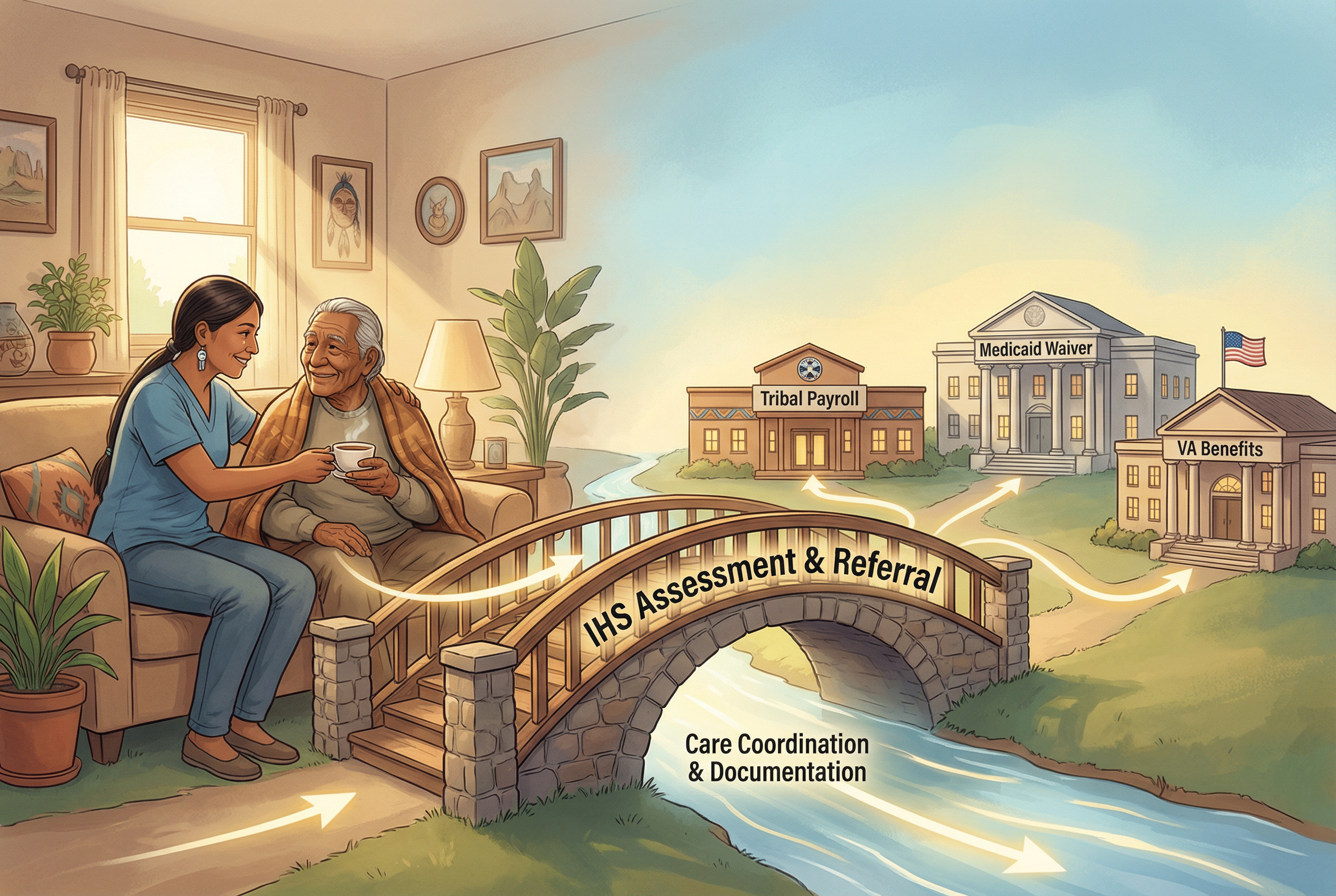
The Indian Health Service (IHS) primarily provides health care and care coordination rather than direct wage payments to family caregivers, but it plays a key role in long-term services and supports (LTSS) by assessing medical need and referring patients to tribal or state payment programs. IHS facilities and IHS-supported tribal health programs can perform clinical functional assessments that document ADL/IADL needs and medical necessity, which are often required by tribal payrolls, Medicaid waivers, or VA benefit applications. IHS also coordinates with tribal social services and state agencies to link patients to HCBS waivers or self-direction programs, acting as a bridge rather than a direct payer. Understanding the scope of IHS services helps caregivers use IHS assessments and referrals as evidence in applications for programs that will actually disburse caregiver payments.
Next, we’ll outline the LTSS services IHS commonly offers and how those services support the documentation required for paid caregiving.
What Long-Term Services and Supports Does IHS Offer for Family Caregivers?
IHS and IHS-funded tribal health programs provide LTSS elements such as home health referrals, case management, chronic disease management, and functional assessments required for eligibility determinations. These services help establish the clinical basis for paid caregiving by documenting needs like assistance with bathing, dressing, medication management, and mobility—core ADL/IADL criteria used by many payor programs. IHS case managers often coordinate with tribal social service teams and state Medicaid offices to make referrals to waiver programs or community support resources. While IHS does not typically disburse caregiver wages, its assessments and care plans are essential documentation that enable tribes or state waivers to authorize payments.
Can IHS Directly Pay Family Caregivers?
IHS generally does not directly pay family caregivers as a routine function; payment for caregivers usually comes from tribal payrolls, state Medicaid waivers, or VA benefits rather than from IHS operating funds. When direct payment is unavailable, IHS can facilitate alternative pathways by writing clinical assessments, providing referrals to tribal finance or social services, and coordinating with state Medicaid agencies that allow self-directed care payments. Some unique local partnerships or pilot projects may allow IHS-funded initiatives to support caregiver stipends indirectly, but these are exceptions rather than the rule. Caregivers seeking paid arrangements should use IHS documentation to support applications to the entities that do issue payments.
Understanding this limitation clarifies why caregivers must pursue tribal or Medicaid channels for compensation, using IHS support as clinical backing.
What Medicaid Waivers Are Available for Native American Caregivers?
Medicaid HCBS waivers, state self-direction programs, and consumer-directed care models are the primary Medicaid pathways that allow family members to be paid for providing care to eligible recipients, and tribes often work with state Medicaid agencies to ensure tribal members can access these waivers. These waiver types include 1915(c) HCBS waivers, 1915(i) state plan HCBS options, and consumer-directed personal care services that permit hiring family caregivers in some states. The mechanism works by documenting medical necessity through assessments, enrolling the care recipient in the waiver or state program, and then designating the family caregiver as an authorized provider or employee under that program. Because each state designs waiver rules, tribal members should verify whether waivers explicitly permit payment to family caregivers and whether tribal residency or enrollment produces additional flexibility.
Which States Offer Medicaid Waivers Supporting Tribal Family Caregivers?
Several states have established HCBS waivers or self-direction programs that can accommodate tribal members, but eligibility and openness to paying family caregivers vary by state and by the specifics of tribal-state agreements. States with known consumer-directed options typically allow family caregivers to be paid if the program’s service definitions and provider rules permit it; however, tribal members should check whether their tribe has a memorandum of understanding or cross-agency agreement with state Medicaid to streamline access. Because state rules change frequently, caregivers should verify current waiver names, enrollment contact points, and tribal addenda with both tribal social services and state Medicaid offices before applying. When in doubt, starting with a clinical assessment from IHS or tribal health services improves the likelihood of successful enrollment.
Confirming state waiver names and tribal applicability early prevents wasted effort collecting incompatible documents.
How to Qualify and Apply for Medicaid Waivers as a Native American Caregiver?
Qualifying for a Medicaid waiver typically requires documenting the care recipient’s medical necessity through functional assessments, verifying eligibility criteria (income/resource limits where applicable), and submitting a completed waiver application with required proofs such as tribal enrollment or residency documentation. The step-by-step application process usually looks like this:
Request a clinical functional assessment from IHS or a licensed clinician to document ADL/IADL needs.
Contact tribal social services and state Medicaid waiver coordinators to confirm program rules and request the specific application packet.
Assemble documentation (tribal ID/enrollment proof, proof of residence, medical records, caregiver ID) and submit the application with any required signatures.
These steps ensure applications include both clinical justification and administrative proofs, which speeds determination and reduces appeals. Paid.care can assist caregivers by checking eligibility, helping assemble documentation, and guiding the submission process—check eligibility with Paid.care if you want hands-on support through these steps.
Caregivers who proactively coordinate IHS assessments, tribal verification, and state waiver contacts typically shorten approval time and reduce back-and-forth requests for additional documentation.
What Veteran Caregiver Benefits Are Available for Native American Families?
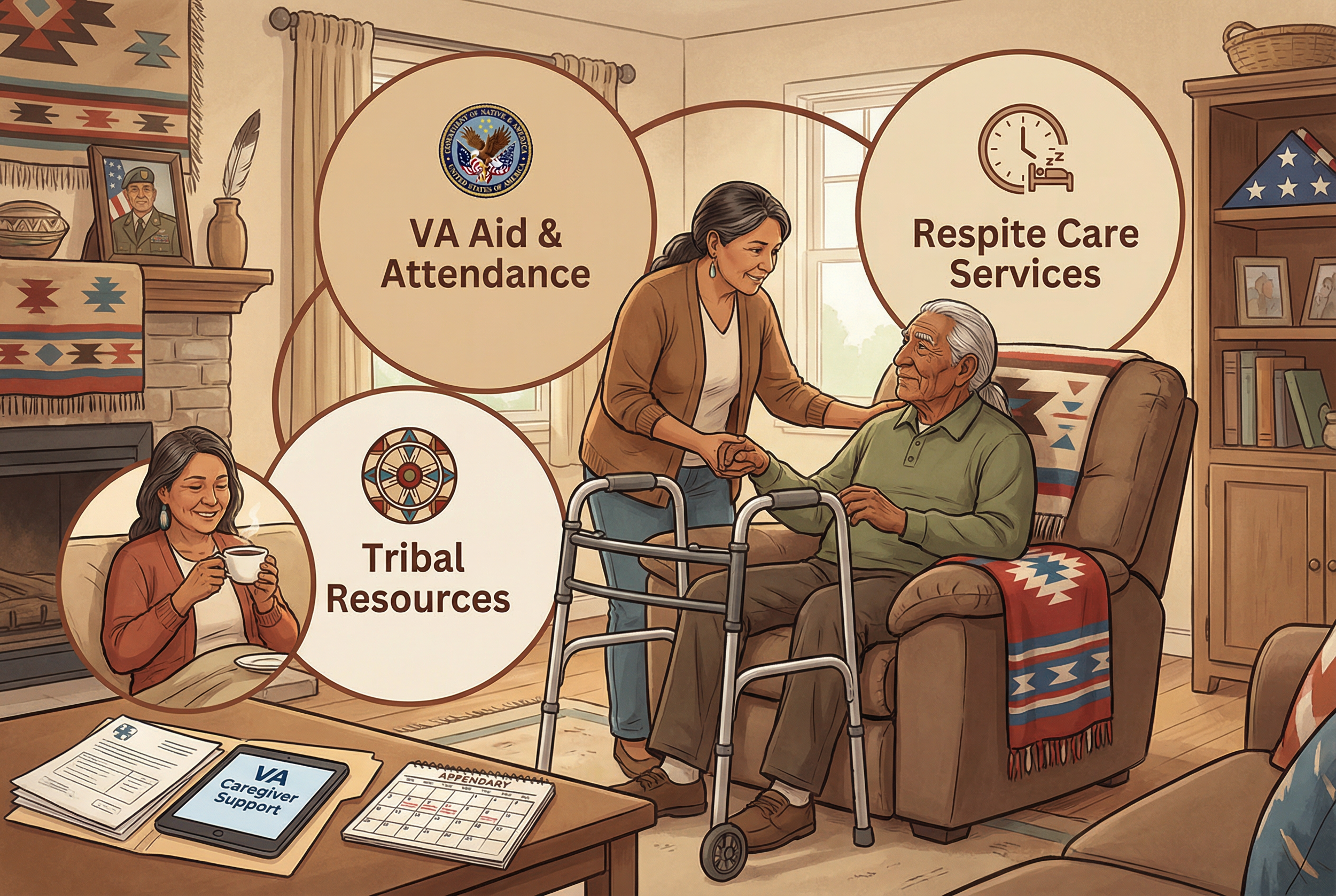
Veteran caregiver benefits, especially the Aid and Attendance benefit and VA respite programs, can provide financial support and respite services for tribal veterans and their family caregivers, often stacking with Medicaid or tribal supports to cover different aspects of care. Aid and Attendance adds a monetary benefit to VA pension for eligible wartime veterans or surviving spouses who require assistance with daily living, and those funds can be directed to cover in-home care costs that include family caregiver compensation in some cases. The VA also offers caregiver support programs and short-term respite services that can relieve family caregivers and demonstrate need in other benefit applications. Tribal veteran caregivers should coordinate VA applications with IHS assessments and tribal social services to create a cohesive evidence package supporting both VA and other payment sources.
Understanding how VA benefits intersect with tribal and Medicaid resources enables caregivers to maximize available supports.
How Does the Aid and Attendance Program Support Tribal Veteran Caregivers?
Aid and Attendance is an added benefit to VA pension for eligible veterans or surviving spouses who need assistance with activities of daily living, and it can indirectly support family caregivers by increasing household resources used to pay for care. Eligibility focuses on wartime service, medical need documented through physician statements and functional assessments, and financial eligibility consistent with VA pension rules. Applications require specific VA forms, medical evidence, and documentation of the veteran’s need for assistance; tribal veterans can use IHS or tribal clinician assessments as part of their medical evidence. Pairing Aid and Attendance with Medicaid or tribal payments requires careful coordination to avoid benefit conflicts and to align payment uses for caregiving services.
Accurate medical and service documentation is essential to get Aid and Attendance approved and to demonstrate need for caregiver support.
What Respite Care Services Are Offered to Native American Veteran Caregivers?
Respite services for veteran caregivers include short-term in-home respite, adult day programs, and temporary facility stays that relieve family caregivers and maintain continuity of care for veterans, and these services are available through the VA, state programs, and sometimes tribal social services. VA programs may provide caregiver support and respite vouchers or referral to community respite programs, while tribal programs sometimes offer culturally appropriate respite or caregiver relief funded through grants. Respite complements paid caregiver programs by preventing burnout, documenting ongoing caregiver burden, and showing continued need for paid supports in applications. Caregivers should inquire with VA caregiver support coordinators, tribal social services, and IHS case managers to identify available respite options and referral processes.
Documented use of respite services strengthens broader applications by evidencing sustained caregiver responsibilities and clinical need.
What Are the Eligibility Requirements for Tribal and IHS Caregiver Payment Programs?
Eligibility for tribal and IHS-related caregiver payment programs centers on three clusters: tribal affiliation and residency proofs, clinical or functional need for the care recipient, and program-specific administrative requirements such as income limits or caregiver training. Tribal affiliation commonly requires a tribal enrollment card, enrollment number, or letter from the tribal enrollment office, while residency proofs can include tribal land residency statements or other accepted documents; program specifics vary by tribe and state. Clinical eligibility is usually demonstrated through ADL/IADL assessments, physician statements, or IHS functional assessments showing medical necessity for ongoing in-home support. Finally, administrative items like caregiver background checks, provider enrollment paperwork, and agreement to training or care plans may be required depending on whether the caregiver will be a tribal employee or an authorized Medicaid provider.
A clear checklist of required documents and steps reduces delays and appeals during the application process.
Tribal affiliation proofs such as an enrollment card, enrollment letter, or tribal ID.
Residency verifications like tribal land residency statements, utility bills, or tribal office confirmation.
Clinical assessments including ADL/IADL forms, physician statements, and IHS functional evaluations.
What Tribal Affiliation and Residency Proof Is Needed?
Tribal affiliation is typically proven by an enrollment card, tribal ID, or official letter from the tribal enrollment office, and some programs accept alternative proofs such as a certificate of degree of Indian blood if enrollment is not available. Residency proof may require documents that link the care recipient to tribal land or a tribal community, such as housing verification, a letter from tribal housing, or utility statements if accepted by the administering program. Because tribes and states differ in accepted documents, caregivers should request a definitive list of acceptable proofs from the tribal social services office or the waiver coordinator before collecting materials. Getting the right tribal and residency proofs on the first submission prevents delays and reduces the need for appeals or supplemental evidence requests.
Confirming acceptable documents early with tribal officials streamlines application completion and reduces the risk of rejection.
What Care Recipient Conditions Qualify for Paid Family Caregiving?
Care recipients usually qualify for paid family caregiving when they demonstrate deficits in activities of daily living (ADLs) such as bathing, dressing, feeding, toileting, or mobility, or limitations in instrumental ADLs (IADLs) like medication management, meal preparation, or transportation. Chronic conditions, cognitive impairment (including dementia), severe mobility limitations, and complex medication regimens are common medical profiles that meet medical necessity for paid caregiving. Assessments documenting ADL/IADL dependency—completed by IHS clinicians, tribal providers, or licensed assessors—are central to approvals, and supplemental medical records or therapy notes strengthen applications. Securing timely assessments and ensuring they explicitly map limitations to required services makes approvals more likely and provides a clear rationale for caregiver payment.
Documented functional need is the single most important determinant across tribal, Medicaid, and VA pathways for authorizing paid family caregiving.
What Frequently Asked Questions Do Native American Caregivers Have About Payment Programs?
Caregivers frequently ask how payments are issued, whether IHS pays caregivers directly, and where to begin when multiple programs overlap; clear answers focus on payment pathways, documentation requirements, and coordinated next steps. Payment is most often issued through tribal payroll systems, state Medicaid disbursements for self-directed care, or VA pension payments; the issuing entity determines pay cadence, taxation, and employment status. IHS rarely issues caregiver wages directly but is a crucial assessor and referrer whose clinical documentation enables payments from other sources. Starting points that reduce friction include securing an IHS assessment, contacting tribal social services to confirm program types and required documentation, and verifying state waiver rules if Medicaid funding is involved.
Below are concise, actionable answers to common practical questions caregivers ask.
How are payments issued? Payments typically come through tribal payroll, state Medicaid payment systems, or VA benefit disbursements depending on the program.
What documentation is most important? Clinical ADL/IADL assessments, tribal affiliation proof, residency confirmation, and caregiver identification are commonly required.
Where should I start? Begin with an IHS or tribal clinical assessment, then confirm program eligibility with tribal social services or state waiver coordinators.
How Do Native American Caregivers Get Paid Through Tribal and Medicaid Programs?
Native American caregivers receive payment via several pathways: tribal payroll systems that hire caregivers, Medicaid self-direction or HCBS waivers that authorize family caregivers as paid providers, and VA benefits that increase household resources for care. The typical three-step process is: secure clinical assessment (IHS or provider), confirm program eligibility and required documents with tribal or state offices, and submit the application designating the family caregiver as an authorized provider. Payment timelines vary by administering agency, with tribal payrolls and state Medicaid processes each defining their own enrollment and pay cycles. For caregivers who prefer guided assistance, Paid.care provides eligibility screening, care coaching, and weekly payment facilitation to help caregivers complete enrollment and receive compensation.
Understanding these pathways and timelines helps caregivers set realistic expectations and track applications until payment begins.
Can IHS Pay for Family Caregiving Services?
No, IHS typically does not pay family caregivers directly; instead, IHS documents medical need and coordinates referrals that enable tribes, states, or the VA to authorize payments. When direct IHS payment is not available, caregivers should use IHS functional assessments and referral letters to apply for tribal payrolls, Medicaid waivers, or VA benefits that provide compensation. IHS can also help caregivers identify available community resources, respite options, and partner programs that complement paid caregiving. The recommended next step is to obtain a formal IHS assessment and then contact tribal social services or the state waiver coordinator to pursue the payment pathway most appropriate for the care recipient’s circumstances.
Relying on IHS documentation while pursuing the actual paying program ensures applications contain the medical evidence necessary for approval.
This article has explained program types, the role of IHS, Medicaid waiver options, veteran benefits, eligibility requirements, application steps, and common payment pathways to help Native American caregivers pursue compensation for in-home care. For caregivers ready to move from information to application, professional screening and assistance can reduce administrative barriers and accelerate enrollment into paying programs. Paid.care offers eligibility checks, dedicated care coaching, weekly payment facilitation, free care coaching, 24/7 support, and a mobile app to help caregivers manage care and communication; caregivers may choose to check eligibility with Paid.care to see if their situation fits tribal, Medicaid, or VA pathways and to get guided help through applications.
FAQs
-
Yes, in some situations. Many tribes use a mix of Medicaid waivers, Tribal health programs, and Title VI elder services to create options that can pay or provide stipends to family caregivers. In other cases, programs may not pay cash but can offer respite care, transportation, meals, or home-based services that support the caregiver. Payment is never automatic—you must qualify based on the elder’s needs, the tribe’s policies, and available funding.
-
Depending on your tribe and state, you might see:
Tribal or state Medicaid Home- and Community-Based Services (HCBS) waivers that allow “self-directed” care
Tribal LTSS (Long-Term Services and Supports) programs that let elders choose a family caregiver
Indian Health Service (IHS)–affiliated programs coordinated with tribal health departments
Title VI programs for Native American elders, sometimes combined with local caregiver support services
Tribal caregiver stipend or allowance programs, where available
Each tribe and region is different, so the exact program names and rules vary.
-
Start by contacting:
Your tribal health department or social services office
The Tribal aging services or elder services program
The IHS service unit or clinic that serves your community
A tribal benefits coordinator or case manager, if your tribe has one
Ask specifically if they have self-directed care, caregiver stipends, or Medicaid HCBS options for elders who want a family member to provide care. They can explain eligibility, how to apply, and whether funds are currently available.
-
While requirements differ by tribe and state, most programs look at:
The elder’s tribal enrollment or eligibility as an American Indian/Alaska Native
The elder’s age and level of need, often documented through an assessment
The elder’s residence (on-reservation, off-reservation, service area)
Income and assets, especially for Medicaid-funded options
Whether you, as the caregiver, meet program rules (e.g., background checks, training, not being a legal guardian in some states)
The elder usually must be approved for a specific number of care hours or services, and you can only be paid for those approved services.
-
To stay compliant:
Follow the care plan created by the case manager or tribal program
Log your hours accurately, using the official timesheets or electronic visit verification (EVV) system
Never bill for hours you didn’t work or services you didn’t provide
Report changes quickly—hospital stays, moving, changes in health, or if someone else starts providing care
Keep copies of authorizations, letters, and payment records
Ask your tribal program staff or case manager in writing if you’re unsure about a rule
Good documentation and open communication with the tribal or IHS program are the best ways to protect both you and your elder from overpayment issues or allegations of fraud.

