
The Caregiver’s Tax Easter Eggs: Unlocking Unpaid Caregiver Tax Credits and Benefits
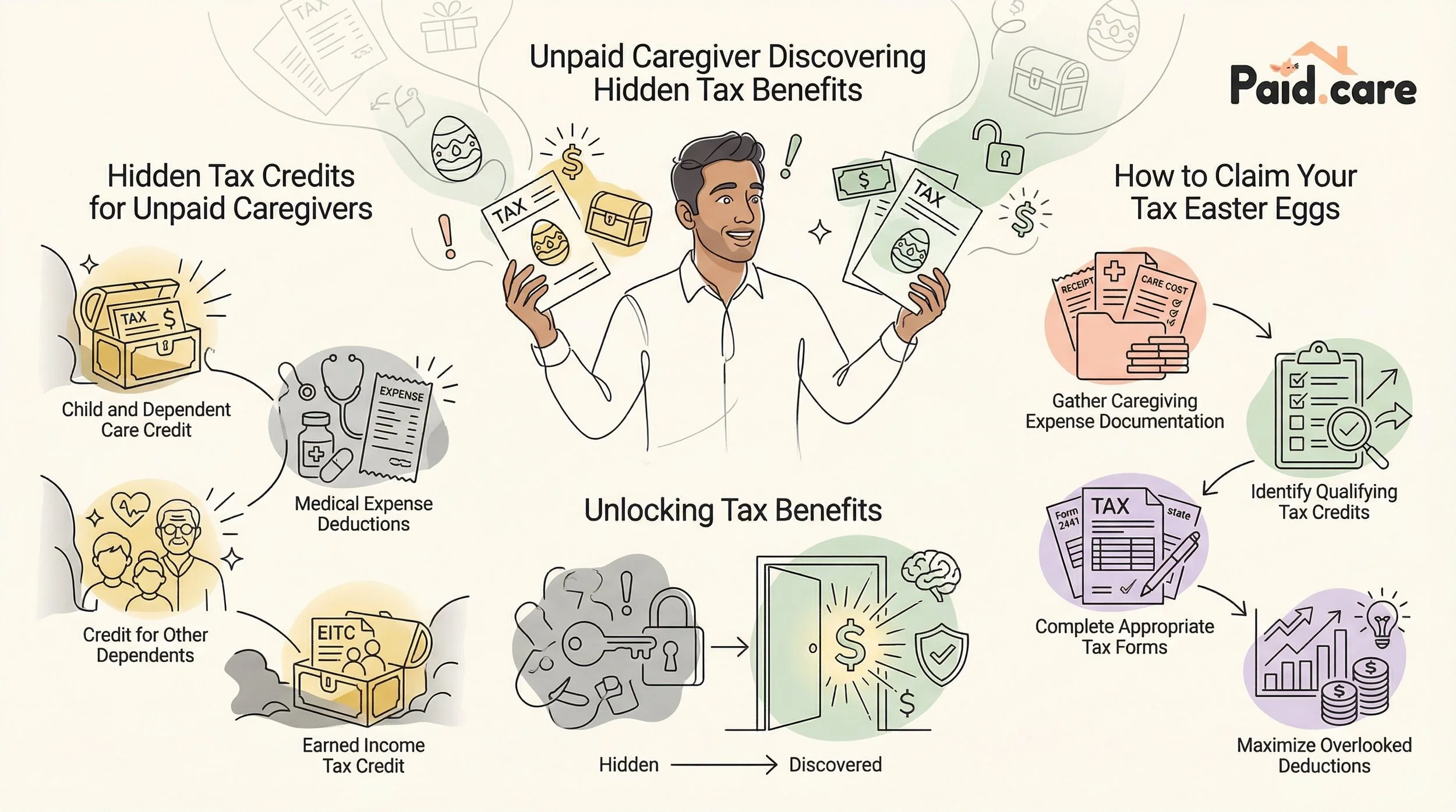
Navigating the world of caregiver tax credits can be complex, yet it holds significant financial benefits for those who provide unpaid care to family members. This article delves into the various caregiver tax credits and benefits available, particularly focusing on the unique opportunities in states like Indiana, Michigan, and Illinois. Many caregivers are unaware of the potential tax relief available to them, which can alleviate some of the financial burdens associated with caregiving. By understanding the eligibility criteria and specific state benefits, caregivers can unlock valuable tax credits that may have previously gone unnoticed. We will explore who qualifies for these credits, the impact of Medicaid, and the specific tax breaks available in each state.
Who Qualifies for Caregiver Tax Credits and Unpaid Caregiver Tax Relief?
Caregiver tax credits are designed to support individuals who provide unpaid care to family members, often leading to significant financial relief. To qualify for these credits, caregivers must meet specific eligibility criteria, which can vary by state. Generally, caregivers who provide care to a relative with a disability or chronic illness may be eligible for "tax relief". Understanding these criteria is crucial for caregivers to maximize their potential benefits.
What Are the Eligibility Criteria for Caregiver Tax Credit in Indiana, Michigan, and Illinois?
In Indiana, Michigan, and Illinois, the eligibility criteria for caregiver tax credits include the following:
Relationship to the Care Recipient: The caregiver must be related to the individual receiving care, such as a parent, sibling, or child.
Care Requirements: The care recipient must have a qualifying condition, such as a disability or chronic illness, that necessitates assistance.
Income Limits: Each state may impose income limits that affect eligibility for tax credits, requiring caregivers to meet specific financial thresholds.
Documentation such as medical records and proof of relationship may be required when claiming these credits.
How Do Medicaid and Medicaid Waivers Affect Caregiver Tax Benefits?
Medicaid plays a significant role in determining caregiver tax benefits. Medicaid waivers allow states to provide services to individuals with disabilities or chronic illnesses in their homes rather than in institutional settings. These waivers can impact the availability of caregiver tax credits by providing additional financial support for caregivers. Understanding how these waivers work is essential for caregivers seeking to maximize their tax benefits.
What Are the State-Specific Caregiver Tax Breaks in Indiana, Michigan, and Illinois?
Each state offers unique caregiver tax breaks that can significantly benefit unpaid caregivers. By understanding these state-specific tax breaks, caregivers can better navigate their financial options.
How Do Indiana’s Tax Deductions Support Family Caregivers?
Indiana provides several tax deductions specifically aimed at supporting family caregivers. These include:
Caregiver Tax Credit: A credit that reduces the amount of state tax owed, available to those who provide care to qualifying individuals.
Dependent Care Deductions: Caregivers can deduct expenses related to the care of dependents, which can include medical expenses and other caregiving costs.
These deductions can help alleviate the financial burden on caregivers, making it easier for them to provide necessary support.
What Unique Tax Benefits Do Michigan and Illinois Offer to Unpaid Caregivers?
Michigan and Illinois also offer distinct tax benefits for unpaid caregivers:
Michigan: Caregivers may qualify for a tax credit based on the number of hours spent providing care, which can lead to substantial savings on state taxes.
Illinois: The state offers a caregiver tax credit that allows caregivers to claim a percentage of their caregiving expenses, providing direct financial relief.
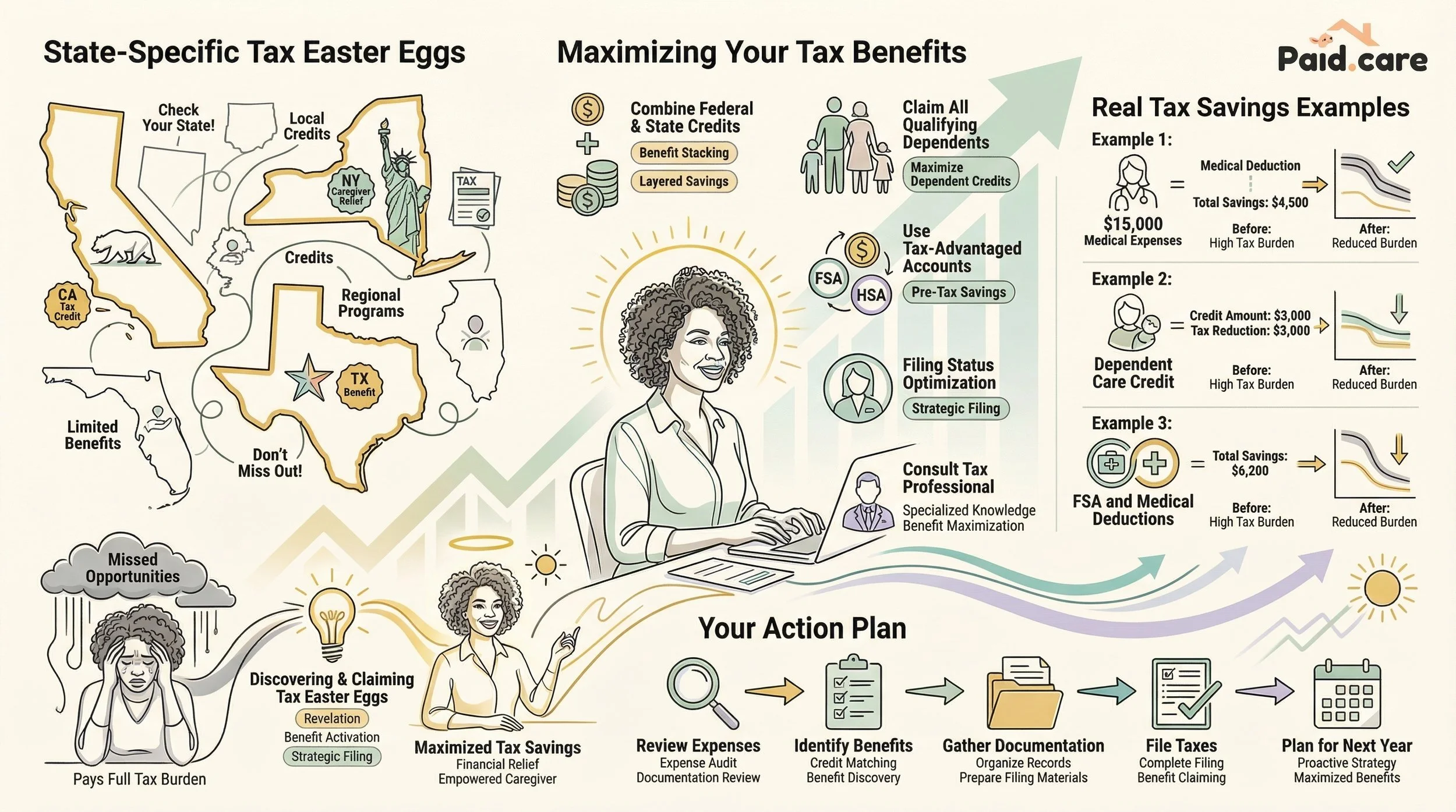
These benefits highlight the importance of understanding state-specific tax laws to maximize available credits.
How Can Caregivers Claim Lesser-Known Tax Deductions and Credits?
Many caregivers are unaware of the lesser-known tax deductions and credits available to them. By understanding how to claim these benefits, caregivers can significantly reduce their tax liabilities.
What Are the Hidden Tax Benefits for Family Caregivers?
Hidden tax benefits for family caregivers may include:
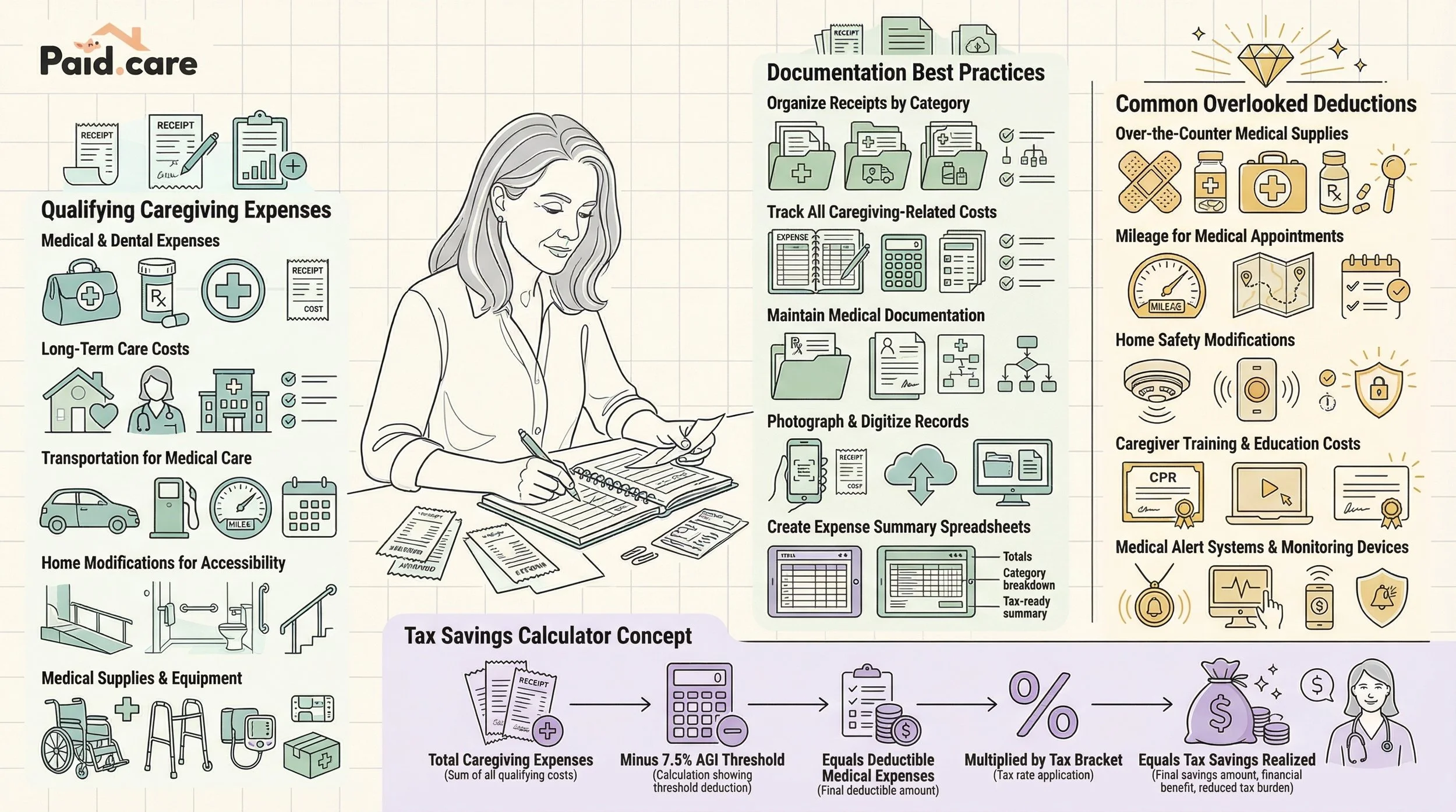
Medical Expense Deductions: Caregivers can deduct unreimbursed medical expenses incurred while caring for a dependent.
Mileage Deductions: Caregivers who travel for caregiving purposes may be eligible to deduct mileage expenses.
Home Office Deductions: If caregivers manage caregiving tasks from home, they may qualify for home office deductions.
These hidden benefits can provide substantial financial relief, making it essential for caregivers to explore all available options.
Which Tax Filing Tips Maximize Caregiver Tax Relief?
To maximize caregiver tax relief, consider the following tips:
Keep Detailed Records: Maintain thorough documentation of caregiving expenses, including receipts and mileage logs.
Consult a Tax Professional: Engaging with a tax professional can help identify all eligible credits and deductions.
Stay Informed: Regularly review state tax laws and updates to ensure you are aware of any changes that may affect your eligibility.
By following these tips, caregivers can enhance their chances of receiving the maximum tax benefits available to them.
FAQs
-
Yes. The $500 "Credit for Other Dependents" is often called the catch-all credit for caregivers. In 2026, you can claim this for a parent or relative if you provide more than half of their financial support and their gross income is below $4,700. This is a non-refundable credit that directly reduces your tax bill, and it remains available for caregivers with an adjusted gross income (AGI) of up to $200,000 (single) or $400,000 (married filing jointly).
-
The 2026 legislation significantly boosted the Child and Dependent Care Credit (CDCC) by raising the maximum credit rate from 35% to 50%. While the expense limits remain at $3,000 for one dependent and $6,000 for two or more, low-to-middle-income caregivers can now recover half of those costs. To qualify, the care must be for a spouse or dependent who is physically or mentally incapable of self-care and must be necessary for you to work or look for work.
-
Starting January 1, 2026, the annual contribution limit for a Dependent Care FSA has increased from $5,000 to $7,500 per household ($3,750 for those married filing separately). This is a "pre-tax power move" that allows you to set aside $2,500 more than in previous years to pay for adult day care or in-home aides. Because this money is taken out before taxes, it lowers your overall taxable income, potentially moving you into a lower tax bracket.
-
Yes. If you itemize your deductions, you can deduct unreimbursed medical expenses for your dependent that exceed 7.5% of your AGI. This includes a wide range of "Easter Eggs" people often miss: the cost of specialized medical equipment (like ramps or hospital beds), transportation to appointments ($0.21 per mile in 2026), and even long-term care insurance premiums. If you pay for your parent’s nursing home or in-home care primarily for medical reasons, the entire cost may be deductible.

