
Understanding the Caregiver Prenup: Setting Clear Caregiving Boundaries Early
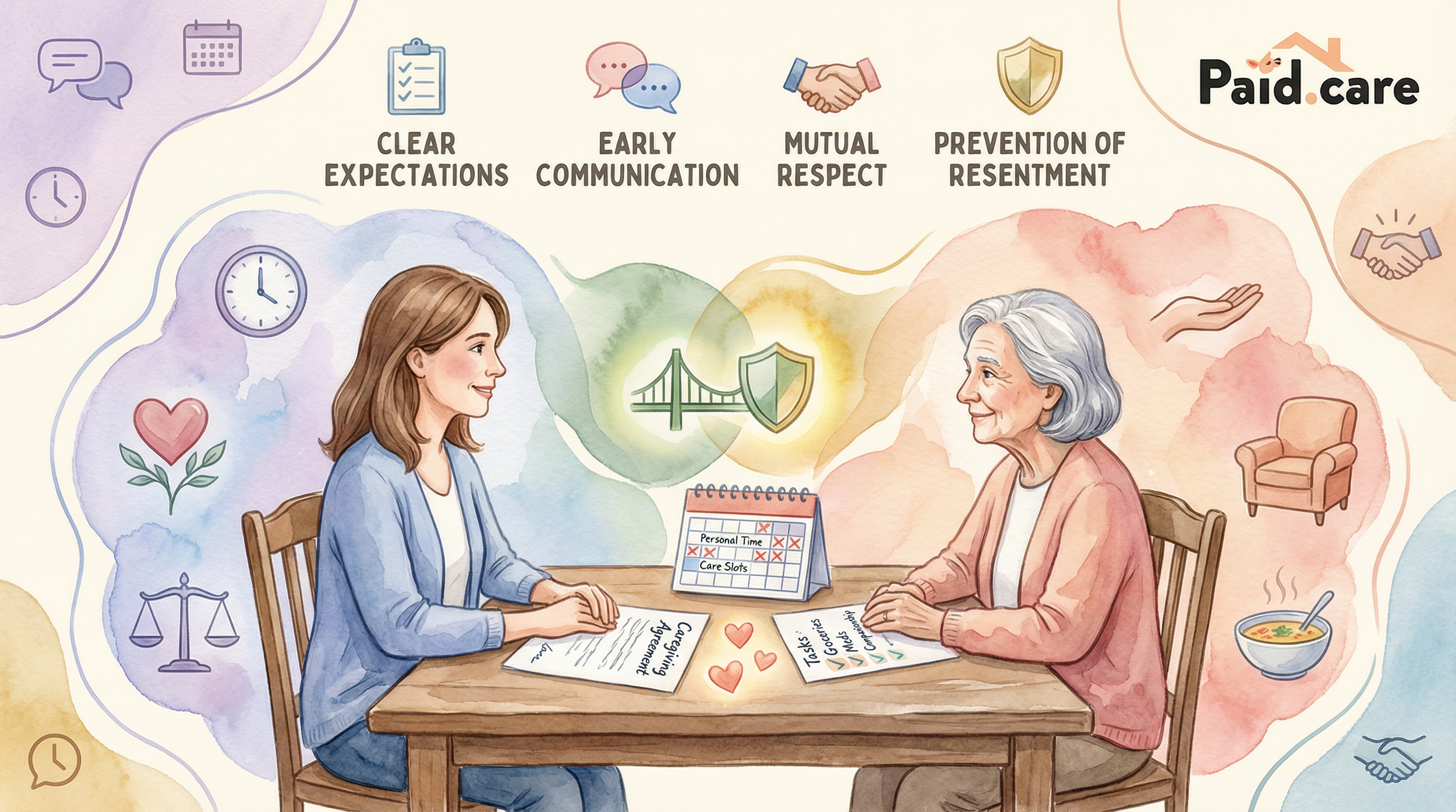
Navigating the complexities of caregiving can be challenging, especially when family dynamics are involved. A "Caregiver Prenup" serves as a proactive measure to establish clear boundaries and expectations among family members regarding caregiving responsibilities. This article will delve into the significance of caregiver prenups, exploring how they can help define roles, protect unpaid caregivers, and facilitate effective communication. By addressing these critical aspects, families can mitigate potential conflicts and ensure a smoother caregiving experience. We will also examine the legal considerations in states like Indiana, Michigan, and Illinois, and provide resources for creating effective caregiving agreements.
What Is a Caregiver Prenup and Why Is It Important?
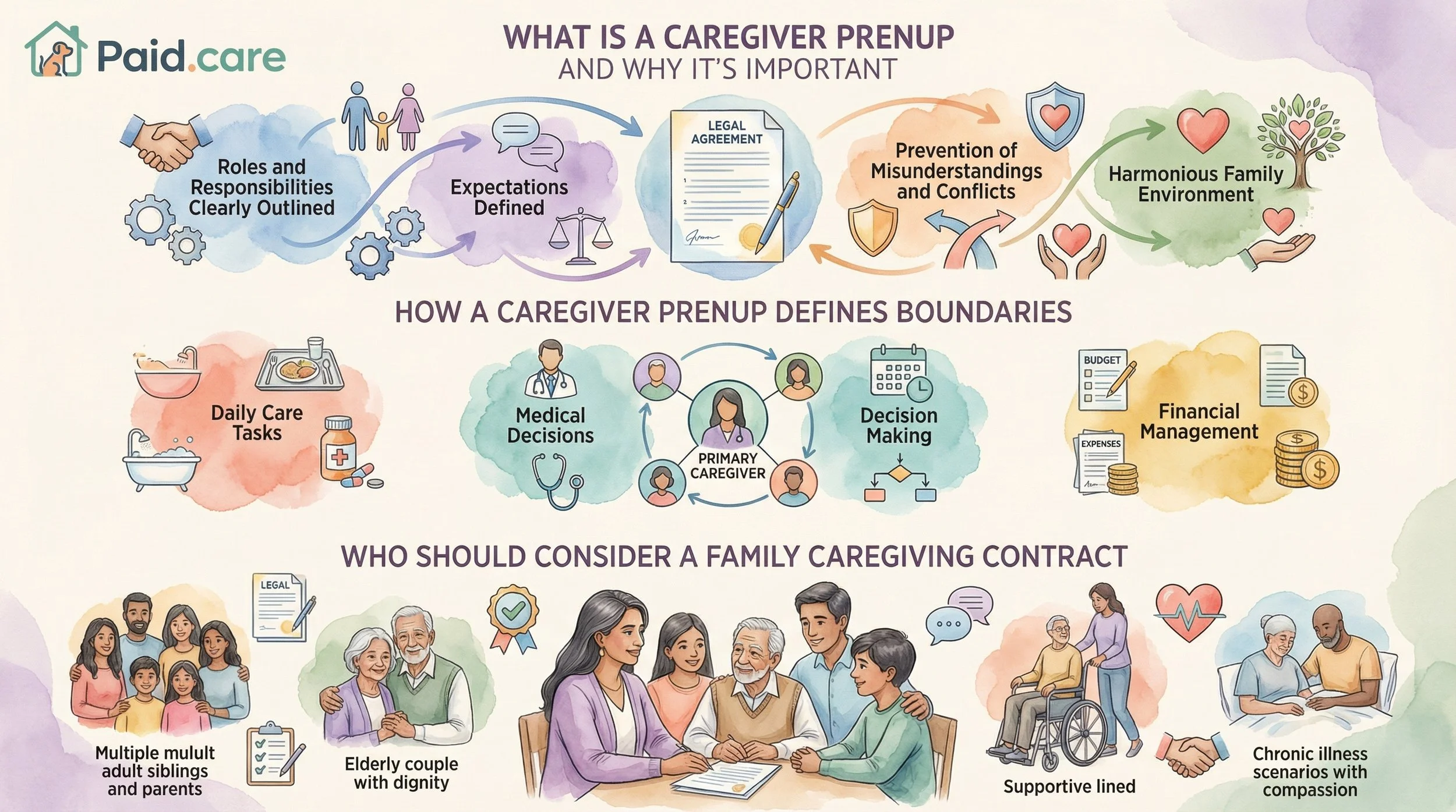
A caregiver prenup is a legal agreement that outlines the roles, responsibilities, and expectations of family members involved in caregiving. This document is crucial as it helps prevent misunderstandings and conflicts that can arise from differing expectations. By clearly defining caregiving boundaries, families can foster a more harmonious environment, ensuring that everyone understands their roles and the support they can expect. The importance of setting these boundaries cannot be overstated, as it directly impacts the quality of care provided and the relationships among family members.
How Does a Caregiver Prenup Define Caregiving Boundaries?
Caregiver prenups clarify the specific roles and responsibilities of each family member involved in caregiving. For instance, they may outline who is responsible for daily care tasks, medical decisions, and financial management. By providing concrete examples of boundaries, such as designating one person as the primary caregiver while others assist with specific tasks, these agreements help prevent potential conflicts. This clarity is essential in ensuring that all parties feel valued and understood, ultimately leading to a more effective caregiving arrangement.
Who Should Consider a Family Caregiving Contract?
Family caregiving contracts are beneficial for various family dynamics, particularly in situations where multiple family members are involved in caregiving. Families with elderly parents, individuals with disabilities, or those facing chronic illnesses should consider these agreements. By establishing a caregiver prenup, families can ensure that all parties understand their roles and the expectations placed upon them. This proactive approach not only benefits the caregivers but also enhances the quality of care received by the individual in need.
How Do Legal Considerations Vary for Caregiver Prenups in Indiana, Michigan, and Illinois?
Legal considerations for caregiver prenups can differ significantly across states, particularly in terms of Medicaid waivers and other state-specific regulations. Understanding these variations is crucial for families looking to create effective caregiving agreements that comply with local laws.
What Are the State-Specific Medicaid Waiver Impacts on Caregiving Agreements?
Medicaid waivers can significantly impact caregiver agreements by determining eligibility for financial assistance and the types of services covered. In Indiana, for example, certain Medicaid waivers may allow for payment to family caregivers, while Michigan and Illinois have different regulations regarding compensation for caregiving services. Families must be aware of these state-specific impacts to ensure their agreements align with available resources and legal requirements.
How Can Caregiver Legal Agreements Protect Unpaid Caregivers?
Legal agreements can provide essential protections for unpaid caregivers by formally recognizing their contributions and outlining their rights. These agreements can help ensure that caregivers are not taken for granted and that their needs are considered in the caregiving arrangement. By establishing clear expectations and responsibilities, families can create a supportive environment that acknowledges the vital role of unpaid caregivers.
Further emphasizing the critical need for such protections, research highlights the inherent vulnerabilities faced by those who provide unpaid care.
Legal Status & Vulnerability of Unpaid Caregivers In this article, I examine the legal position of those who perform caregiving work within the context of a cohabiting relationship through a novel relational vulnerability lens. I argue that the state, through privatising and devaluing caregiving labor, situates carers within an unequal and imbalanced relational framework, exposing them economic, emotional, and spatial harms. Relational vulnerability: The legal status of cohabiting carers, 2019
What Are Effective Communication Strategies for Setting Care Expectations Early?
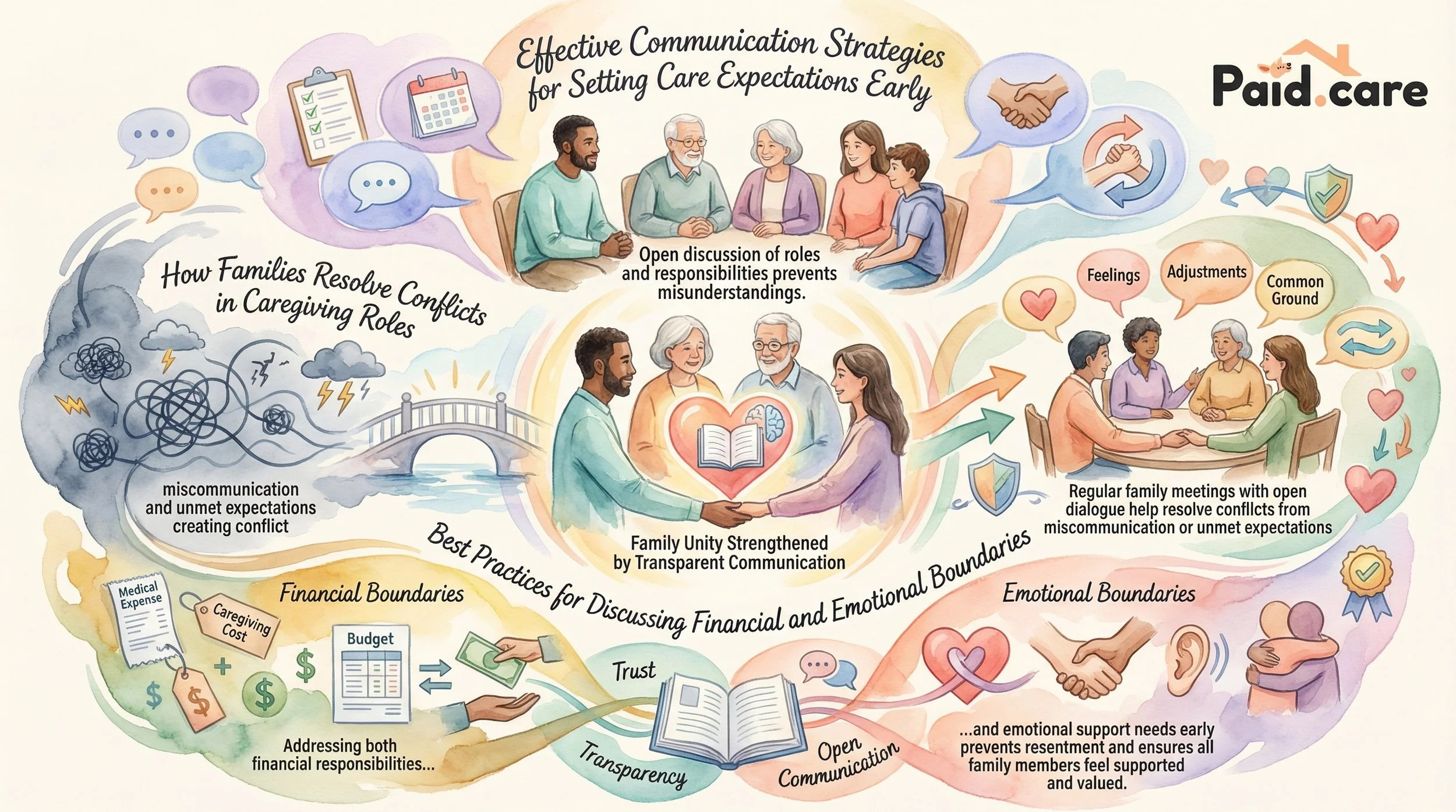
Effective communication is key to establishing care expectations among family members. By discussing roles and responsibilities openly, families can prevent misunderstandings and foster a collaborative caregiving environment.
How Can Families Resolve Conflicts in Caregiving Roles?
Conflicts in caregiving roles often arise from miscommunication or unmet expectations. Families can resolve these conflicts by holding regular meetings to discuss caregiving dynamics and address any concerns. Encouraging open dialogue allows family members to express their feelings and negotiate adjustments to the caregiving plan as needed. This proactive approach can significantly reduce tension and improve overall family relationships.
What Are Best Practices for Discussing Financial and Emotional Boundaries?
When discussing financial and emotional boundaries, families should prioritize transparency and honesty. It is essential to address financial responsibilities, such as who will cover medical expenses or caregiving costs, and to discuss emotional support needs. Establishing these boundaries early on can help prevent resentment and ensure that all family members feel supported and valued in their roles.
Where Can Caregivers Find Sample Prenup Templates and Guidance?
Caregivers seeking to create a caregiver prenup can find various resources and templates online. These templates can serve as a starting point for families to customize their agreements based on their unique situations.
What Should Be Included in a Caregiver Prenup Template?
A comprehensive caregiver prenup template should include essential elements such as the roles and responsibilities of each caregiver, financial arrangements, and provisions for conflict resolution. Additionally, it should outline the process for making changes to the agreement as family dynamics evolve. By including these components, families can create a robust framework that supports effective caregiving.
How Can Caregivers Customize Agreements for Their Unique Situations?
Customizing caregiver agreements is crucial to addressing the specific needs of each family. Caregivers should consider factors such as the individual's health condition, family dynamics, and available resources when tailoring their agreements. Seeking legal advice can also help ensure that the agreement complies with state laws and adequately protects all parties involved.
FAQs
-
A Caregiver Prenup, formally known as a Family Care Agreement, is a proactive contract between a caregiver, the care recipient, and often other family members. It is designed to outline expectations, duties, and financial arrangements before a health crisis occurs. Think of it as a roadmap that prevents "I thought you were doing that" moments from turning into family feuds.
-
Without a clear agreement, caregiving often defaults to the "path of least resistance," where one person (usually the one living closest) takes on everything until they burn out. Setting boundaries early prevents the "Martyrdom Trap." It ensures the caregiver has scheduled "off-duty" time and that the care recipient knows exactly what kind of support to expect, preserving the relationship rather than straining it.
-
A solid agreement should cover four main pillars: Financials (is the caregiver being paid or reimbursed for expenses?), Logistics (who handles doctor visits vs. grocery shopping?), Respite (who steps in when the primary caregiver needs a vacation?), and The Exit Strategy (at what point does home care become insufficient, and what is the plan for a facility?).
-
Frame the discussion as an act of love and preservation, not a business deal. You might say, "I love you and want to provide the best care possible, which is why I want us to put a plan in writing while we can both think clearly." It’s about ensuring that the caregiving role doesn't swallow the "child" or "spouse" role, allowing you to remain a family first and a care provider second.

