
Caregiving Nomad: How to Navigate Medicaid Caregiver Rules and Cross State Caregiving Laws
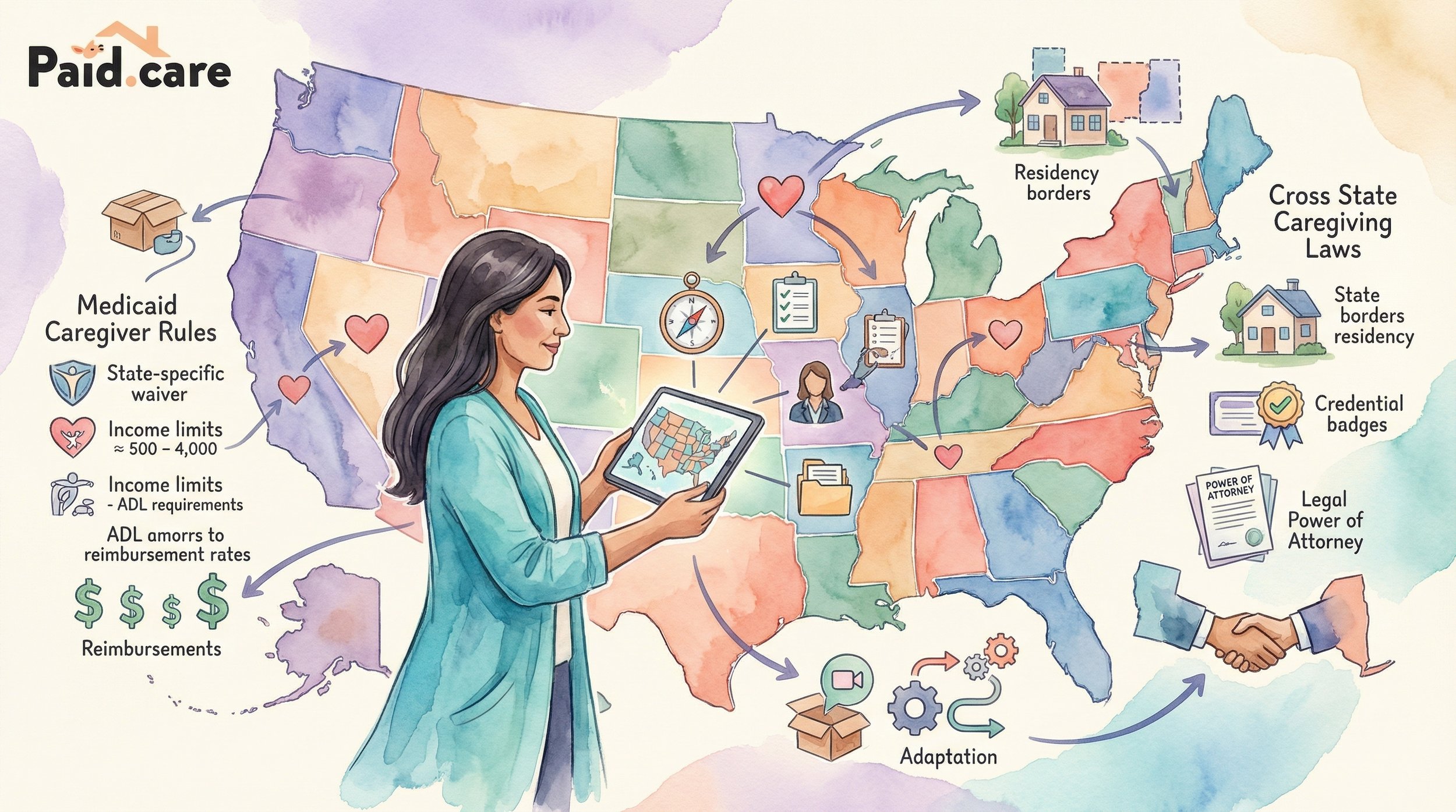
Navigating the complexities of caregiving across state lines can be a daunting task for many families. The "Caregiving Nomad" concept refers to individuals who provide care to loved ones while living in different states, often facing unique legal and financial challenges. This article will explore the legal requirements for unpaid caregivers, the variations in Medicaid waiver eligibility across states, and practical steps caregivers can take to ensure they provide effective support. Understanding these aspects is crucial for caregivers who wish to maintain compliance with state laws while delivering the best care possible. We will delve into the legal frameworks, Medicaid programs, and logistical considerations that impact caregivers in Indiana, Michigan, and Illinois.
What Are the Legal Requirements for Unpaid Caregivers Across State Lines?
Unpaid caregivers often face a complex web of legal requirements when providing care across state lines. These regulations can vary significantly from one state to another, impacting the responsibilities and rights of caregivers. Understanding these legal frameworks is essential for ensuring compliance and protecting both the caregiver and the care recipient.
Which Interstate Caregiving Regulations Affect Family Caregivers?
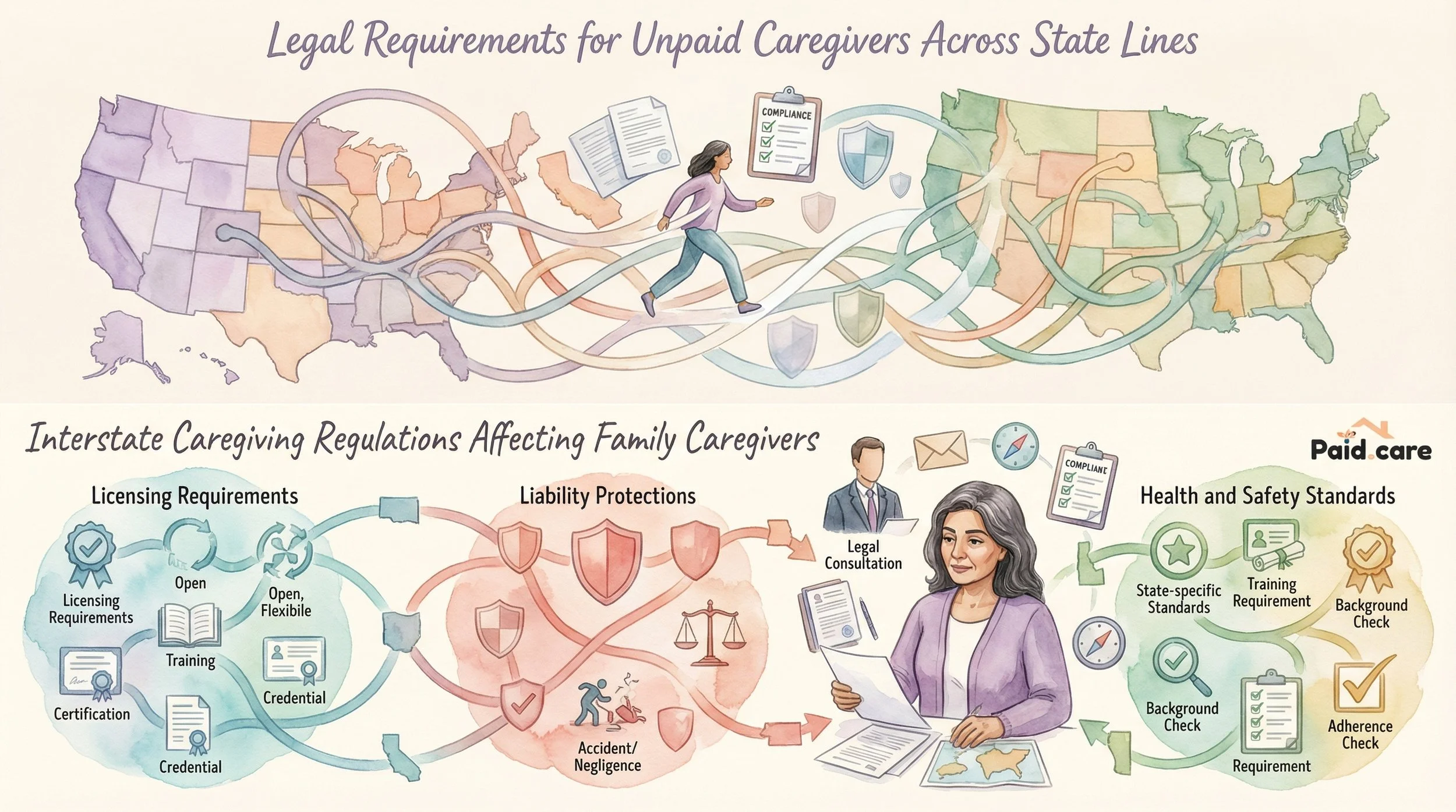
Family caregivers must navigate various interstate caregiving regulations that can affect their ability to provide care. Key regulations include:
Licensing Requirements: Some states may have specific licensing or certification requirements based on the type of care provided, while others do not impose such regulations.
Liability Protections: Different states offer varying levels of liability protection for unpaid caregivers, which can impact their legal exposure in case of accidents or negligence claims.
Health and Safety Standards: Caregivers must adhere to state-specific health and safety standards, which can include training requirements and background checks.
These regulations highlight the importance of understanding the specific laws in each state where caregiving occurs.
How Do State Laws Impact Caregiver Eligibility and Responsibilities?
State laws significantly influence caregiver eligibility and responsibilities. Each state has its own criteria for determining who qualifies as a caregiver and what responsibilities they must fulfill. For instance, some states may require caregivers to complete training programs, while others may not have such requirements. Additionally, the scope of responsibilities can vary, with some states mandating specific tasks that caregivers must perform, such as administering medication or managing finances. Understanding these differences is crucial for caregivers to ensure they meet their legal obligations while providing care.
How Does Medicaid Waiver Eligibility Vary in Indiana, Michigan, and Illinois?
Medicaid waivers are essential for many caregivers, as they can provide financial support and resources for care. However, eligibility for these waivers can differ significantly between states, impacting the options available to caregivers and their loved ones.
What Are the Medicaid Waiver Programs Available in Each State?
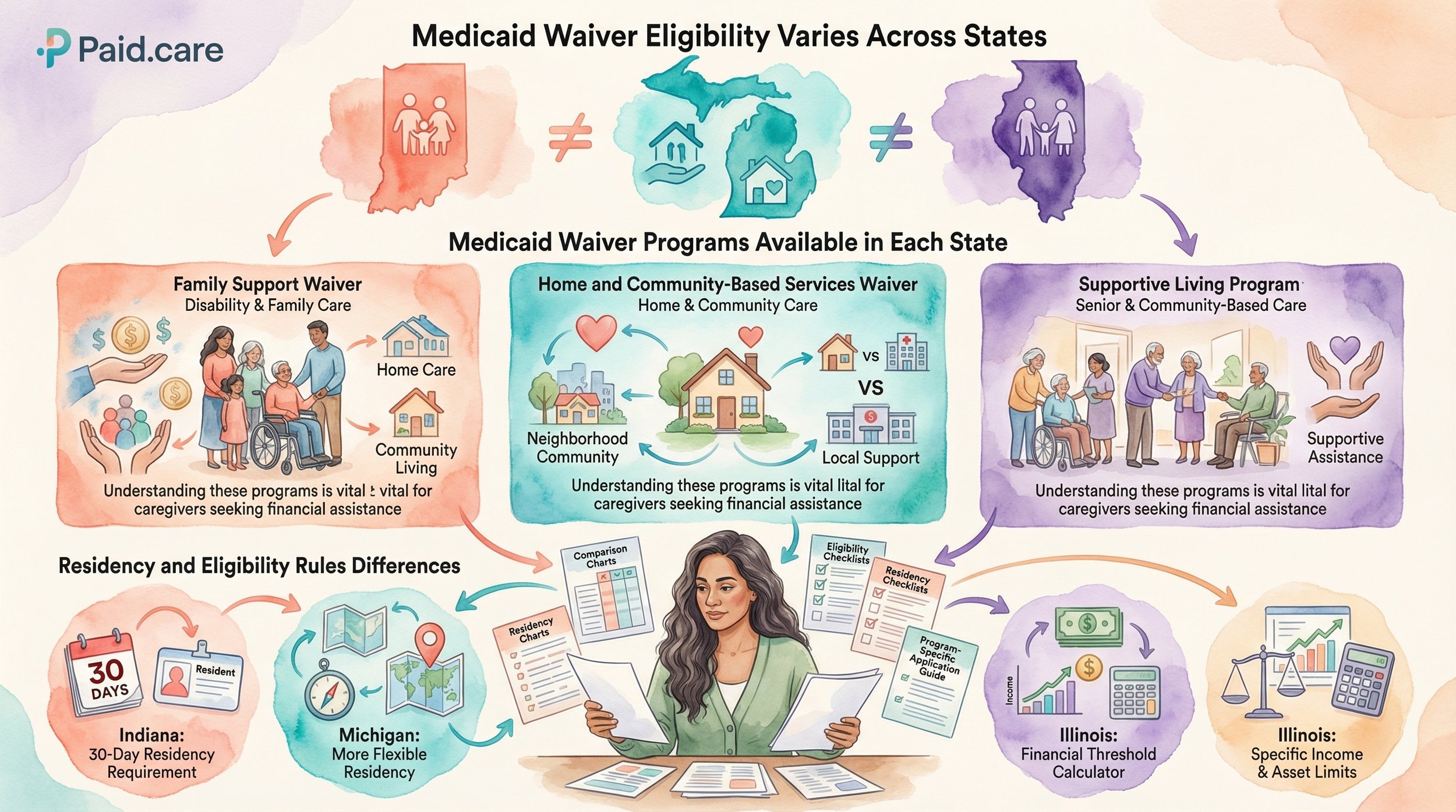
Each state offers various Medicaid waiver programs designed to support caregivers and care recipients. In Indiana, the Family Support Waiver provides funding for services that help families care for individuals with disabilities. Michigan offers the Home and Community-Based Services Waiver, which supports individuals in receiving care at home rather than in institutional settings. Illinois has the Supportive Living Program, which assists seniors in accessing community-based care. Understanding these programs is vital for caregivers seeking financial assistance.
How Do Residency and Eligibility Rules Differ Across These States?
Residency and eligibility rules for Medicaid waivers can vary widely among Indiana, Michigan, and Illinois. For example, Indiana typically requires individuals to be residents for at least 30 days before applying for Medicaid benefits, while Michigan has a more flexible residency requirement. Illinois has specific income and asset limits that can affect eligibility. These differences can significantly impact caregivers' ability to access necessary resources and support.
What Practical Steps Can Caregiving Nomads Take to Provide Care Across States?
Caregiving across state lines presents unique logistical challenges that require careful planning and organization. Here are some practical steps caregivers can take to ensure they provide effective care.
How to Manage Caregiving Logistics When Living in a Different State?
Managing caregiving logistics involves several key considerations:
Establish Communication: Maintain open lines of communication with healthcare providers, family members, and the care recipient to coordinate care effectively.
Utilize Technology: Leverage technology, such as telehealth services and caregiving apps, to stay connected and manage care from a distance.
Plan Visits: Schedule regular visits to assess the care recipient's needs and make necessary adjustments to the care plan.
These strategies can help caregivers navigate the complexities of providing care from afar.
What Support and Reimbursement Options Exist for Unpaid Caregivers?
Unpaid caregivers may be eligible for various support and reimbursement options, including:
State Programs: Many states offer financial assistance programs for unpaid caregivers, which can help cover expenses related to caregiving.
Tax Deductions: Caregivers may qualify for tax deductions related to caregiving expenses, providing some financial relief.
Community Resources: Local organizations and support groups can offer resources, training, and respite care options to assist caregivers.
Exploring these options can provide valuable support for caregivers managing the demands of caregiving across state lines.
FAQs
-
No. Medicaid is a state-specific program, and there is no "portability" between states. You cannot be enrolled in two states at once, so you must officially close your case in your current state before applying in the new one. To avoid a lapse in care, time your move for the end of the month: cancel your old coverage on the 30th and file your new application on the 1st.
-
It depends on the destination state's specific "Self-Directed" or HCBS (Home and Community-Based Services) waiver rules. As of 2026, while 44 states allow payments to legal relatives, the eligibility criteria and hourly rates vary significantly. Your loved one will have to undergo a new "Level of Care" assessment in the new state, and you may be required to pass a new background check or state-specific certification before payments can resume.
-
The best safety net is "Retroactive Medicaid." Most states allow you to apply for coverage that reaches back up to three months from your application date, which can pay for medical bills incurred while your new case was pending. However, beware of residency traps: some states require a 30-day physical presence or nursing home stay before you can even apply for long-term care benefits.
-
In 2026, the federal government (via H.R. 1) introduced stricter "Concurrent Enrollment" monitoring. A national database now makes it easier for states to flag individuals who haven't properly closed their old cases, which can lead to immediate benefit suspension. Additionally, new federal work requirements for certain Medicaid groups may apply to you as a caregiver; ensure your caregiving hours are properly documented to meet these "community engagement" standards if required by your new state.

