
Medicaid Caregiver Program Guide: How Family Caregivers Can Access Support and Benefits

Navigating the complexities of caregiving can be overwhelming, especially for family members who take on the role of primary caregivers. This guide aims to clarify the Medicaid caregiver programs available, detailing how family caregivers can access essential support and benefits. Understanding these programs is crucial for caregivers in states like Indiana, Michigan, and Illinois, where specific eligibility criteria and services vary. Many caregivers face challenges such as financial strain and lack of resources, but Medicaid programs can provide significant relief. This article will explore the eligibility criteria for Medicaid caregiver programs, the application process, available financial benefits, and additional resources for caregivers.
What Are Medicaid Caregiver Programs and Who Qualifies?
Medicaid caregiver programs are designed to support family members who provide care to individuals with disabilities or chronic illnesses. These programs offer various services and financial assistance to help alleviate the burden on unpaid caregivers. Eligibility for these programs typically depends on the care recipient's needs and the state in which they reside, rather than on the caregiver's income in most cases. Understanding these criteria is essential for caregivers seeking support.
Understanding Eligibility Criteria for Family Caregivers in Indiana, Michigan, and Illinois
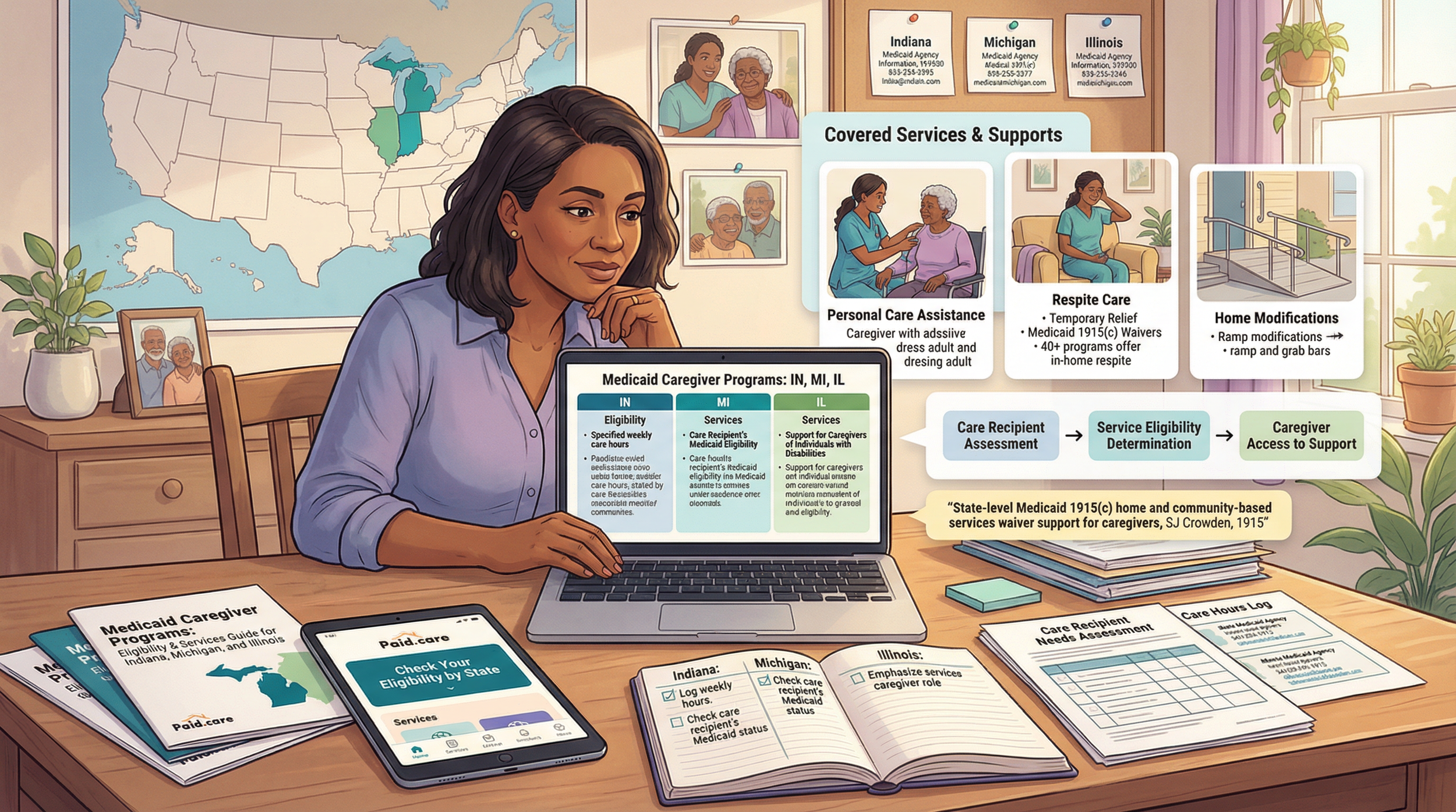
Eligibility criteria for Medicaid caregiver programs can vary significantly by state. In general, family caregivers must meet specific requirements related to the care recipient's condition and needs to qualify for assistance. For instance, in Indiana, caregivers may need to demonstrate that they provide a specified number of hours of care per week. Michigan has similar requirements but focuses primarily on the care recipient's eligibility for Medicaid services rather than the caregiver's income. Illinois offers programs that support caregivers of individuals with disabilities, emphasizing the importance of the caregiver's role in the care process. Resources are available for caregivers to check their eligibility, including state Medicaid agency websites and local support organizations.
Which Services and Supports Do Medicaid Waiver Programs Cover?
Medicaid Waiver programs provide a range of services and supports tailored to the needs of caregivers and care recipients. These services may include personal care assistance, respite care, and home modifications to improve accessibility. Understanding the types of services covered is crucial for caregivers to maximize the benefits available to them. Caregivers can access these services through their state's Medicaid program, which often requires an assessment of the care recipient's needs to determine eligibility for specific services.
Further research highlights the specific role of Medicaid 1915(c) waivers in providing essential respite care services for caregivers.
Medicaid 1915(c) Waivers for Caregiver Respite These respite care services are for care recipients unable to care for themselves when an informal caregiver is temporarily unavailable. States offer in-home respite care through two separate waiver programs, making 40 total waiver programs that offer in-home respite care. State-level Medicaid 1915 (c) home and community-based services waiver support for caregivers, SJ Crowder, 1915
How to Apply for State Medicaid Waiver Programs as a Family Caregiver
Applying for Medicaid Waiver programs can be a complex process, but understanding the steps involved can simplify it for family caregivers. Each state has its own application procedures, which typically include submitting documentation and undergoing an assessment.
Step-by-Step Application Process for Indiana Medicaid Waiver Programs
In Indiana, the application process for Medicaid Waiver programs involves several key steps. First, caregivers must complete an application form, which can often be found on the state Medicaid website. Next, an assessment is conducted to evaluate the care recipient's needs. This assessment helps determine the level of care required and the services that may be available. Finally, caregivers should follow up on their application status and provide any additional information requested by the state.
Required Documentation and Tips for Michigan and Illinois Applications
When applying for Medicaid Waiver programs in Michigan and Illinois, caregivers must gather specific documentation. This may include proof of the care recipient's eligibility for Medicaid, medical records detailing their condition, and evidence of the caregiver's relationship to the recipient. To ensure a smooth application process, caregivers should keep copies of all submitted documents and be prepared to answer questions during the assessment. It is also beneficial to reach out to local support organizations for guidance and assistance throughout the application process.
What Financial Benefits and Support Services Are Available to Unpaid Caregivers?
Unpaid caregivers often face financial challenges while providing essential care to their loved ones. Fortunately, various financial benefits and support services are available to help alleviate some of these burdens. Understanding these options can empower caregivers to seek the assistance they need.
Overview of Disability Caregiver Benefits and Elderly Care Assistance
Disability caregiver benefits may include financial compensation for caregivers who provide substantial care to individuals with disabilities under certain state programs or Medicaid Waivers, but these benefits vary widely by state and are not guaranteed under all Medicaid programs. These benefits can help cover expenses related to caregiving, such as medical supplies and transportation costs. Additionally, elderly care assistance programs may offer financial support for caregivers who assist aging family members, helping to ensure that they receive the necessary care without placing undue financial strain on the caregiver.
Research confirms that Medicaid's Managed Long-Term Services and Supports (MLTSS) can offer crucial benefits like respite, transportation, and even payment for family caregivers.
Medicaid MLTSS Benefits: Respite, Transport, & Paid Family Care Participants identified a variety of specific supports in MLTSS including respite, transportation, being able to pay family members for care, and care coordination. These supports family caregivers identified as supporting them in their caregiving role. Family caregivers of individuals with intellectual and developmental disabilities: experiences with Medicaid managed care long‐term services and supports in the …, HJ Williamson, 2016

Accessing Training, Respite Care, and Other Support Resources
Training programs can equip caregivers with essential skills and knowledge to provide better care, while respite care offers temporary relief, allowing caregivers to take breaks and recharge. Accessing these resources can significantly improve the well-being of both caregivers and care recipients. Caregivers should explore local organizations and state programs that offer training and respite services tailored to their needs.
Indeed, state Medicaid agencies are already recognized for their role in providing training, information, and referral services to family caregivers, though more targeted support could further enhance these efforts.
Medicaid Support & Training for Family Caregivers , state Medicaid agencies already support family caregivers through training, information, and referral services. However, family caregivers could benefit from additional supports, especially those targeted to meet caregivers’ specific needs and preferences. Medicaid supports for family caregivers, 2020
Where Can Caregivers Find Additional Help and Resources in Their State?
Finding additional help and resources is crucial for caregivers seeking support. Various organizations and agencies provide valuable information and assistance tailored to caregivers' needs.
Local Aging and Disability Resource Centers in Indiana, Michigan, and Illinois
Local Aging and Disability Resource Centers (ADRCs) serve as a vital resource for caregivers in Indiana, Michigan, and Illinois. These centers offer information on available services, eligibility requirements, and application processes for Medicaid programs. Caregivers can contact their local ADRC to access personalized assistance and guidance tailored to their specific situation.
Nonprofit Family Caregiver Support Organizations and Online Tools
Numerous nonprofit organizations focus on supporting family caregivers. These organizations often provide resources such as support groups, educational materials, and online tools to help caregivers navigate their responsibilities. Engaging with these organizations can provide caregivers with a sense of community and access to valuable information that can enhance their caregiving experience.
FAQs
-
“Medicaid caregiver program” is a broad term that usually refers to state Medicaid long-term care supports, especially home- and community-based services (HCBS) and self-directed care options. Medicaid confirms that HCBS lets eligible beneficiaries receive services at home or in the community, and self-directed services can give participants more control over who provides care. Whether a family caregiver can be paid depends on the specific state program and rules.
-
A strong first step is to contact your state Medicaid agency, because Medicaid.gov specifically directs people to their state agency to apply, check eligibility, and get application help. In many cases, families can also begin through the Marketplace or apply directly through the state Medicaid agency, depending on the state’s process.
-
Support varies by state and program, but Medicaid HCBS waivers may include services such as personal care, homemaker services, home health aide support, case management/service coordination, adult day health services, and respite care. Medicaid also notes that states can tailor HCBS waiver programs to target certain populations and service needs, so covered supports are not the same everywhere.
-
Eligibility commonly depends on the care recipient’s medical need/level of care, financial eligibility, and the specific Medicaid authority or waiver available in that state. Medicaid explains that HCBS waivers are designed within broad federal guidelines but states can set additional targeting criteria and limit enrollment in certain programs, which is one reason availability and wait times can differ.

