
Florida Family Caregiver Requirements: Eligibility, Training, and Support for Medicaid Waiver Programs

Navigating the landscape of family caregiving in Florida can be complex, especially when it comes to understanding the requirements for eligibility, training, and support under Medicaid Waiver programs. This article aims to clarify these aspects, providing essential information for family caregivers who play a crucial role in supporting their loved ones. Readers will learn about the specific eligibility criteria for family caregivers, the registration and background check processes, training requirements, and available financial assistance and support services. By addressing these key areas, we aim to empower caregivers with the knowledge they need to effectively navigate the system and access the resources available to them.
What Are the Eligibility Criteria for Florida Family Caregivers?
Eligibility criteria for family caregivers in Florida are essential for determining who can provide care under Medicaid programs. Understanding these criteria helps ensure that caregivers meet the necessary requirements to support their loved ones effectively. The Florida Medicaid program outlines specific qualifications that family caregivers must meet to be eligible for assistance.
Who Qualifies as a Family Caregiver Under Florida Medicaid?
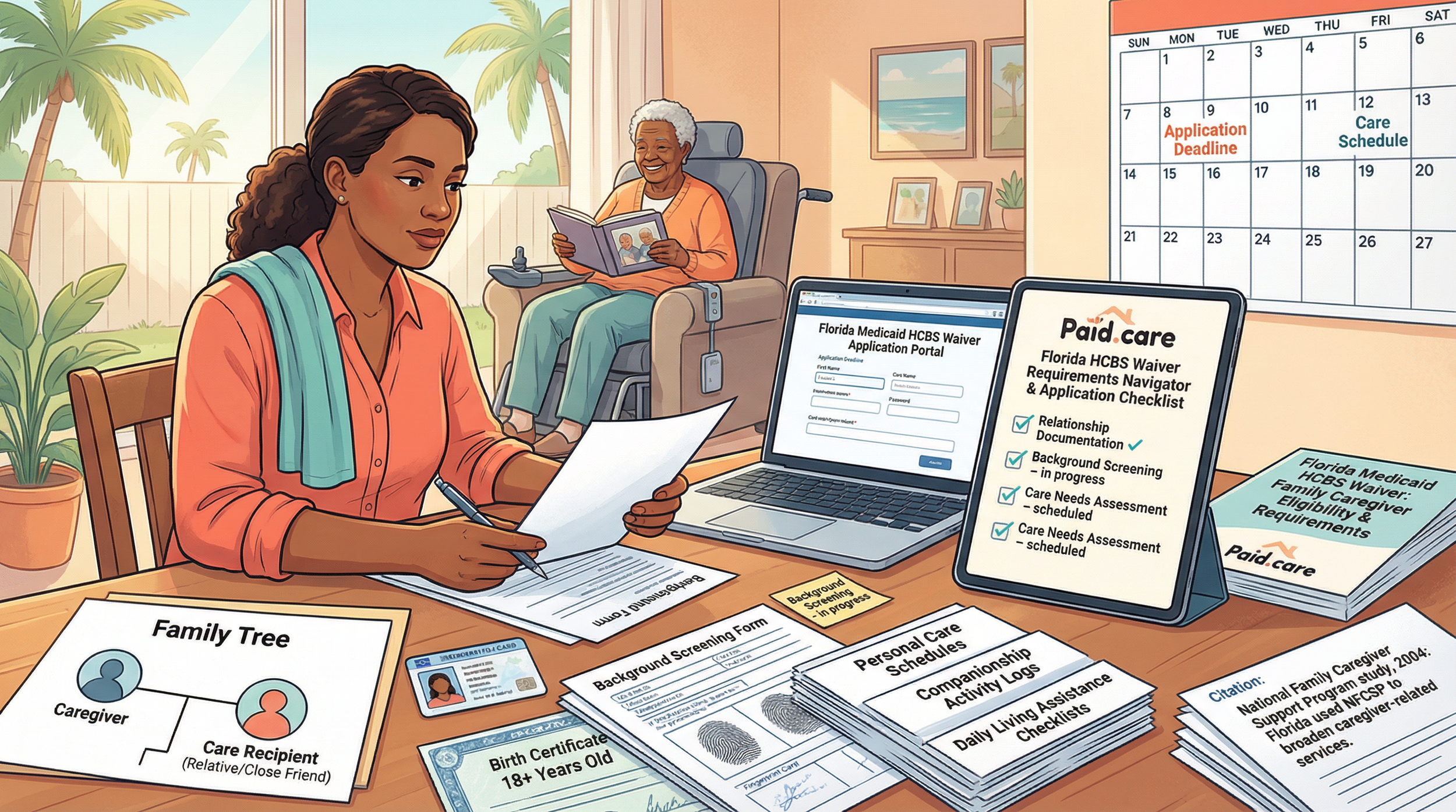
A family caregiver under Florida Medicaid is typically defined as a relative or close friend who provides care to an individual with a medical condition or disability. To qualify, caregivers must demonstrate a commitment to providing ongoing support and assistance, which may include personal care, companionship, and help with daily activities. Additionally, caregivers must be at least 18 years old and must undergo a background screening to ensure the safety and well-being of the care recipient.
What Are the Medicaid Waiver Program Requirements for Caregivers?
The Medicaid Waiver programs in Florida have specific requirements for caregivers to participate. These programs are designed to provide support to individuals who require assistance but wish to remain in their homes rather than enter institutional care. Caregivers must complete an application process, which includes providing documentation of their relationship to the care recipient and demonstrating their ability to meet the care needs of the individual. This process ensures that caregivers are adequately prepared to provide the necessary support.
Studies further elaborate on how Florida's Medicaid Home and Community-Based Services (HCBS) waiver programs are structured to offer crucial support to family caregivers.
Florida Medicaid HCBS Waiver Support for Family Caregivers This article reports findings from a study of 10 states in providing support services to family or informal caregivers of older persons. We also examined states' Medicaid HCBS-waiver programs to determine the extent to which they served family caregivers. For example, Florida and Maine used the NFCSP to broaden caregiver-related services. A study of 10 states since passage of the National Family Caregiver Support Program: Policies, perceptions, and program development, 2004
How to Complete the Caregiver Registration and Background Check Process in Florida?
Completing the caregiver registration and background check process in Florida is a critical step for those looking to provide care under Medicaid programs. This process ensures that caregivers are qualified and suitable for the responsibilities they will undertake.
What Steps Are Involved in Registering as a Family Caregiver?
Registering as a family caregiver involves several key steps. First, caregivers must fill out an application form that includes personal information and details about the care recipient. Next, they must submit to a background screening, which typically includes a review of criminal history and other relevant checks. Once the application is approved, caregivers will receive confirmation of their registration, allowing them to begin providing care.
What Are the Legal and Background Check Requirements for Caregivers?
Legal requirements for caregivers in Florida include passing a background screening to ensure the safety of the individuals they will be caring for. This screening involves a review through the Florida Department of Law Enforcement and may include a fingerprint-based criminal background check. Caregivers must also comply with any additional state regulations regarding caregiving, which may include training or certification requirements.
What Are the Training and Certification Requirements for Florida Family Caregivers?
Training and certification are vital components of being a family caregiver in Florida. These requirements ensure that caregivers are equipped with the necessary skills and knowledge to provide effective care.
How Many Training Hours Are Required for Caregivers?
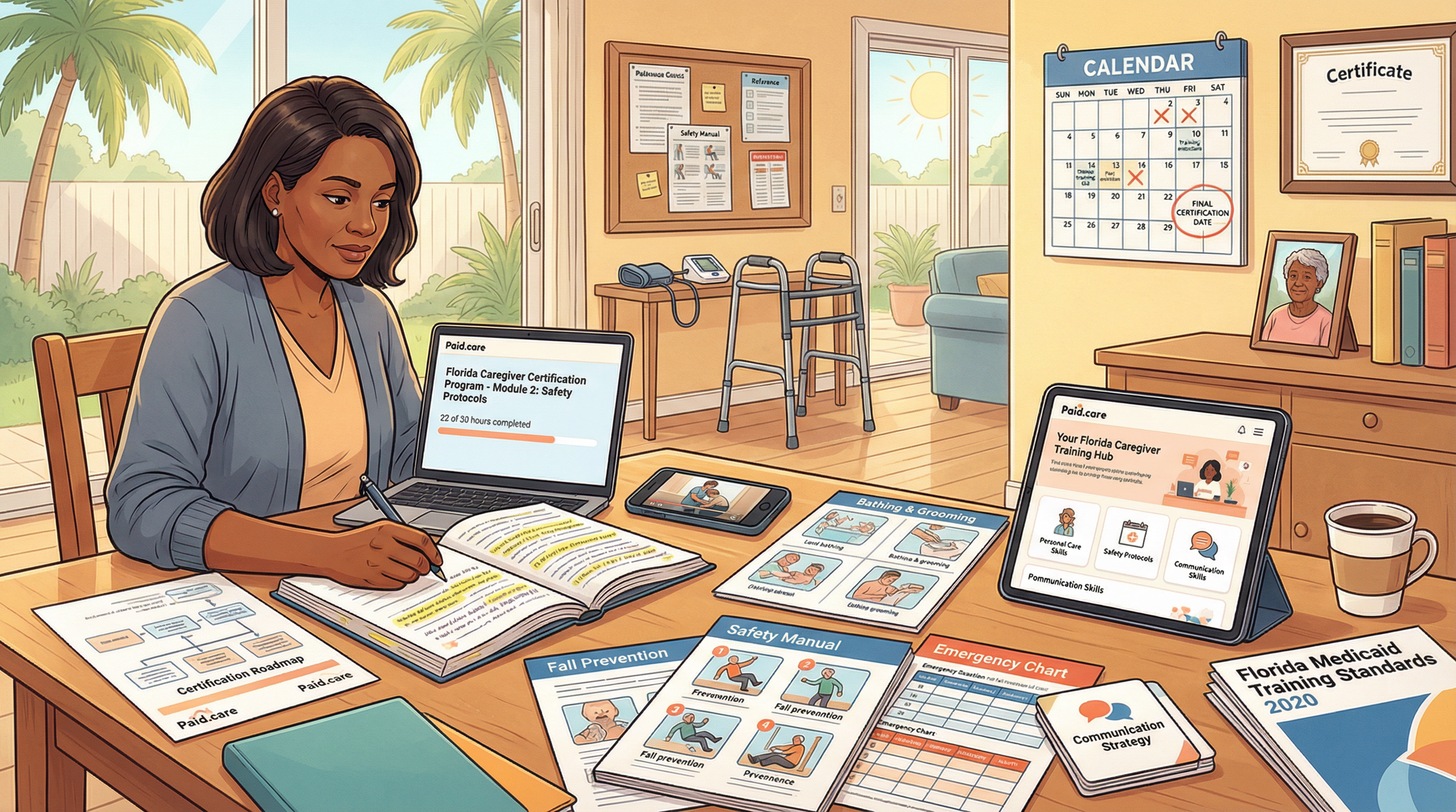
In Florida, caregivers participating in Medicaid waiver programs are generally required to complete a minimum of 30 hours of training before they can begin providing care. This training covers essential topics such as personal care techniques, safety protocols, and communication skills. Completing this training not only prepares caregivers for their roles but also enhances the quality of care provided to recipients.
What Topics Are Covered in Florida Caregiver Training Programs?
Florida caregiver training programs cover a variety of important topics, including:
Personal Care Skills: Techniques for assisting with daily living activities such as bathing, dressing, and grooming.
Safety Protocols: Understanding how to create a safe environment for care recipients, including fall prevention and emergency response.
Communication Skills: Effective communication strategies for interacting with care recipients and their families.
These training topics are designed to equip caregivers with the knowledge and skills necessary to provide high-quality care.
Beyond the curriculum, understanding the broader context of caregiver support reveals how Florida Medicaid addresses training and assistance services.
Florida Medicaid Caregiver Training & Support Costs This report explores issues in family caregiver support across states, including how states define family caregivers, the types of services they provide, and how they pay for those services. Florida Medicaid does not factor the cost of providing this training into MCO payment. • Caregiver assistance services, are defined as, “Services that provide assistance to a caregiver in the form of personal care, homemaker, chore, or respite services.” Medicaid supports for family caregivers, 2020
What Financial Assistance and Support Services Are Available to Florida Family Caregivers?
Financial assistance and support services are crucial for family caregivers, as they often face significant challenges in balancing caregiving responsibilities with their personal and financial needs. Understanding the available resources can help alleviate some of these burdens.
Are Unpaid Family Caregivers Eligible for Benefits or Payments?
Unpaid family caregivers may be eligible for various benefits or payments through state Medicaid waiver programs such as the Consumer-Directed Care Plus (CDC+) and other home and community-based services (HCBS) waivers. These benefits can include financial assistance for caregiving expenses and respite care services. Eligibility for these benefits depends on the specific waiver program and the care recipient's needs, making it essential for caregivers to explore their options.
Further research highlights the specific mechanisms and state-level innovations in compensating family caregivers through Medicaid consumer-directed programs.
Florida Medicaid: Paying Family Caregivers & Eligibility States have the opportunity to use Medicaid to support enrollees with long-term services and supports (LTSS) needs, including paying family caregivers. This report explores how Connecticut, Florida, and Virginia have implemented policies to help Medicaid enrollees (and their family caregivers) who choose to self-direct their services. It also examines how states are part of the screening process for level-of-care eligibility for these programs. Paying family caregivers through medicaid consumer directed programs: State opportunities and innovations, 2021
What Respite and Support Services Does Florida Offer to Caregivers?
Florida offers a range of respite and support services for caregivers, including:
Respite Care: Temporary relief services that allow caregivers to take a break while ensuring their loved ones receive care.
Support Groups: Opportunities for caregivers to connect with others facing similar challenges, providing emotional support and shared resources.
Training Programs: Ongoing education and training opportunities to enhance caregiving skills and knowledge.
These services are designed to support caregivers in their roles and help them maintain their well-being while providing care.
FAQs
-
In Florida, this usually refers to the rules a family must meet for a loved one to receive long-term care support through Medicaid programs, plus any requirements for the caregiver role. That can include eligibility for the care recipient, the type of services approved, whether a family member can provide care, and what documentation or assessments are needed. Because Florida programs can be administered through managed care plans and state guidelines, families should always confirm the exact requirements for their situation.
-
Eligibility typically depends on a combination of factors, such as income, assets, medical need, level of care required, and whether the person qualifies for long-term care services at home instead of institutional care. Families may also need to complete assessments and enrollment steps before services are approved. Since Florida eligibility pathways can be complex, it is important to check current Medicaid and long-term care program rules rather than assuming someone qualifies automatically.
-
In some cases, family members may be able to provide care under certain Florida Medicaid-related programs or service arrangements, but it depends on the specific program rules, the care plan, and who is serving as the caregiver. Some relationships may be allowed while others may have restrictions. Families should verify whether the caregiver must be enrolled, approved, or connected to a specific provider or program before expecting compensation.
-
Training requirements can vary based on the type of care being provided and the program or provider involved. Some family caregivers may receive orientation, care plan instructions, or task-specific guidance, especially when helping with personal care or more complex needs. Even when formal training is not always required, families should still ask for clear instruction from the care team so care is safe, consistent, and properly documented.

