
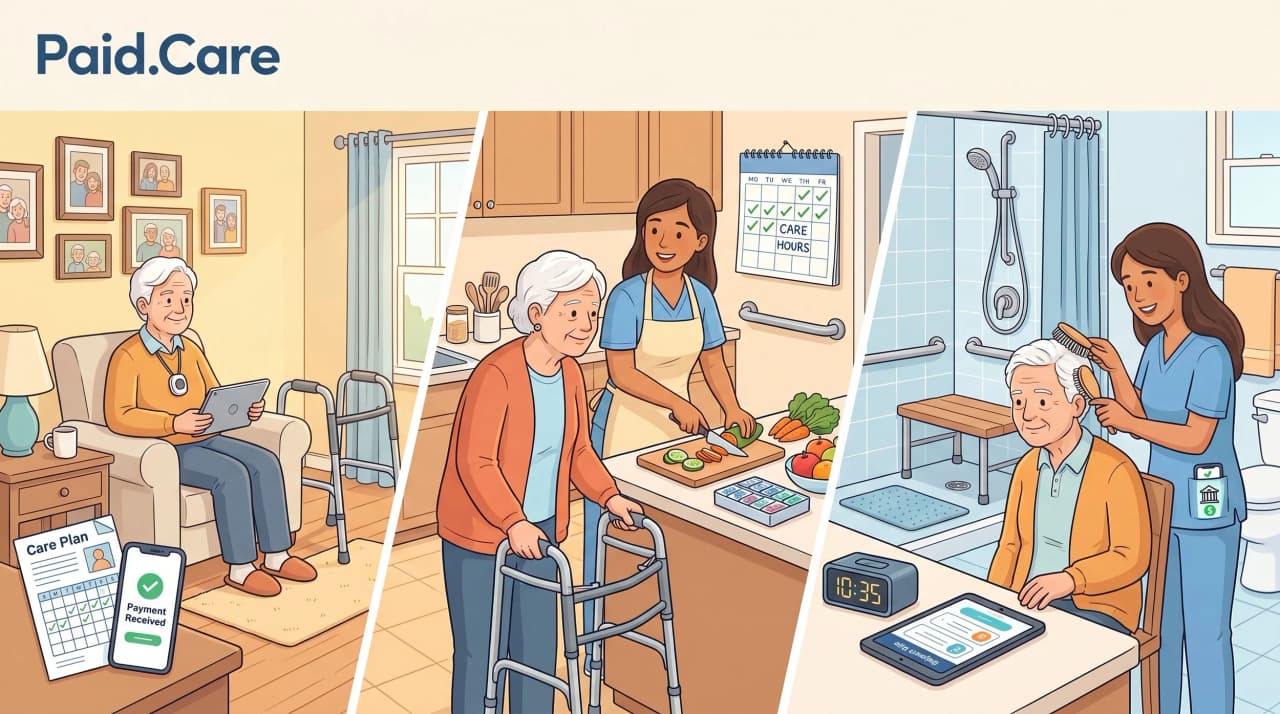
Introduction: What “In-Home Care for Older Adults” Really Means
Aging in place means staying in the comfort of your own home for as long as possible as you get older, rather than moving into a retirement or long-term care facility. For many families across the Midwest, this isn’t just a preference—it’s the goal. About 77% of adults aged 50 and older say they want to remain at home as they age, and the right support makes that possible.
In-home care for older adults covers a wide spectrum. It can be medical—like home health services ordered by a doctor—or non-medical, such as help with bathing, meals, and light housekeeping. What surprises many families is that in numerous states, relatives and friends can get paid through Medicaid and similar programs to provide this care.
Paid.care currently helps family caregivers in Indiana , Michigan , and Illinois qualify, train, and receive weekly pay for in home care they’re already providing. This article walks through the types of services available, safety considerations, funding options including Medicaid waivers and veteran programs , and how to decide what works for your family.
What Is In-Home Care for Older Adults?
In-home care means support provided in the older adult’s own home, ranging from a few hours a week to around-the-clock live-in help. In-home care provides dedicated, one-on-one assistance tailored specifically to the individual’s habits and preferences—something institutional settings simply cannot match.
There are two main categories to understand. Non-medical home care includes help with meals, bathing, dressing, companionship, and light housekeeping. Home health care involves skilled nursing, wound care, injections, and physical therapy ordered by a physician.
Consider two examples: A 78-year-old in Detroit might need help with bathing three times weekly and diabetes-friendly meal preparation. Meanwhile, an 82-year-old in Indianapolis recovering from hip replacement surgery may need a physical therapist visiting at home for six weeks.
Care can come from family caregivers (relatives or close friends), hired aides through agencies, or independent caregivers the family employs directly. Many families now combine informal care with professional support and technology like medical alert systems and telehealth visits.
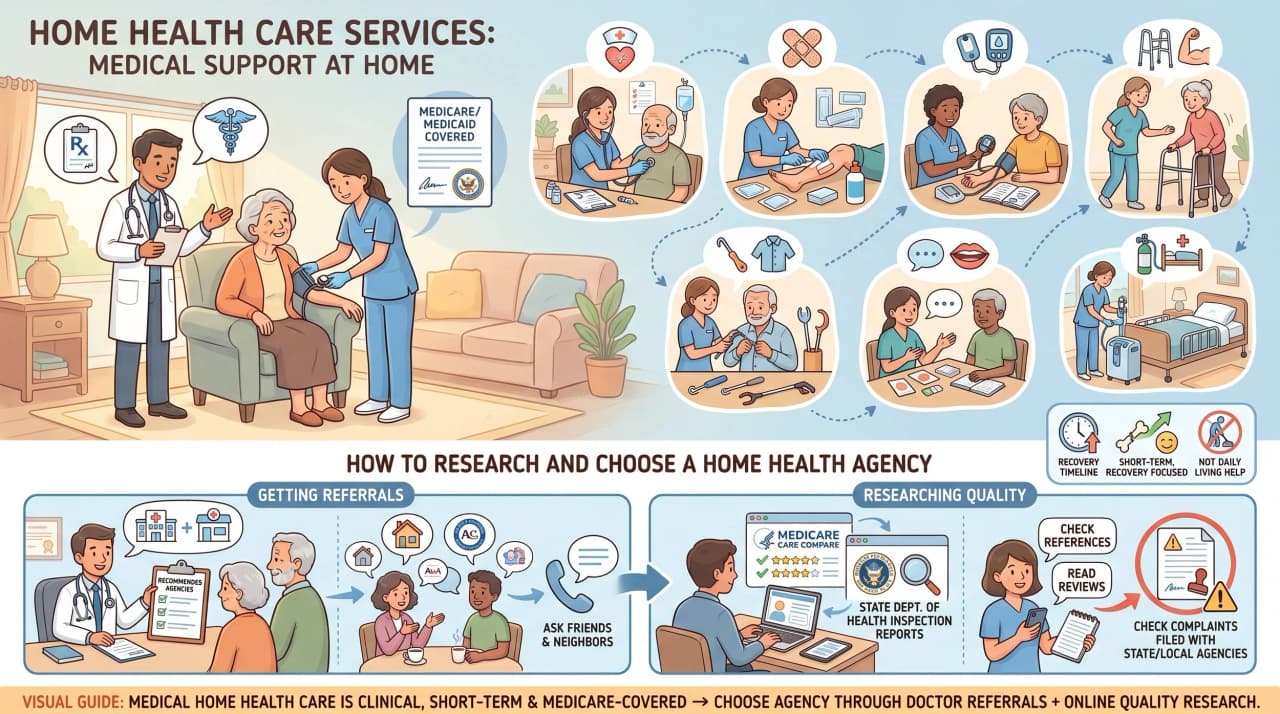
Home Health Care Services: Medical Support at Home
Home health care is clinical care prescribed by a physician. It’s often covered by Medicare or Medicaid when eligibility criteria are met. Home health care services may include in-home nursing care to help a person recover from surgery, an accident, or an illness, and can also assist with managing chronic conditions such as diabetes.
Common services include:
- Skilled nursing visits (monitoring congestive heart failure, administering IV medications)
- Wound care after surgery
- Blood pressure and diabetes management with glucometer training
- Physical therapy for fall recovery or post-surgery rehab
- Occupational therapy to regain dressing and self-care skills
- Speech therapy for post-stroke recovery
- Setup and training for medical equipment like oxygen, walkers, or hospital beds
Typical visit patterns vary. A home health aide or nurse might visit twice weekly for 60 minutes, while a physical therapist may come 2-3 times weekly for a month after a fall. Doctors, hospital discharge planners, and local health systems can refer families to Medicare-certified agencies. Use Medicare’s Care Compare website to check quality ratings.
Keep in mind: home health is time-limited and focused on recovery or stabilization. It usually does not provide coverage for ongoing help with meals, bathing, or housekeeping.
How to Research and Choose a Home Health Agency
Start by asking the older adult’s primary care doctor or hospital discharge nurse for 2-3 recommended agencies in your area—whether that’s Lansing, Fort Wayne, or Peoria. To find a home care service, ask your doctor or other health care professional about good options in your area, and consider seeking referrals from friends or neighbors.
Use online tools like Medicare Care Compare and state Department of Health websites to review inspection reports, quality metrics, and complaint history. When hiring a home care provider, it’s important to check references and any complaints filed against a company with state and local agencies that regulate health services.
Questions to ask agencies:
- What’s your response time for urgent needs?
- Do you have round-the-clock on-call support?
- How do you coordinate with physicians?
- Can you accommodate language or cultural needs?
- Will you bill Medicare or Medicaid directly?
Full-service home care agencies usually come at a higher cost but provide prescreened applicants who have already undergone background checks, which can offer peace of mind when hiring.
Non-Medical In-Home Support: Daily Activities and Household Tasks
Most older adults first need help with everyday activities, not nursing tasks. Home care services can provide assistance with activities of daily living, such as bathing, dressing, grooming, and meal preparation, which are essential for older adults living at home. These supports help delay or avoid moving to an assisted living facility or skilled nursing facility.
Activities of Daily Living (ADLs):
- Bathing and personal hygiene
- Dressing and grooming
- Toileting and continence care
- Transferring (bed to chair, standing)
- Eating assistance
- Walking safely
Instrumental Activities of Daily Living (IADLs):
- Grocery shopping
- Meal preparation (including special diets)
- Medication management
- Paying bills and managing finances
- Using the phone
- Light housekeeping and laundry
- Transportation to medical appointments
Who can provide this support:
- Family members and friends (informal caregivers)
- Privately hired aides
- Agency-employed home care workers
- Options range from 4-hour shifts to overnight or 24-hour coverage
For a 79-year-old with heart disease in Gary, Indiana, an aide might prepare low-sodium meals while supervising bathing to prevent falls.
Friendly Visitor, Companion, and Social Programs
Friendly visitor and senior companion care programs are often run by local senior centers, faith communities, or Area Agencies on Aging. Typical visits last 1-2 hours weekly and include conversation, reading mail, playing cards, or light walks.
These programs are frequently free or low-cost and can significantly reduce loneliness—a serious health concern for seniors living alone. An 84-year-old widow in suburban Grand Rapids, for example, might look forward to weekly visits that provide social activities and human connection.
Additional options include phone reassurance programs, virtual check-ins, and volunteer driving programs. Call your county’s Area Agency on Aging or local senior center to ask about companion programs near you.
Nutrition, Money Management, Transportation, and Safety at Home
These practical life details directly impact whether an older adult can stay home safely and avoid preventable hospitalizations.
Nutrition Support: Meal delivery services like Meals on Wheels deliver home meals accommodating diabetic, low-sodium, or renal diets. Congregate meals at senior centers provide both nutrition and social interaction. These options ensure seniors receive proper meals even when meal preparation becomes difficult.
Money Management: Setting up automatic bill pay reduces missed bills. Review bank statements monthly with a trusted family member. Organize Medicare paperwork and consider powers of attorney prepared by an elder law attorney. Social workers through aging services can assist older adults with these tasks.
Transportation: Transportation services for older adults can help them get to medical appointments, shopping centers, and other community locations, which is crucial for maintaining their independence. Options include discounted senior fares on buses and paratransit in cities like Indianapolis or Chicago, volunteer driver programs, faith-based ride ministries, and non-emergency medical transportation through Medicaid.
Safety Technology: Emergency medical alert systems with fall detection connect to round-the-clock monitoring centers. GPS trackers help families locate seniors with dementia who may wander. Home modifications, such as installing grab bars or ramps, can help older adults maintain their independence and safety while aging in place.
Emergency Medical Alert Systems and Home Modifications
Wearable pendants, wristbands, and wall-mounted buttons connect to round-the-clock monitoring centers when the older adult pushes a button or when a fall is detected.
Consider this scenario: A 90-year-old in Bloomington who lives alone uses a fall-detection pendant linked to her daughter’s smartphone and local EMS. If she falls, help arrives within minutes.
Key considerations when choosing a system:
- Monthly cost ($25-50 typical)
- Fall detection accuracy
- GPS capability for those who leave home
- Battery life
- Ease of use with arthritis or vision issues
Room-by-room safety checklist:
- Bathroom: Grab bars, elevated toilet seat, shower chair, handheld showerhead
- Bedroom: Motion-sensor nightlights, phone within reach
- Kitchen: Lever faucets, items at reachable heights
- Stairs: Sturdy railings on both sides
- Throughout: Remove loose rugs, improve lighting
Emotional Health, Caregiver Stress, and Support Options
In-home care isn’t only about physical tasks—it’s about emotional well being for everyone involved.
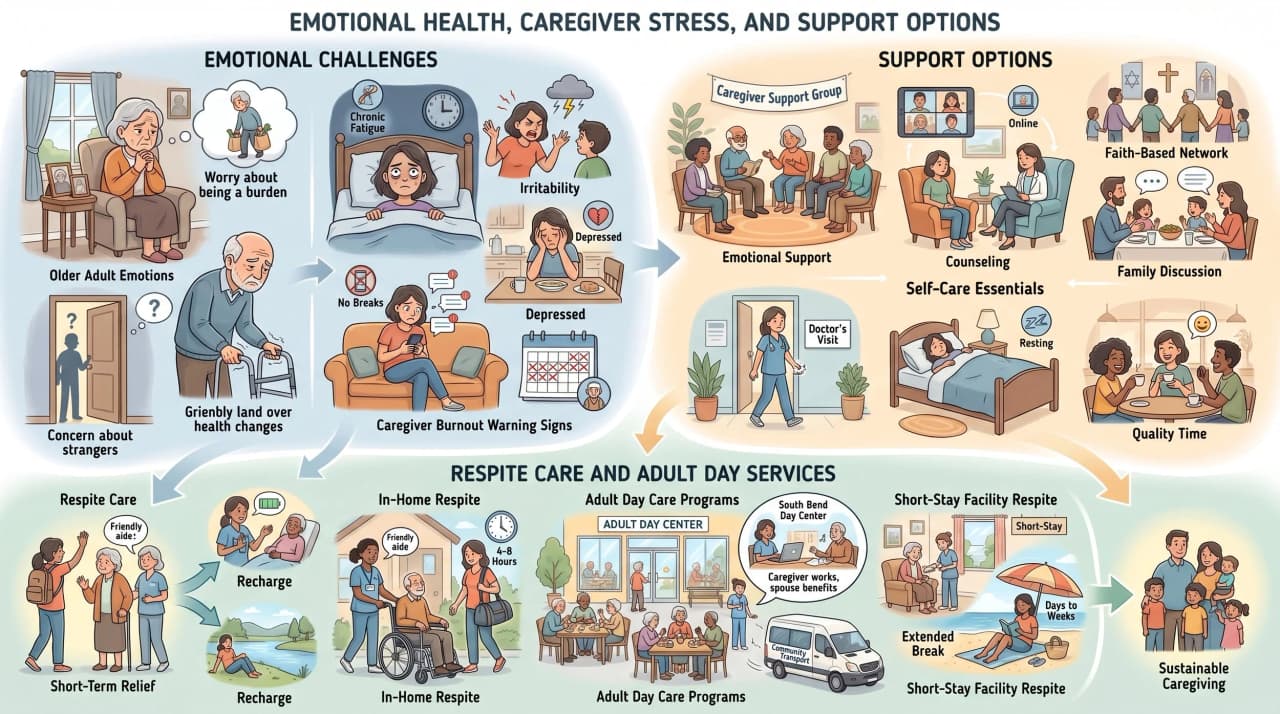
Older adults often experience loss of independence, worry about being a burden, fear of strangers in the home, and grief over health changes. Caregiving can be emotionally and physically exhausting, leading to feelings of guilt among caregivers who may feel they are letting their loved ones down by seeking help.
Warning signs of caregiver burnout:
- Chronic fatigue and trouble sleeping
- Irritability and mood changes
- Symptoms of depression
- Feeling constantly “on call”
- Neglecting your own health appointments
Open conversations about feelings of guilt and the need for help can help caregivers and their loved ones understand each other’s perspectives and reduce stress. Support options include local and online caregiver support groups, individual counseling, faith-based networks, and honest family discussions about sharing responsibilities.
Treat your own doctor visits, sleep, and quality time with friends as non-negotiable parts of the care plan—not optional extras.
Respite Care and Adult Day Services
Respite care services provide short-term relief for primary caregivers, allowing them to take breaks and recharge while ensuring their loved ones continue to receive care.
Types of respite care:
- In-home respite: An aide comes to the home for 4-8 hours
- Adult day care programs: Supervised activities, meals, medication reminders, and sometimes transportation (available in communities like South Bend, Flint, or Springfield)
- Short-stay facility respite: A few days to several weeks in an assisted living or nursing facility
Consider a caregiver in South Bend who uses adult day care three days per week. This allows them to continue working while caring for a spouse with early dementia. The spouse receives social activities, supervision, and meals while the caregiver maintains employment.
Ask about Medicaid waiver coverage, veterans benefits, and sliding-scale fees when exploring these options.
Paying for In-Home Care: Private Pay, Insurance, Medicaid Waivers, and Veteran Programs
In-home care can be funded through multiple channels. In-home care is generally more affordable than assisted living or nursing homes for seniors who only need a few hours of help each day. However, a key consideration for in-home care is that it may become less cost-effective than nursing homes if round-the-clock care is needed.
The cost of in-home care varies significantly based on factors such as the level of care needed, frequency and duration of visits, geographical location, and type of support required.
Funding sources overview:
Medicare and standard health insurance typically do not cover non-medical assistance with activities of daily living, which is often required for seniors receiving in-home care. In-home care can be financially demanding, and families may need to explore various funding options, including Medicaid and local community resources, to help cover costs.
How Family Caregivers Can Get Paid Through Medicaid and Similar Programs
Many states, including Indiana, Michigan, and Illinois, allow certain family members to be paid as caregivers for an eligible older adult through Medicaid waiver or state-funded programs. Program names vary—examples include Structured Family Caregiving and consumer-directed personal care programs.
Typical eligibility steps:
- Confirm the older adult’s Medicaid eligibility
- Complete a functional assessment showing need for help with ADLs
- Create a formal care plan
- Enroll the family caregiver through an approved agency or fiscal intermediary
Pay rates depend on state, program, and assessed needs. Caregivers may receive $15-25 per hour for 20-40 hours weekly, depending on assessment results. Accurate time tracking and documentation are essential to avoid payment delays.
How Paid.care Helps Family Caregivers in Indiana, Michigan, and Illinois
Paid.care is a tech-enabled services platform that helps relatives and friends already caring for an older adult get qualified, trained, and paid through Medicaid, HCBS waivers, and qualifying programs.
Core services include:
- Eligibility screening to determine if the older adult and caregiver may qualify in IN, MI, or IL
- Application guidance through enrollment for appropriate caregiver programs
- Care coaching to build safe in-home care plans (fall prevention, medication management, coordinating with the doctor)
- Financial coaching so caregivers understand tax requirements, pay rates, and budgeting
- Mobile app for logging hours, managing shifts, and viewing upcoming payments
Paid.care is not a traditional home care agency sending trained staff you’ve never met. Instead, it’s a platform that helps your family’s chosen caregiver—daughter, son, friend, neighbor—become the paid provider when state rules allow. This means your loved one receives care from someone familiar, which often reduces anxiety compared to strangers.
Paid.care also partners with employers who want to provide support for employees managing caregiving responsibilities alongside work.
Step-by-Step: From Unpaid Family Caregiver to Paid Caregiver with Paid.care
Here’s the typical journey:
- Answer eligibility questions through a short online questionnaire for your state (IN, MI, or IL)
- Talk with a Paid.care specialist who reviews your situation—relationship to the older adult, current care tasks, income, and Medicaid status
- Complete required paperwork and training including basic caregiving skills and program compliance modules
- Get set up on the mobile app to track hours and manage shifts
- Begin providing care under the approved plan and receive weekly payments
Consider this scenario: A daughter in Indianapolis has been caring for her 81-year-old mother with COPD for two years—unpaid. Through Paid.care’s guidance, she enrolls in a Medicaid waiver program and transitions to paid caregiver status within 4-8 weeks. Her caregiving becomes formally recognized, documented, and compensated.
Evaluating If In-Home Care Is the Right Choice for Your Family
Choosing the right in-home care requires a thorough assessment of physical health, cognitive state, and social needs. In-home care reduces exposure to illnesses common in communal settings, leading to better recovery outcomes for patients—an especially important consideration since COVID-19 heightened awareness of infection risks.
Checklist for family discussions:
- Current and projected medical needs (dementia progression, frequent falls, complex medications)
- Home layout (stairs, bathroom safety, kitchen accessibility)
- Availability and health of family caregivers
- Local resources (home health agencies, adult day centers, transportation)
- Access to funding programs
Contrast aging in place with other options. Assisted living provides socialization but costs roughly $4,500 monthly. Nursing homes offer round-the-clock skilled care but remove the older adult from their familiar environment. Specialized care for dementia or Alzheimer’s focuses on safety, memory care, and specialized engagement—important for certain illness progressions.
The Eldercare Locator is a public service that connects individuals with local support services for elderly care. Decisions can be revisited as needs change—what works today may need adjustment in a short time.
Talking with an Older Loved One About Bringing Help into the Home
These conversations can feel overwhelming, but practical approaches help.
- Choose a calm time, not during a crisis
- Focus on safety and independence rather than deficits
- Use “I” statements: “I worry about your safety on the stairs” rather than “You can’t manage anymore”
- Start with a small trial—perhaps 4 hours once a week—to reduce resistance
- Involve trusted allies like the primary care doctor or a geriatric care manager who can frame accepting help as wisdom, not weakness
Acknowledge emotions on both sides. Many older adults fear losing independence. Many caregivers feel guilty about not doing everything themselves. Address these feelings openly rather than avoiding them.
Next Steps: Where to Start and How Paid.care Can Support You
Safe, high-quality in-home care is possible when families combine the right mix of care services, funding, and caregiver support. The care you’re already providing has real value—and in many cases, you can get paid for it.
Immediate actions:
- Make a quick list of the older adult’s current needs (ADLs and IADLs)
- Call their primary care provider to ask about home health eligibility if there are recent hospital stays or new diagnoses
- Contact the local Area Agency on Aging for information on meals, transportation, and caregiver support programs
- For families in Indiana, Michigan, or Illinois: complete Paid.care’s online eligibility check to see if a family caregiver can qualify for pay
Becoming a paid family caregiver reduces financial strain and allows your loved one to keep receiving care from someone they know and trust—in their loved one’s home, surrounded by familiar faces and routines.
Ready to learn more? If you’re in IN, MI, or IL, visit Paid.care to check your eligibility, get trained, and start receiving weekly payments for the caregiving you’re already doing.
FAQs
1. What is in-home care for older adults?
In-home care for older adults provides practical support that helps seniors remain safe, comfortable, and independent in their own homes. This type of care may include help with daily activities like bathing, dressing, meal preparation, medication reminders, mobility support, housekeeping, transportation, and companionship. For many families, in-home care is a flexible alternative to assisted living or nursing home placement.
2. How can in-home care improve safety for older adults?
In-home care can reduce the risk of falls, medication mistakes, missed meals, isolation, and household accidents. A caregiver can help keep walkways clear, assist with transfers, monitor changes in health, support safe bathing routines, and make sure the older adult follows their care plan. Families may also improve safety by adding grab bars, better lighting, non-slip rugs, medical alert systems, and clear emergency contact instructions.
3. What tasks can family caregivers help with at home?
Family caregivers often assist with activities of daily living, such as bathing, grooming, dressing, toileting, and eating. They may also help with instrumental daily tasks like grocery shopping, cooking, laundry, transportation, appointment scheduling, medication reminders, and managing household routines. In many cases, family caregivers also provide emotional support, companionship, and advocacy during doctor visits or care planning.
4. Can family caregivers get paid for providing in-home care?
Yes, in some situations, family caregivers may be able to get paid for providing in-home care. Payment options often depend on the older adult’s state, Medicaid eligibility, veteran status, long-term care insurance policy, or participation in a waiver program. Common pathways may include Medicaid Home and Community-Based Services waivers, self-directed care programs, Veterans Affairs caregiver benefits, structured family caregiving programs, or private family care agreements.
5. How should families start the process of getting paid for caregiving?
Families should begin by documenting the care being provided, including daily tasks, hours worked, medical needs, and safety concerns. Next, they can check whether the older adult qualifies for Medicaid, a Medicaid waiver, VA benefits, or other state-based caregiver support programs. It is also helpful to speak with the local Area Agency on Aging, Medicaid office, or a caregiver payment platform to understand eligibility, required forms, background checks, training rules, and payment rates.