
AI Caregiving Assistant: Your Essential Co-Pilot for Senior Caregiving Support
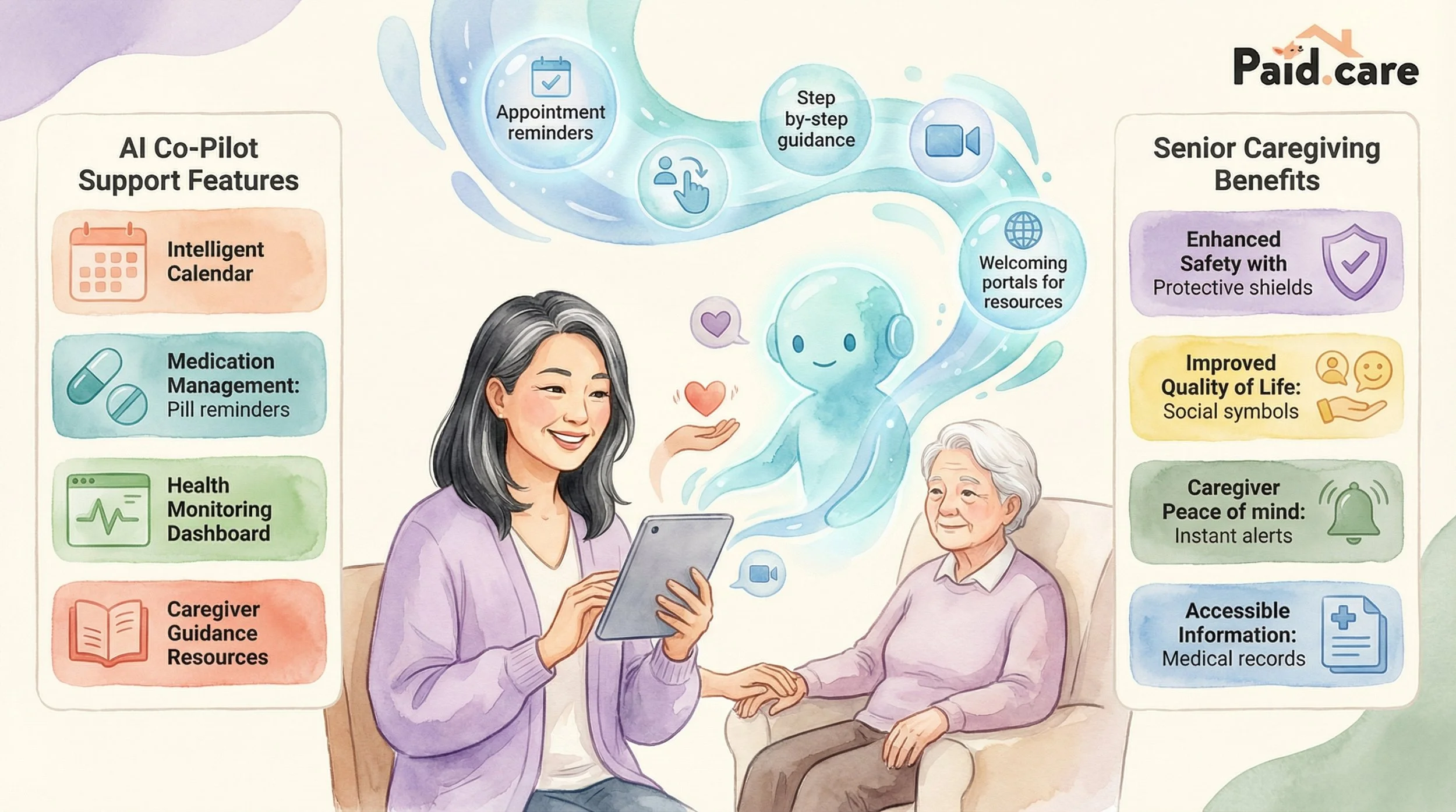
As the population ages, the demand for effective senior caregiving solutions has never been more critical. AI technology is emerging as a transformative force in this field, providing innovative tools that support unpaid family caregivers. This article explores how AI acts as a caregiving co-pilot, enhancing the quality of care for seniors while alleviating the burdens faced by their caregivers. Readers will learn about the specific tasks AI can assist with, how it personalizes care recommendations, and the various technologies that enhance caregiving support. Additionally, we will discuss Medicaid support options available in states like Indiana, Michigan, and Illinois, and highlight resources for unpaid caregivers.
How Does AI Support Unpaid Family Caregivers in Senior Care?
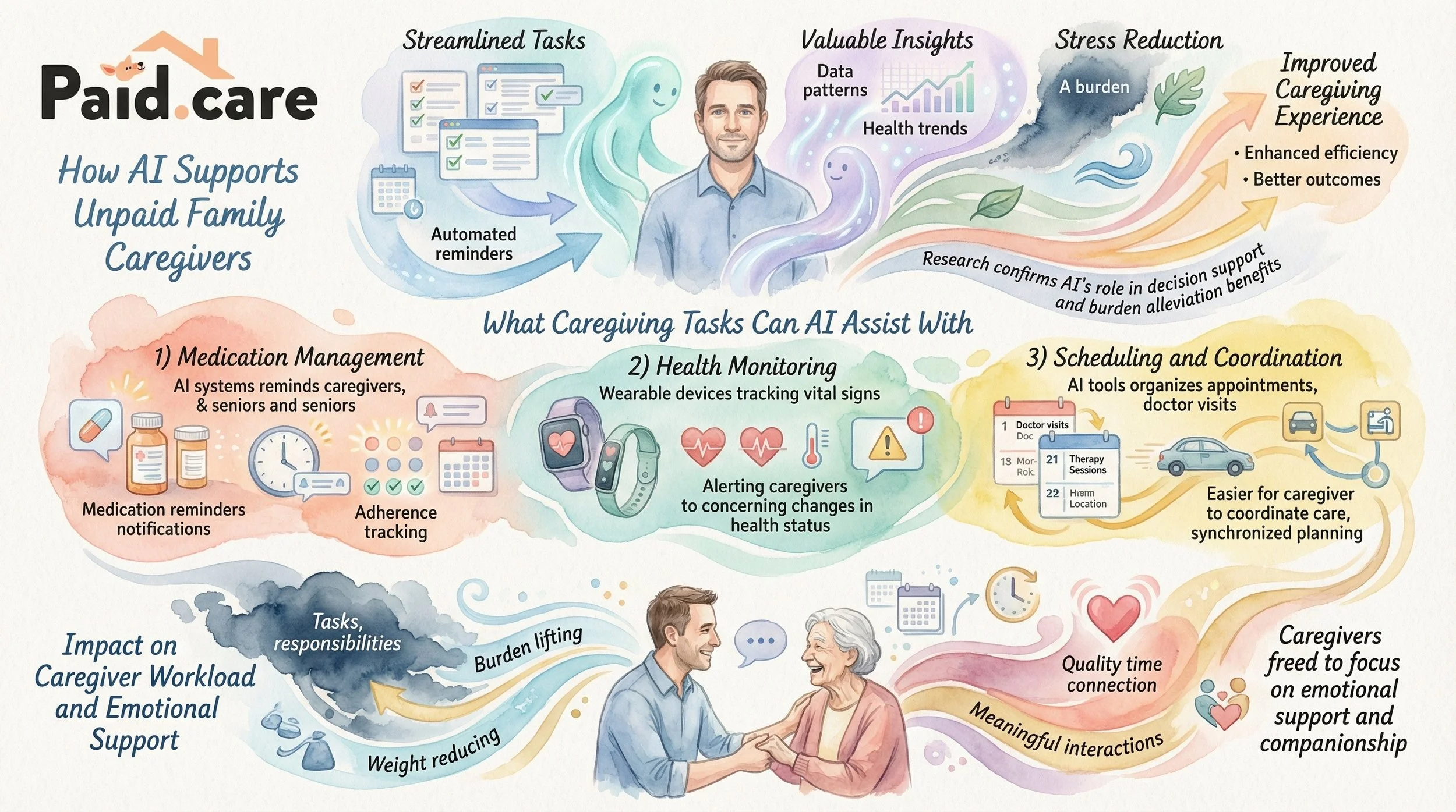
AI technology plays a pivotal role in supporting unpaid family caregivers by streamlining tasks and providing valuable insights. By leveraging advanced algorithms, AI can assist caregivers in managing daily responsibilities, thereby reducing stress and improving the overall caregiving experience. The integration of AI into caregiving not only enhances efficiency but also ensures that seniors receive personalized care tailored to their unique needs.
Indeed, studies confirm the significant impact of AI in providing crucial decision support and alleviating the burdens faced by informal caregivers.
AI for Informal Caregivers: Decision Support & Burden Alleviation This study aimed to build upon the authors' previous systematic literature review on technologies for informal caregivers. Specifically, it focused on analyzing AI-based solutions to understand the advantages and challenges of using AI in decision-making support for informal caregivers in elderly care. AI-powered solutions to support informal caregivers in their decision-making: a systematic review of the literature, F Milella, 2023
What Caregiving Tasks Can AI Assist With?
AI can assist with a variety of caregiving tasks, including:
Medication Management: AI systems can remind caregivers and seniors about medication schedules, ensuring adherence to prescribed treatments.
Health Monitoring: Through wearable devices, AI can track vital signs and alert caregivers to any concerning changes in health status.
Scheduling and Coordination: AI tools can help organize appointments and manage transportation, making it easier for caregivers to coordinate care.
These capabilities significantly lighten the workload for family caregivers, allowing them to focus on providing emotional support and companionship.
How AI Personalizes Care Recommendations for Seniors
AI personalizes care recommendations by analyzing data from various sources, including health records and daily activity patterns. This data-driven approach enables AI to identify specific needs and preferences of seniors, leading to tailored care plans. For instance, AI can suggest dietary adjustments based on health conditions or recommend exercises that align with a senior's mobility level. This level of personalization not only enhances the quality of care but also empowers seniors to take an active role in their health management.
What Medicaid Caregiving Support and Waivers Are Available in Indiana, Michigan, and Illinois?
Understanding the Medicaid support available for caregivers is crucial for those navigating the complexities of senior care. Each state offers different waivers and programs designed to assist family caregivers financially and logistically.
How to Determine Medicaid Eligibility for Senior Care Programs
Determining eligibility for Medicaid programs involves several steps:
Income Assessment: Applicants must provide documentation of their income to ensure it falls within the state’s guidelines.
Asset Evaluation: Medicaid also considers the applicant's assets, which must be below a certain threshold.
Medical Necessity: A medical assessment may be required to establish the need for long-term care services.
Understanding these criteria can help families navigate the application process more effectively.
What Senior Care Technologies Enhance AI Caregiving Assistance?
The integration of technology in senior care is revolutionizing how caregivers provide support. Various senior care technologies enhance AI caregiving assistance, making it easier to monitor and manage care.
How Do Remote Health Monitoring Tools Work with AI?
Remote health monitoring tools utilize AI to collect and analyze health data from seniors in real-time. These tools can track vital signs, medication adherence, and daily activities, providing caregivers with valuable insights. For example, if a senior's heart rate exceeds a certain threshold, the system can alert caregivers immediately, allowing for prompt intervention. This proactive approach to health management significantly improves outcomes for seniors.
What Are Practical AI Elder Care Solutions for Family Caregivers?
Practical AI elder care solutions include:
Virtual Health Assistants: These AI-driven applications can answer health-related questions and provide reminders for medication and appointments.
Telehealth Services: AI enhances telehealth platforms by facilitating remote consultations, making healthcare more accessible for seniors.
Smart Home Devices: AI-enabled devices can automate daily tasks, such as adjusting lighting or temperature, improving the living environment for seniors.
These solutions not only enhance the caregiving experience but also promote independence among seniors.
Further research underscores the broad spectrum of AI and IT solutions available, from advanced robotics to smart home integration, all designed to enhance senior care and address systemic challenges.
AI & IT Solutions for Senior Care: Robots, IoT, and Home Support Elderly care services using IT technology, such as artificial intelligence elderly care robots, IOT and mobile carriers’ elderly care services, fall accident prevention system, medication management system, home care support service, and fire prevention through life data analysis, are not only convenient, but also In addition, it is presented as a vision that will solve long-term social problems such as the labor shortage of care workers for the elderly. AI-based senior care service development case analysis and prospects, 2023

Where Can Unpaid Caregivers Find Resources and Support Using AI Tools?
Unpaid caregivers often face challenges in accessing resources and support. AI tools can help navigate these challenges by providing information and connecting caregivers with available services.
Which Programs Offer Assistance to Unpaid Caregivers?
Several programs offer assistance to unpaid caregivers, including:
National Family Caregiver Support Program: Provides resources and support services to family caregivers.
Area Agencies on Aging: Local agencies that offer information and assistance to caregivers in their communities.
Online Support Groups: AI-driven platforms can connect caregivers with online communities for emotional support and shared experiences.
These resources can significantly ease the burden on caregivers, providing them with the support they need.
How AI Helps Navigate Regional Caregiving Services in the Midwest
AI tools can streamline the process of finding regional caregiving services by analyzing user preferences and needs. For instance, AI can recommend local service providers based on specific criteria, such as location, services offered, and user reviews. This capability not only saves time but also ensures that caregivers find the most suitable resources for their loved ones.
FAQs
-
An AI Caregiving Assistant is a digital tool designed to help manage the daily complexities of senior care. In 2026, these assistants act as "co-pilots" by integrating with wearable health monitors and smart home sensors to track vitals, detect falls, and manage medication schedules. Unlike a simple alarm, the AI uses "agentic" capabilities to proactively alert family members if it notices subtle changes in a senior’s behavior, such as decreased movement or changes in speech patterns that might signal a health issue.
-
While AI cannot replace human touch, 2026 models feature advanced Natural Language Processing (NLP) that allows for empathetic, fluid conversation. These assistants help combat "social isolation" by engaging seniors in storytelling, memory exercises, and check-ins throughout the day. By recognizing emotional cues in a senior's voice, the AI can adjust its tone to provide comfort or suggest a video call with a family member, bridging the gap when a human caregiver cannot be physically present.
-
One of the biggest causes of burnout is the "administrative load" of caregiving. AI assistants now handle time-consuming tasks such as documenting care logs, summarizing doctor’s visits from voice notes, and coordinating schedules between multiple family members. By automating these repetitive chores and providing 24/7 "passive monitoring," the AI gives the primary caregiver peace of mind and more time to focus on meaningful quality time rather than paperwork.
-
Privacy is a top priority under the 2026 HIPAA and federal AI regulatory updates. Reputable AI caregiving tools now use "ephemeral processing" and end-to-end encryption to ensure that sensitive health data is not used for unauthorized training or marketing. However, caregivers should always verify that their chosen assistant is HIPAA-compliant and check the "data training" toggles in the settings to ensure that personal conversations and medical records remain private.

