
The Respite Swap: How to Build a Local Care Circle for Effective Caregiver Support

Creating a local care circle, often referred to as a "Respite Swap," is an innovative approach to supporting caregivers in your community. This concept not only alleviates the burden on individual caregivers but also fosters a sense of community and shared responsibility. In this article, we will explore the essential elements of respite care, the steps to organize a local care circle, and the resources available for caregivers. By understanding the importance of respite care and how to implement a support network, you can significantly enhance the well-being of caregivers and their loved ones.
What Is Respite Care and Why Is It Essential for Caregivers?
Respite care is a temporary relief service that allows caregivers to take a break while ensuring their loved ones receive the necessary care. This service is crucial for preventing caregiver burnout, which can lead to physical and emotional exhaustion. Respite care can take various forms, including in-home assistance, adult day care, or short-term residential care. By providing caregivers with the opportunity to recharge, respite care ultimately enhances the quality of care they can provide to their loved ones.
The critical role of respite care in mitigating the severe impacts of caregiver burnout is further emphasized by research into strategies for caregiver health and well-being.
Preventing Caregiver Burnout: Strategies for Health & Well-being Caring for patients with major neurocognitive disorders, other neuropsychiatric disorders, or functional impairments can lead to caregiver burnout, resulting in premature nursing home placement of the patient and increased risk for physical health problems and mortality in the caregiver. This chapter discusses risk factors and management strategies to help prevent early nursing home placement due to caregiver burnout, to prevent deterioration of caregiver health related to the burden of caregiving, and to reduce adverse health outcomes for patients. Caregiver burnout, 2017
Understanding Respite Care Options for Family and Friend Caregivers
Family and friend caregivers have several options for respite care, including:
In-Home Respite Care: Professional caregivers can come to the home to provide care, allowing family members to take a break.
Adult Day Care Services: These facilities offer care during the day, providing social activities and supervision for elderly or disabled individuals.
Short-Term Residential Care: This option allows caregivers to place their loved ones in a care facility for a short period, ensuring they are well cared for while the caregiver takes time off.
These options can be accessed through local agencies or community organizations that specialize in caregiver support.
How Respite Care Benefits Elderly and Disabled Loved Ones
Respite care not only benefits caregivers but also significantly improves the lives of elderly and disabled individuals. The key benefits include:
Improved Quality of Life: Engaging with different caregivers and participating in activities can enhance the emotional and social well-being of those receiving care.
Reduced Caregiver Stress: When caregivers take breaks, they return refreshed, which positively impacts their interactions with their loved ones.
Enhanced Safety: Professional caregivers are trained to handle various situations, ensuring that elderly or disabled individuals receive safe and appropriate care.
Understanding these benefits highlights the importance of integrating respite care into the caregiving process.
How Can You Organize a Local Respite Swap in Your Community?
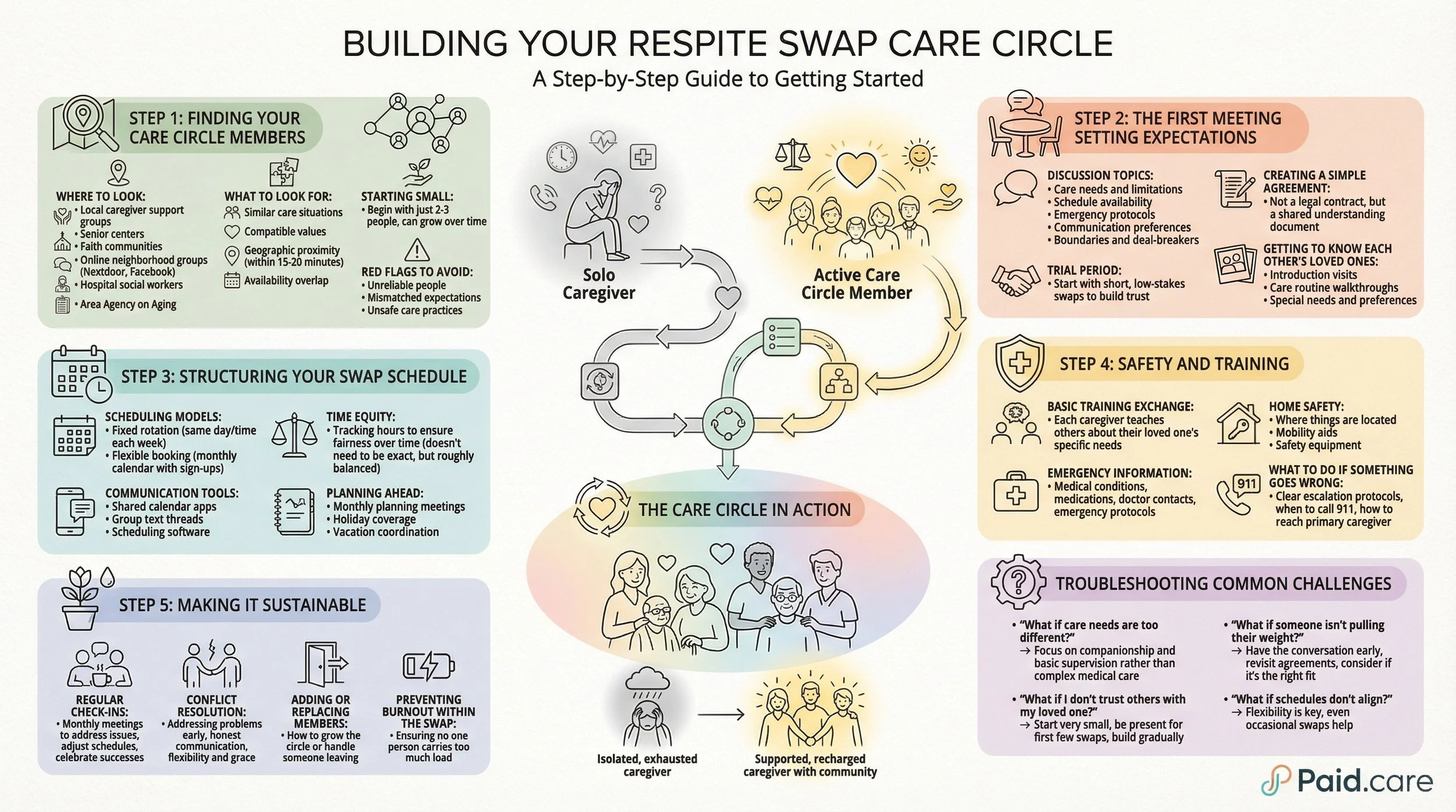
Organizing a local respite swap involves creating a network of caregivers who can support each other by sharing caregiving responsibilities. This collaborative approach can significantly reduce the strain on individual caregivers.
Step-by-Step Guide to Building a Local Care Circle
To establish a local care circle, follow these steps:
Identify Participants: Reach out to local caregivers and gauge interest in forming a support group.
Set Up Meetings: Organize regular meetings to discuss needs, share experiences, and plan the logistics of the swap.
Create a Schedule: Develop a calendar that outlines when caregivers can swap responsibilities, ensuring everyone has the opportunity to take breaks.
Establish Guidelines: Set clear expectations regarding the care provided, including any specific needs of the individuals being cared for.
By following these steps, you can create a sustainable support network that benefits all participants.
Best Practices for Coordinating Caregiver Support Networks
Effective coordination is essential for the success of a caregiver support network. Consider these best practices:
Open Communication: Maintain clear and open lines of communication among all participants to address any concerns or changes in schedules.
Regular Check-Ins: Schedule periodic check-ins to assess the effectiveness of the swap and make necessary adjustments.
Resource Sharing: Share information about local resources, such as respite care services and support groups, to enhance the network's effectiveness.
Implementing these practices will help ensure that the care circle operates smoothly and meets the needs of all caregivers involved.

Who Qualifies for Medicaid Waiver Programs in Indiana, Michigan, and Illinois?
Medicaid waiver programs provide financial assistance for respite care services, making them accessible to more families. Understanding the eligibility criteria is crucial for caregivers seeking support.
Eligibility Criteria for Medicaid Waivers Supporting Respite Care
To qualify for Medicaid waivers in Indiana, Michigan, and Illinois, applicants typically need to meet the following criteria:
Income Requirements: Applicants must demonstrate financial need, which may vary by state.
Care Needs Assessment: A thorough assessment is conducted to determine the level of care required by the individual needing assistance.
These criteria ensure that those who need help the most can access the necessary resources.
Navigating State-Specific Medicaid Waiver Resources
Each state has its own resources for navigating Medicaid waivers. Caregivers can find assistance through:
State Medicaid Offices: These offices provide information on eligibility and application processes.
Local Aging Agencies: These agencies often have staff who can assist with understanding and applying for Medicaid waivers.
Community Organizations: Many non-profits offer guidance and support for caregivers seeking financial assistance for respite care.
Utilizing these resources can simplify the process of obtaining necessary support.
Where Can Unpaid Caregivers Find Local Elderly and Disability Care Resources?
Unpaid caregivers often need additional support and resources to manage their responsibilities effectively. Identifying local resources can significantly ease their burden.
Community Care Networks and Support Groups in the Tri-State Area
In the Tri-State Area, several community care networks and support groups offer valuable resources for caregivers, including:
Local Caregiver Support Groups: These groups provide a platform for caregivers to share experiences and advice.
Community Health Centers: Many health centers offer services specifically designed for elderly and disabled individuals, including respite care options.
Online Resources: Websites and forums dedicated to caregiver support can provide information and connect caregivers with local services.
These resources can help caregivers find the support they need to continue providing care.
How to Access and Utilize Local Caregiver Support Services
Accessing local caregiver support services involves:
Researching Available Services: Use online directories or community boards to find local resources.
Contacting Organizations: Reach out to local agencies to inquire about available programs and services.
Participating in Workshops: Many organizations offer workshops that provide training and resources for caregivers.
By actively seeking out these services, caregivers can enhance their support network and improve their caregiving experience.
FAQs
-
A Respite Swap is a mutual agreement between two or more family caregivers to trade caregiving hours. Instead of paying for a professional service, you take over the care of another person's loved one for a set period (such as four hours on a Saturday), and in return, that caregiver does the same for you later in the week. In 2026, this "barter system" has become a popular way to combat caregiver isolation and high costs, providing a break with someone who truly understands the physical and emotional demands of the role.
-
Building a Care Circle starts with a "mapping exercise." Look beyond immediate family to "latent supporters"—neighbors, members of your faith community, or fellow caregivers you’ve met in support groups. In 2026, many caregivers use "Circle Coordination" apps that allow you to invite these individuals into a private digital space. The goal isn't to find one person to do everything, but to find five people who can each do one small thing, such as one person for grocery runs and another for a two-hour "safety watch" during your Respite Swap.
-
Even with a trusted friend, you should create a simple "Swap Memo." This document should outline emergency contact numbers, a current medication list with 2026 QR-code links for dosage instructions, and a "Liability Waiver" clause. If you are a "Solo Ager" using a friend for care, ensure your Durable Power of Attorney explicitly lists them as a "Designated Caregiver." This prevents legal complications with state agencies if an accident occurs during a swap and ensures the arrangement remains transparent for Medicaid "Community Engagement" reporting.
-
Yes. The 2026 Lifespan Respite Reauthorization Act has increased funding for state grants that help "informal" networks. Furthermore, if your loved one is enrolled in the "GUIDE Model" (for dementia care), you may be eligible for a $2,500 annual respite stipend. This stipend can often be used to pay for "training" for your Care Circle members or to hire a professional for a few hours to "bridge the gap" during a Respite Swap, ensuring that your local circle has the resources they need to provide safe, high-quality care.

