
How to Be a Caregiver for a Family Member (and Get Support & Pay for Your Care)
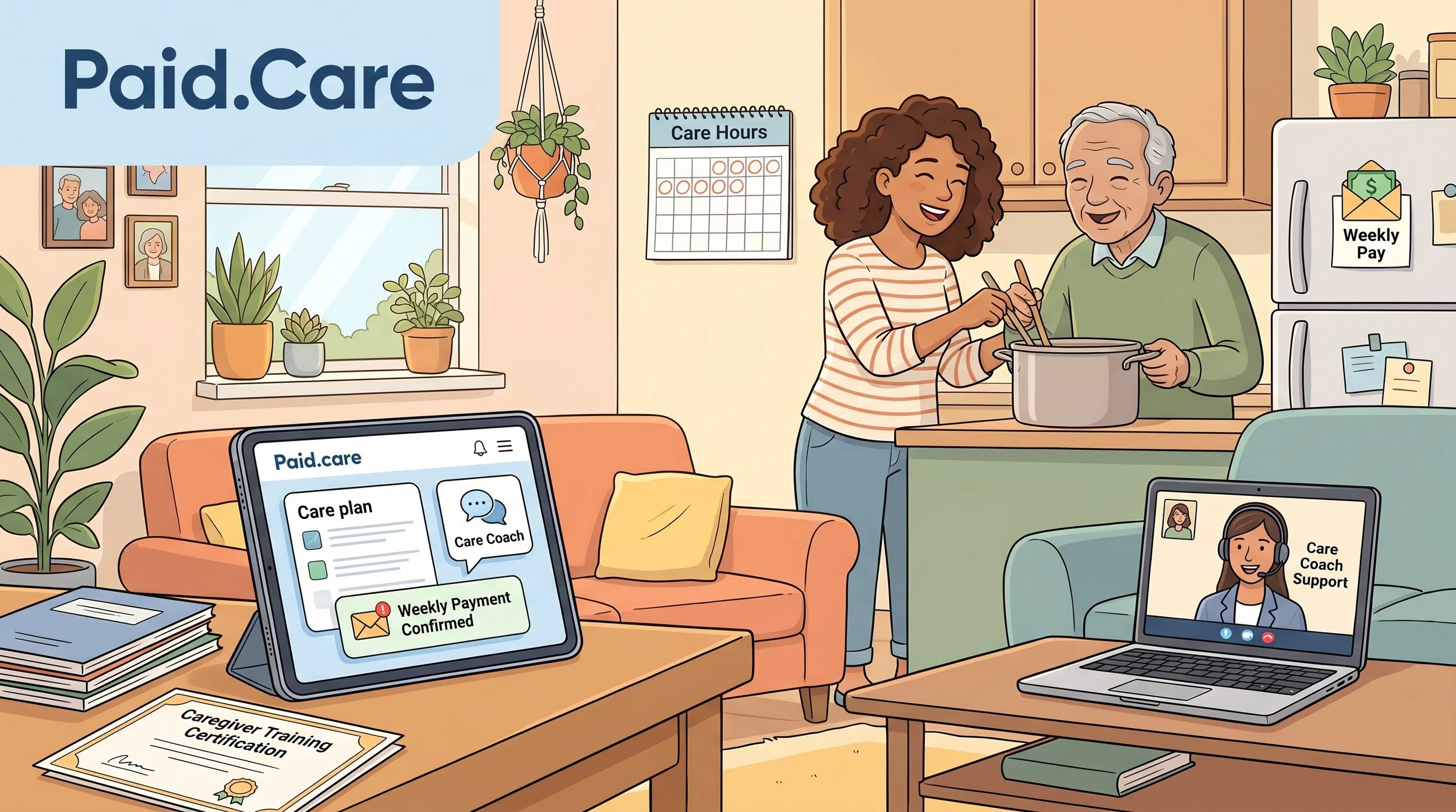
Caring for a loved one at home is one of the most meaningful things you can do—but it’s also real work that deserves real recognition. If you’re providing unpaid care to a parent, spouse, child, or friend, you’re not alone. Millions of family caregivers across the U.S. face the same challenges, and many don’t realize they may qualify to get paid for the care they already provide.
This guide walks you through what it means to be a family caregiver, how to organize your responsibilities, and the specific programs that can compensate you for your time—especially if you live in Indiana, Michigan, or Illinois.
Key Takeaways
Many states, including Indiana, Michigan, and Illinois in 2026, allow certain family caregivers to receive payment through Medicaid, HCBS waivers, and veteran programs.
Paid.care helps family caregivers in IN, MI, and IL check eligibility, complete state paperwork, meet training rules, and receive weekly pay for in-home care.
Being a family caregiver means handling daily living tasks, medical coordination, and financial management—planning and boundaries are essential to avoid burnout.
Payment options include Medicaid consumer-directed programs, VA benefits, paid family leave, and long-term care insurance.
Acting now by confirming your loved one’s eligibility (age, disability, income) and applying to appropriate programs can end years of unpaid caregiving.
Understanding Your Role as a Family Caregiver
In 2026, millions of Americans provide regular assistance to family members or friends who need help with daily tasks. Whether you’re caring for an aging parent with Alzheimer’s disease, a spouse recovering from stroke, or an adult child with disabilities, your role is vital—and often exhausting.
A family caregiver is anyone regularly helping a loved one with activities of daily living (bathing, dressing, mobility, eating, toileting) or instrumental tasks like meal preparation, transportation, medication management, and bill paying.
Common caregiving situations include caring for older adults with dementia, supporting a person with developmental disabilities, or assisting a veteran with mobility limitations.
Many caregivers provide 20–40+ hours of unpaid care weekly on top of their regular job and parenting responsibilities.
Main responsibilities span personal care services, household tasks, appointment scheduling, health advocacy, and emotional support.
Caregiving is real work with physical, emotional, and financial impact—seeking training, caregiver support, and compensation is reasonable and encouraged.
First Steps: Getting Organized and Talking as a Family
Before diving into daily care tasks or exploring payment options, start with planning. A clear foundation makes everything else easier.
Hold a family meeting within 1–2 weeks to clarify who will provide care, who will manage finances, and who serves as backup support. Video calls work fine if relatives live far away.
Gather key documents: ID cards, insurance cards (Medicare, Medicaid, private, VA), medication lists, contact info for all doctors, and existing powers of attorney or advance directives.
Create a simple written care plan listing daily routines (wake time, meals, medications, hygiene, exercise) and weekly tasks (groceries, laundry, appointments).
Discuss preferences directly with the care recipient: staying at home vs. assisted living facilities, privacy needs, cultural or religious practices, and who they’re comfortable receiving personal care from.
Designate one primary decision-maker for medical and financial matters. Document legal authority with durable power of attorney or guardianship when needed—consult an elder law attorney in your state.
What Family Caregivers Actually Do Day to Day
Understanding concrete tasks helps you plan your time and identify where you might need training or support.
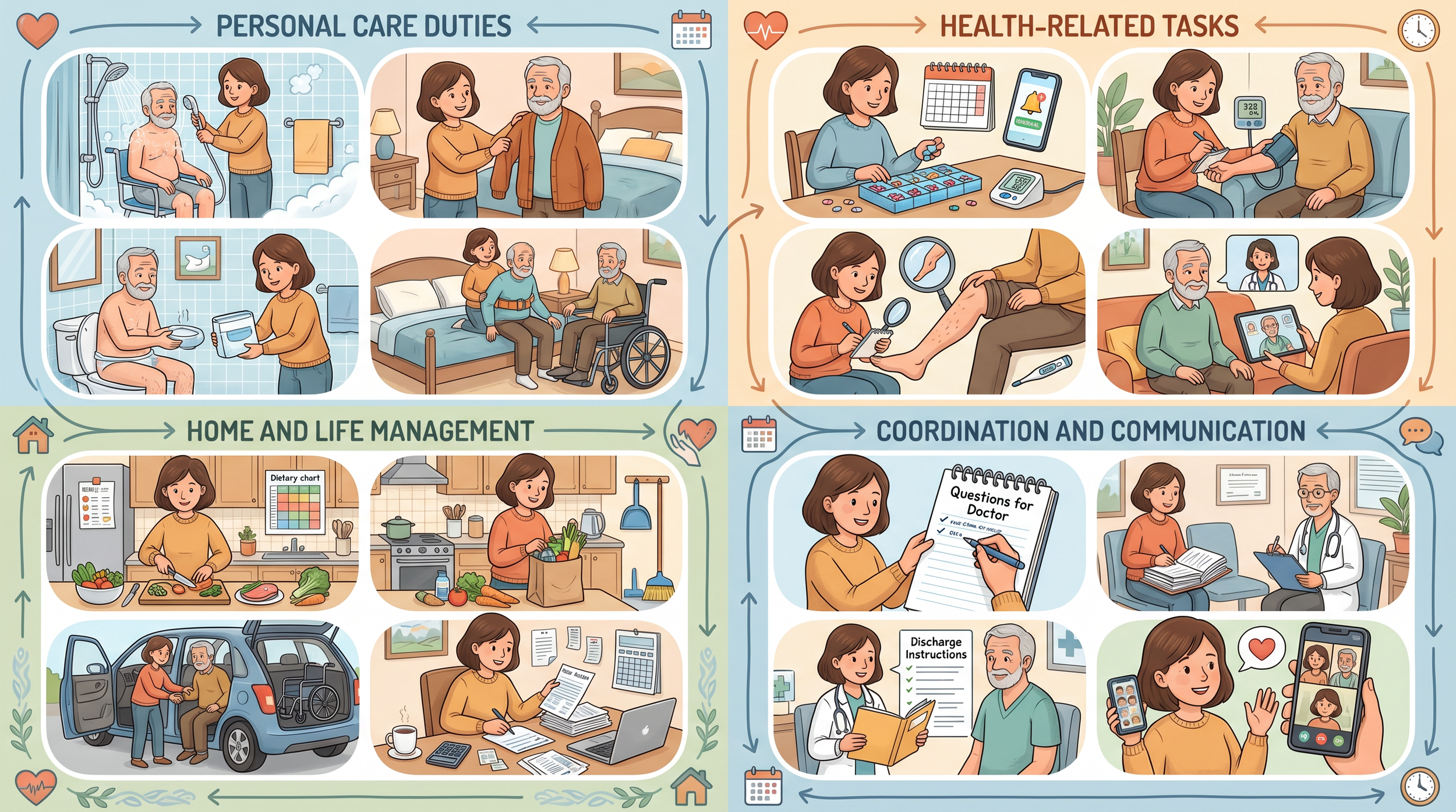
Personal Care Duties:
Helping with bathing or showers 2–3 times weekly
Assisting with dressing each morning
Toileting support and incontinence management
Safe transfers from bed to wheelchair using proper techniques
Health-Related Tasks:
Organizing pill boxes and setting medication reminders
Checking blood sugar or blood pressure when instructed
Monitoring for health changes to report to clinicians
Coordinating telehealth appointments
Home and Life Management:
Cooking balanced meals following dietary restrictions
Grocery shopping and light housekeeping
Arranging transportation to medical appointments
Managing mail, bills, and finances
Coordination and Communication:
Keeping a running list of questions for doctors
Bringing a notebook to appointments for notes
Tracking discharge instructions after hospital visits
Sharing updates with other caregivers and siblings
Emotional Support:
Making time daily to talk and involve the person in decisions
Helping maintain hobbies and social connections
Treating them as a person, not just a patient
Many caregivers also use technology like smartphones and caregiver apps to track hours, communicate with care teams, and store important documents.
How to Get Paid to Be a Caregiver for a Family Member
The answer to whether you can become a paid caregiver depends on your state and specific government programs. Here’s what you need to know:
Medicaid Consumer-Directed Programs: Many states offer Home and Community Based Services (HCBS) waiver programs that let eligible individuals hire a relative or friend as a paid caregiver instead of using home care agencies.
State Availability: As of 2026, Indiana, Michigan, and Illinois all have programs paying family caregivers who meet medical-need and income eligibility requirements.
Pay Rates: Compensation typically mirrors local home care aides wages—often $13–$20+ per hour depending on state and program—capped at a set number of authorized weekly hours.
Other Payment Avenues: VA caregiver programs for veterans, employer or state paid family leave (short-term partial wage replacement), and certain long-term care insurance policies can also provide financial assistance.
How Paid.care Helps: Paid.care specializes in helping unpaid family caregivers in Indiana, Michigan, and Illinois check Medicaid waiver eligibility, complete enrollment paperwork, finish required training, and use a mobile app to log hours and receive weekly payments.
If you’re caring for a loved one in IN, MI, or IL, check if you can start getting paid for the care you already provide.
Step-by-Step: Becoming a Paid Caregiver Through Medicaid & HCBS
Each state has its own rules, but the general path follows these steps:
Confirm Medicaid Status: Verify whether your loved one currently has Medicaid or may qualify based on income (typically under 300% SSI), savings, and disability or age criteria (usually 65+ or meeting disability requirements).
Request Functional Assessment: A nurse or case manager evaluates how much help the person needs with bathing, dressing, toileting, transferring, eating, and cognition.
Determine Program Eligibility: The assessor uses this information to determine eligibility for community based services or waiver programs covering in-home personal care.
Enroll in Consumer-Directed Program: If approved, the care recipient may enroll in self-directed care that specifically allows hiring a relative as a paid caregiver.
Meet Caregiver Requirements: Complete background checks, basic caregiver training (often 8–40 hours within 60–120 days), sign timesheets, and follow state care plans.
Start Receiving Payment: Once enrolled and trained, caregivers can log hours and receive regular payments through the program.
Paid.care’s care coaching team guides Indiana, Michigan, and Illinois families through exact Medicaid waiver applications and enrollment steps, helping avoid common paperwork delays.
Veterans Affairs (VA) Programs for Family Caregivers
If you’re caring for an eligible veteran, additional resources may be available through the Department of Veterans Affairs:
Program of Comprehensive Assistance for Family Caregivers (PCAFC): Provides monthly payments ($2,000–$3,000+ depending on region), health insurance through CHAMPVA, 30 days annual respite care, mental health counseling, and training for primary and secondary caregivers of qualifying veterans.
Veteran Directed Care (VDC): Allows veterans to manage a budget for in-home services and often hire relative caregivers as paid workers, similar to Medicaid self-direction.
Aid and Attendance: Adds $1,000+ monthly for veterans needing help with 2+ activities of daily living—sometimes combinable with other programs.
Eligibility depends on service record, disability rating, and need for assistance. Contact your local VA medical center’s caregiver support program or a veterans service organization for help completing applications.
VA programs can sometimes combine with Medicaid HCBS, but families should confirm with a benefits counselor to avoid conflicts.
Other Ways to Offset Caregiving Costs
Not everyone qualifies for Medicaid or VA payment. Here are alternative supports:
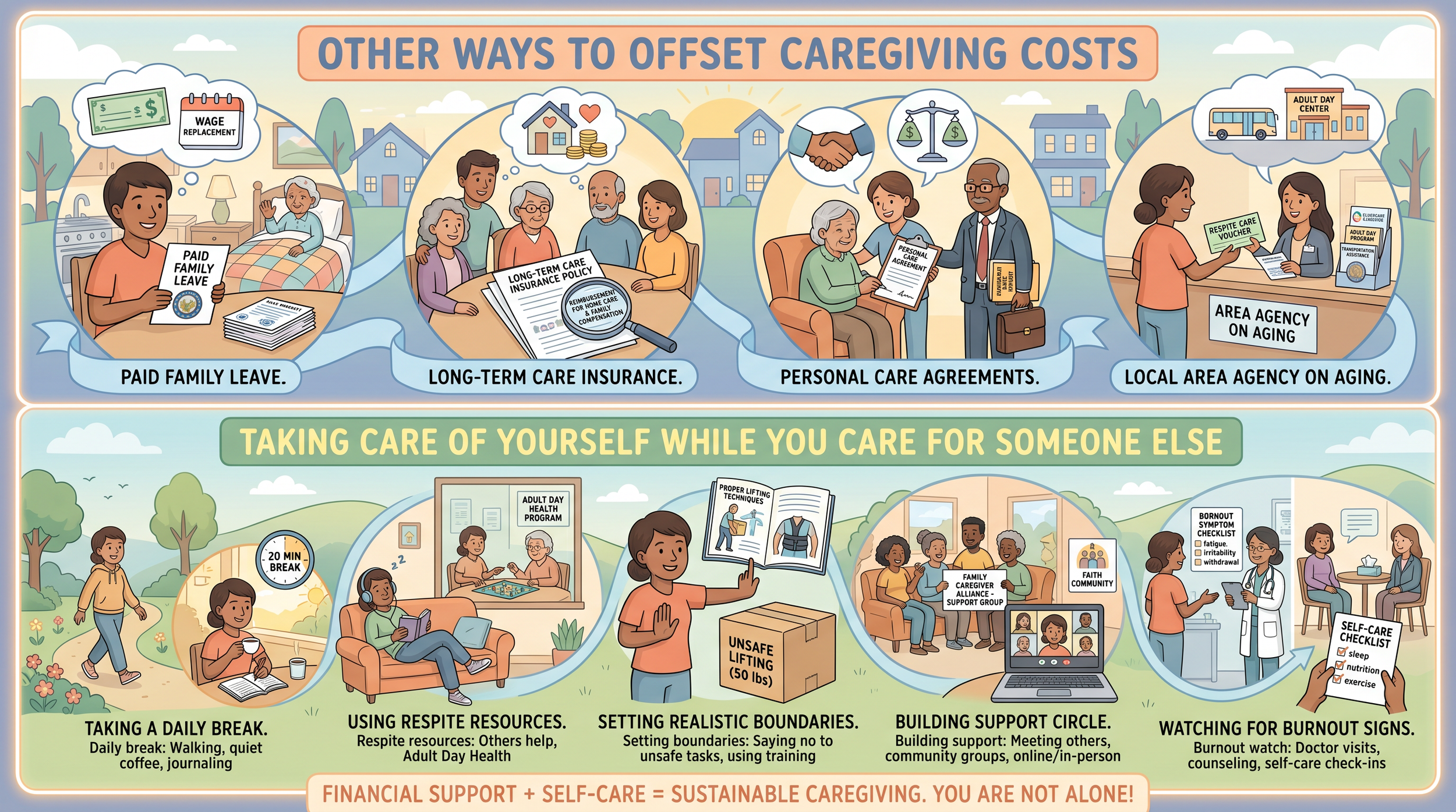
Paid Family Leave: More than a dozen states plus Washington, DC (including recent additions like Rhode Island) offer programs replacing a portion of wages when workers take unpaid leave to care for seriously ill relatives. Check your state labor department or HR portal for eligibility and benefits.
Long-Term Care Insurance: Policies purchased before illness may reimburse home care and sometimes pay family members directly. Review actual policy terms or contact the insurer to ask about informal caregiver compensation.
Personal Care Agreements: A written contract where a loved one with resources pays a family member at fair market rates for documented care. These agreements help with Medicaid spend-down documentation and should be reviewed by an elder law attorney.
Local Area Agency on Aging: Even without direct pay, seek indirect financial support like respite care vouchers, adult day programs, transportation assistance, or utility relief. Use the Eldercare Locator to find services nearest you.
Taking Care of Yourself While You Care for Someone Else
Caregiver burnout is real. Studies show 40% of caregivers experience high emotional stress, and chronic strain can affect your own health and well being.
Schedule at least one short, non-negotiable daily break—a 20-minute walk, quiet coffee, or journaling—and one longer weekly block for rest.
Use respite resources: Medicaid-funded respite hours (up to 240 hours/year in some programs), Adult Day Health programs, or trusted friends and relatives.
Set realistic boundaries about what you can safely do. Don’t lift above 50 lbs without equipment; don’t provide complex nursing tasks without proper training.
Build a support circle: siblings, neighbors, faith communities, or online caregiver groups through organizations like the Family Caregiver Alliance.
Watch for burnout signs: chronic exhaustion, irritability, depression, or new health problems. Speak with your own doctor or seek counseling early.
How Paid.care Supports Family Caregivers in Indiana, Michigan, and Illinois
Paid.care specializes in helping unpaid family caregivers become paid family caregivers through state Medicaid, HCBS, and waiver programs available in 2026.
Key Services Include:
Eligibility screening to determine if you qualify
Help completing complex program forms and enrollment
Guidance through background checks and required training
Practical caregiver education and care coaching
Mobile app for tracking daily care hours, managing shifts, and viewing upcoming weekly payments
Caregivers typically receive weekly direct deposits—not monthly payments—which helps with household budgeting when reducing or leaving other work.
Paid.care also partners with employers who want to support employees with caregiving responsibilities, connecting workers to paid caregiving options instead of forcing them to quit their job.
If you live in Indiana, Michigan, or Illinois and are caring for a loved one at home, click here to see if you can start getting paid for the care you already provide.
FAQs
-
In many cases, yes. If the care recipient qualifies for Medicaid or specific HCBS waiver programs, they may hire a family member—including certain spouses, parents, or adult children—as a paid caregiver. Eligibility depends on medical need and financial criteria. Paid.care offers free initial eligibility checks for IN, MI, and IL residents.
-
Training requirements vary by program and state but often include short courses covering infection control, safe transfers, confidentiality, and documentation (typically 8–40 hours). Some states allow caregivers to start quickly with basic orientation and complete in-depth training within a set timeframe. Paid.care helps caregivers understand and meet these deadlines.
-
The number of paid hours is determined by a professional assessment of the care recipient’s needs—not by caregiver preference. Some people may be approved for a few hours daily, while others with intensive needs may receive higher authorized weekly hours at program-set rates.
-
Many caregivers continue working part-time or full-time while providing paid care, though schedules can be challenging. Coordinate with employers about flexible work arrangements or paid family leave options. Paid.care’s tools and coaching can help structure caregiving shifts around your work schedule.

