
How Much Do Family Members Get Paid for Caregiving in Ohio? The Complete Guide

If you are one of the thousands of Ohioans caring for an aging parent, a spouse, or a loved one with a disability, you already know that caregiving is a full-time job. It is work that requires endless patience, physical strength, and emotional resilience. You likely manage medications, help with mobility, prepare meals, and provide the essential companionship that keeps your loved one safe and happy at home.
What many family caregivers in Ohio do not realize is that this labor of love can also be a paid profession.
There is a common misconception that caring for family is simply a personal obligation that must be shouldered alone, often at the expense of your own financial stability. However, Ohio has robust programs designed specifically to support people just like you. Through Medicaid waivers, Veterans Affairs programs, and specialized initiatives like Structured Family Caregiving, you can receive financial compensation for the critical work you are already doing.
If you have been searching for answers to "how much do family members get paid for caregiving in Ohio," you are taking the first step toward reclaiming your financial health while providing the best possible care for your family. At Paid.Care, we are dedicated to guiding you through this process, ensuring you maximize your earning potential and receive the support you deserve.
The Financial Landscape: What Can You Expect to Earn?
Let’s address the most pressing question first. In Ohio, the pay rate for family caregivers is not a single fixed number; it varies based on the specific program you qualify for, the level of care your loved one requires, and the agency you choose to partner with.
Generally speaking, hourly pay rates for family caregivers in Ohio currently range between $13 and $21 per hour.
Where you fall on this scale depends heavily on the "acuity" or complexity of the care needed. For example, caring for a family member who needs simple companionship and help with meal prep might command a different rate than caring for someone who requires total assistance with transferring, bathing, and feeding.
In addition to hourly wages, some newer models in Ohio, such as Structured Family Caregiving (SFC), offer a daily tax-free stipend rather than an hourly wage. These stipends can add up to approximately $1,800 per month or more, depending on the tier of care.
It is important to note that not all agencies pay the same. At Paid.Care, we pride ourselves on offering some of the highest reimbursement rates in the state, particularly for the PASSPORT program, because we believe that high-quality family care should be rewarded with high-quality pay.
Understanding the Ohio Medicaid Waiver System
The primary way family members get paid in Ohio is through Medicaid Home and Community-Based Services (HCBS) waivers. These waivers are "carve-outs" of the Medicaid program that allow the state to pay for care in a home setting rather than a nursing home. The logic is simple: it is often more affordable for the state—and infinitely better for the patient—to stay in their own living room rather than move to an institution.
To access these funds, your loved one must typically be eligible for Medicaid and require a "nursing facility level of care." This means that without your help, they would likely need to live in a nursing home.
Why Ohio Pays You to Care for Family
The state of Ohio recognizes that there is a caregiver shortage. Nursing homes are expensive, and most seniors prefer to age in place. By paying family members, the state solves two problems at once: they provide the patient with a caregiver they already know and trust, and they reduce the financial burden on the state's institutional healthcare system. It is a mutually beneficial arrangement, but it requires navigating specific programs to access the funding.
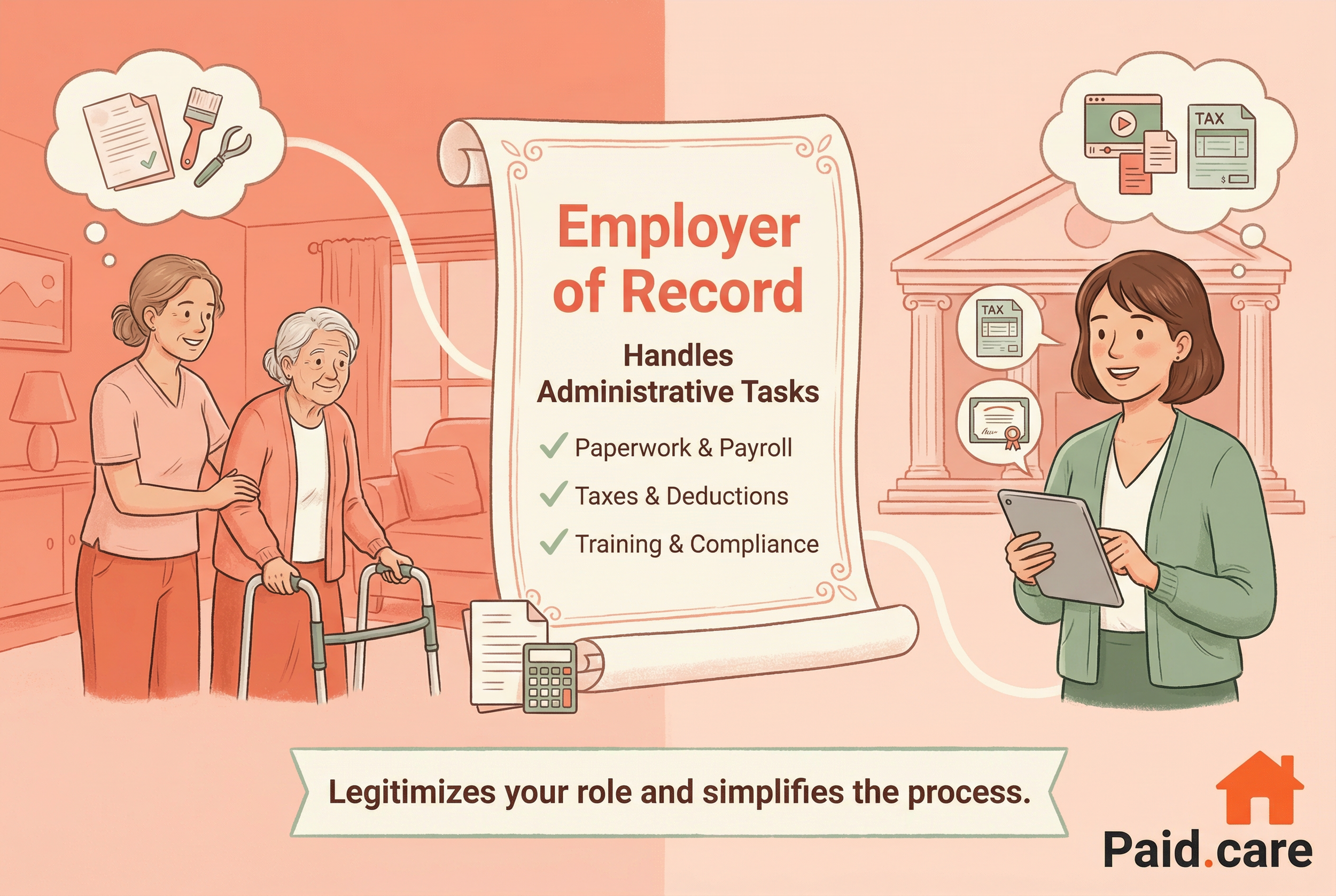
The Role of the "Employer of Record"
In many of these programs, you are not just receiving a check from the government. You become an employee. Often, your loved one acts as the "employer of record" for administrative purposes, or you work through a provider agency like Paid.Care that handles the paperwork, taxes, and training. This distinction is important because it legitimizes your role as a professional aide.
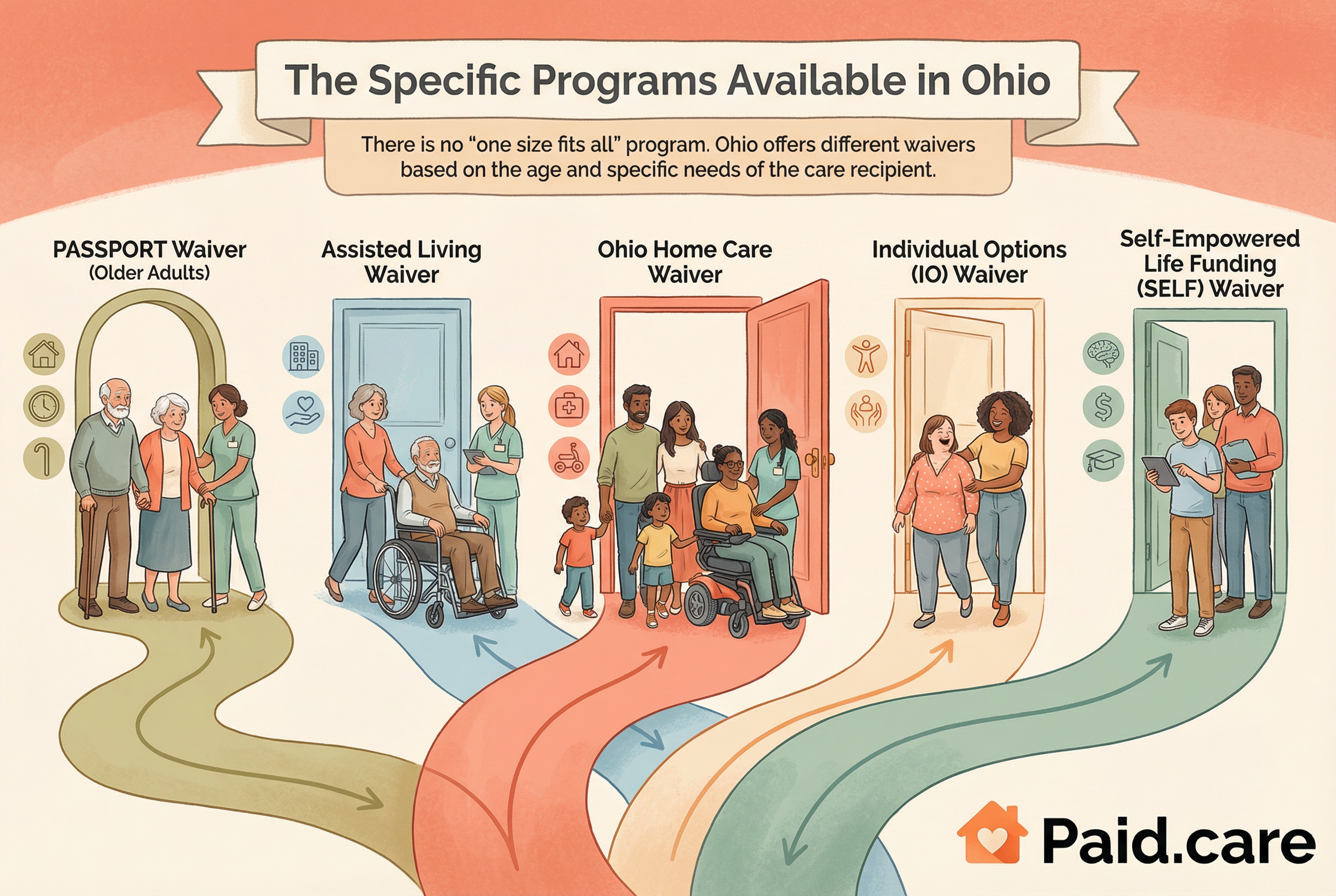
The Specific Programs Available in Ohio
There is no "one size fits all" program. Ohio offers different waivers based on the age and specific needs of the care recipient.
The PASSPORT Waiver Program
For many of our Paid.Care families, the PASSPORT waiver is the most common route to payment. This program is specifically designed for Ohioans aged 60 and older. It covers a wide range of services, including personal care, homemaking, and transportation.
Under PASSPORT, a family member (often an adult child) can be hired as a "consumer-directed" personal care aide. Because the state of Ohio has recently pushed to increase reimbursement rates for personal care to combat labor shortages, pay rates under PASSPORT have become increasingly competitive. This is one of the main avenues where we see caregivers earning that upper range of hourly pay.
Who is Eligible for PASSPORT?
To qualify, the care recipient must be at least 60 years old, financially eligible for Medicaid (which involves looking at income and assets), and require hands-on assistance with activities of daily living. A case manager from your local Area Agency on Aging will conduct an assessment to determine eligibility.
The Ohio Home Care Waiver
If your loved one is under the age of 60 but has significant physical disabilities or unstable medical conditions, the Ohio Home Care Waiver is likely the program for you.
This waiver mirrors many of the benefits of PASSPORT but is tailored for a younger demographic (under age 60). It allows for "personal care aide" services, which family members can provide. Like PASSPORT, the goal is to empower individuals to live independently. The pay rates here are comparable to PASSPORT and are subject to the same Medicaid reimbursement schedules.
MyCare Ohio Plans
For families who are navigating both Medicare and Medicaid (often called "dual-eligible"), MyCare Ohio is a managed care system that coordinates benefits from both programs.
MyCare Ohio plans—administered by large insurance companies like CareSource, Molina, or Aetna—have their own networks of providers. If your loved one is enrolled in a MyCare Ohio plan, you can still get paid, but the authorization for your hours and your pay rate will be filtered through the specific managed care plan's assessment. Paid.Care works with these plans to ensure you are getting the authorized hours you need.
Individual Options (I/O) Waiver
This waiver is specifically for individuals with developmental disabilities (DD). It is often administered through County Boards of Developmental Disabilities. The I/O waiver tends to have very comprehensive funding because it supports individuals who may need lifelong care.
Family members can often become paid providers under this waiver, sometimes referred to as "HPC" (Homemaker/Personal Care) providers. The certification process for this waiver can be distinct from the aging waivers, requiring specific training related to developmental disabilities.
Structured Family Caregiving (SFC): A Daily Rate Alternative
Recently, Ohio has embraced a model known as Structured Family Caregiving (SFC). This is a game-changer for live-in caregivers who provide round-the-clock support.
How SFC Differs from Hourly Care
Unlike the traditional hourly model—where you must clock in and clock out, and are often limited to a set number of hours per week (e.g., 20 or 30 hours)—SFC pays a daily stipend.
You must live in the same home as the care recipient to qualify. Instead of tracking every 15-minute increment of care, you receive a flat daily rate for the support you provide throughout the day. This reduces the administrative burden of logging exact times for every task, allowing you to focus more on the relationship and less on the timesheet.
The Tax Advantages of Living Together
One of the massive benefits of the SFC stipend is that, under certain IRS rules (specifically Notice 2014-7), this income is often tax-free on your federal income taxes if you live with the person you are caring for.
This is a crucial financial detail. If you earn $18 an hour but have to pay 20% in taxes, your take-home pay is significantly lower. If you earn a slightly lower equivalent rate via a stipend but pay zero federal income tax on it, your actual disposable income might be higher. SFC also includes professional coaching and support, giving you a care coach to help navigate challenges.
Options for Veterans and Military Families
If your loved one served in the military, you might have access to a completely different bucket of funding outside of the standard Medicaid system.
Program of Comprehensive Assistance for Family Caregivers (PCAFC)
This program provides a monthly stipend to the primary caregiver of a veteran who has a serious injury or illness incurred or aggravated in the line of duty. The stipend amounts are generous and are based on the federal GS pay scale and the location of the veteran. In Ohio, this can sometimes exceed the amounts offered by Medicaid waivers, depending on the veteran's "tier" of disability.
Aid & Attendance Pension
The Aid & Attendance pension is a cash benefit added to the pensions of wartime veterans (or their surviving spouses) who need help with daily activities. While this money goes to the veteran rather than directly to you, the veteran can use these increased funds to pay you for home care services. This effectively allows the family to keep the funds within the household while ensuring the veteran receives necessary care.
Beyond the Paycheck: The Total Value of Becoming a Paid Caregiver
When we talk about how much family members get paid, we often focus solely on the hourly rate. But the value of formalizing your caregiving role goes far beyond the immediate paycheck.
Protecting Your Retirement and Social Security
When you leave the workforce to care for a parent unpaid, you stop contributing to Social Security. This can severely impact your own retirement benefits down the road. By becoming a paid caregiver through an agency like Paid.Care, you are a W-2 employee. You continue paying into Social Security, protecting your future financial health and ensuring you aren't sacrificing your retirement for your current caregiving duties.
Access to Professional Training and Safety
Professional caregiving requires skills. How do you safely lift someone without hurting your back? How do you manage sundowning in a dementia patient? How do you detect the early signs of a pressure ulcer?
When you are hired as a paid caregiver, you receive professional training. This knowledge makes the daily work easier and safer for both you and your loved one. It transforms you from a well-meaning family member into a skilled care provider.
Reducing Burnout Through Support
There is a profound psychological shift that happens when your work is recognized as a job. It is no longer just "something you have to do" out of guilt or obligation. It is a profession. This recognition can help reduce caregiver burnout and resentment, improving the dynamic between you and your family member. Furthermore, agencies can help arrange respite care, giving you time off when you need it most.
Eligibility Checklist: Do You Qualify?
Before you can start earning, you need to ensure you meet the basic criteria. While every program has its own nuances, here is the general checklist for Ohio:
Residency: Both you and the care recipient must live in Ohio.
Medicaid Eligibility: The care recipient usually needs to be enrolled in Medicaid (or eligible to enroll). This involves income and asset limits.
Level of Care: A case manager (from an Area Agency on Aging or similar body) must assess the care recipient and determine that they need help with Activities of Daily Living (ADLs) like bathing, dressing, toileting, or mobility.
Caregiver Status: You must be at least 18 years old. You must pass a background check (BCI/FBI). In most cases, spouses can be paid caregivers, but rules vary slightly by waiver (for example, some waivers allow spouses, while others prefer adult children or other relatives).
Training: You must be willing to complete the required initial training, which agencies like Paid.Care provide.
Why Choose Paid.Care?
Navigating the bureaucracy of Ohio Medicaid can feel like walking through a maze blindfolded. You know the funding is there, but finding the right forms, the right case managers, and the right agency can be overwhelming. That is where Paid.Care comes in. We are not just a payroll processor; we are your partner in care.
We Advocate for the Highest Rates
We know that caregiving is hard work, and we fight to ensure you get the maximum allowable rate under the PASSPORT and Ohio Home Care programs. While other agencies might skim a large percentage off the top for administrative fees, our mission is to put more money in the pockets of families. We believe the majority of the funding should go to the person doing the actual work: you.
Sign-On Bonuses and Benefits
We appreciate you choosing us. That is why we offer sign-on bonuses for qualified caregivers. It is our way of saying "thank you" for taking on this vital role. Additionally, as a W-2 employee, you gain access to benefits that independent contractors often miss out on.
We Handle the Red Tape
We work directly with the Area Agencies on Aging (AAA) and the Ohio Department of Medicaid. We help you with the paperwork, the certification, and the billing. You focus on caring for Mom or Dad; we focus on getting you paid.
Ongoing Support
Caregiving changes over time. Your loved one’s needs might increase. You might need respite. Paid.Care offers ongoing coaching and support resources so you never feel like you are doing this alone. We provide a community of support so you have a place to turn when the days are difficult.
Taking the Next Step
If you are currently caring for a loved one in Ohio unpaid, you are leaving money on the table—money that could help pay for groceries, rent, or simply provide a financial cushion for your own future. The state of Ohio has allocated these funds because they want to support families like yours. They want your loved one to stay at home, and they are willing to pay you to make that happen.
The range of $13 to $21 per hour is just the starting point. With the right guidance, tax benefits, and agency support, caregiving can become a sustainable, rewarding career path for you. You have already done the hard part: you stepped up to care for someone you love. Now, let us help you get compensated for it.
Would you like to find out exactly which Ohio program you qualify for and see your estimated pay rate? Visit Paid.Care today to start your free eligibility assessment.
FAQs
-
Yes, in many cases. While rules vary by specific waiver, Ohio has expanded opportunities for spousal care. This is especially true if the care required is considered "extraordinary"—meaning it exceeds the normal support a spouse would provide. Programs like the Ohio Home Care Waiver and specific options within PASSPORT often allow spouses to be hired as employees. Paid.Care can help you review your specific situation to see if you qualify.
-
Generally, no. The wages paid to you are considered your income, not your loved one's income. Therefore, paying you does not typically increase their assets or income, so it should not jeopardize their Medicaid or SSI/SSDI eligibility. However, Medicaid rules are complex, so we always recommend discussing specific financial details with a case manager to ensure total compliance.
-
No, you do not need to be a nurse (RN/LPN) or a State Tested Nursing Assistant (STNA) to become a paid family caregiver for personal care services. You simply need a compassionate heart and a willingness to learn. You will be required to complete specific training—such as First Aid and basic caregiving skills—but agencies like Paid.Care provide this training to you free of charge.
-
It depends on your living situation. If you are paid an hourly wage, you are a W-2 employee, and standard taxes are withheld. However, if you live in the same home as the Medicaid member you care for, your income may be exempt from federal income tax under the IRS Difficulty of Care Exclusion (Notice 2014-7). This can significantly increase your take-home pay.
-
The timeline varies based on how quickly the local Area Agency on Aging (AAA) can schedule an assessment. On average, the process—from applying for Medicaid to getting hired and receiving your first paycheck—takes anywhere from 30 to 60 days. Paid.Care works diligently to speed this process up by handling the paperwork and coordinating with case managers on your behalf.

