
Top Caregiver Appreciation Gifts: Thoughtful Ideas to Support and Thank Family Caregivers

Caring for a family member can be both rewarding and challenging, often leading to emotional and physical exhaustion for caregivers. Recognizing their hard work and dedication is essential, and thoughtful gifts can serve as a meaningful way to express gratitude. This article explores various gifts that not only show appreciation but also support the well-being of family caregivers. From personalized items that celebrate their unique contributions to practical gifts that promote relaxation, we will cover a range of options that can make a significant impact. Additionally, we will discuss how Medicaid and regional support programs can influence gift choices, ensuring that your gift aligns with available resources. Finally, we will highlight some of the most thoughtful thank-you gifts that can uplift and encourage caregivers in their vital roles.
Indeed, the demanding nature of caregiving often leaves individuals feeling overwhelmed and unprepared for the emotional and physical toll it can take.
Addressing Caregiver Exhaustion & Distress Family caregivers of patients with cancer often spend a great deal of effort on physically and emotionally demanding work while taking care of patients. However, the majority of caregivers are not properly equipped for their role as caregivers, which may lead to increased distress in both caregivers and patients. Interventions to promote caregiver resilience, 2020
What Are the Best Caregiver Appreciation Gifts to Show Gratitude?
Showing gratitude to caregivers is crucial, as it acknowledges their hard work and dedication. The best caregiver appreciation gifts are those that resonate with their personal experiences and provide emotional support. Personalized gifts, in particular, can create a lasting impact by celebrating their unique contributions and experiences.
Personalized Gifts That Celebrate Family Caregivers
Personalized gifts are a wonderful way to honor family caregivers. These gifts can include custom-made items such as engraved jewelry, photo albums filled with cherished memories, or personalized mugs that feature heartfelt messages. The emotional impact of personalized gifts lies in their ability to convey thoughtfulness and recognition, making caregivers feel valued and appreciated.
Research further supports the idea that personalized gifts are particularly effective in conveying deep personal feelings and gratitude.
Personalized Gifts: Expressing Feelings & Gratitude to prefer the personalized form of gift giving-giving as a means to express personal feelings. One of the most distinguishing features of gift giving, then, seems to be the following: Gift Gift giving and the emotional significance of family and friends, W Vollebergh, 1997
Support Gifts That Help Caregivers Feel Valued
Support gifts can significantly enhance a caregiver's sense of worth and recognition. Items such as heartfelt thank-you notes, self-care packages, or even a subscription to a wellness service can provide emotional support. These gifts remind caregivers that their efforts are seen and appreciated, fostering a sense of community and connection.

Which Gifts Help Family Caregivers Relax and Relieve Stress?
Caregiving can be a demanding role, often leading to stress and burnout. Gifts that promote relaxation and self-care are essential for helping caregivers recharge and maintain their well-being. By focusing on wellness and stress relief, these gifts can provide much-needed respite.
Wellness and Self-Care Gift Ideas for Caregiver Stress Relief
Wellness gifts can include items such as aromatherapy diffusers, massage gift certificates, or relaxation-themed gift baskets filled with calming teas and bath products. These gifts encourage caregivers to take time for themselves, promoting mental health and overall well-being. The benefits of self-care are profound, as they help caregivers manage stress and prevent burnout.
Practical Gifts Designed to Promote Relaxation and Mental Health
Practical gifts that promote relaxation can also be incredibly beneficial for caregivers. Consider items like comfortable loungewear, cozy blankets, or mindfulness journals. These gifts not only provide comfort but also encourage caregivers to prioritize their mental health. By integrating relaxation into their daily routines, caregivers can better cope with the demands of their roles.
How Can Medicaid and Regional Support Programs Influence Gift Choices?
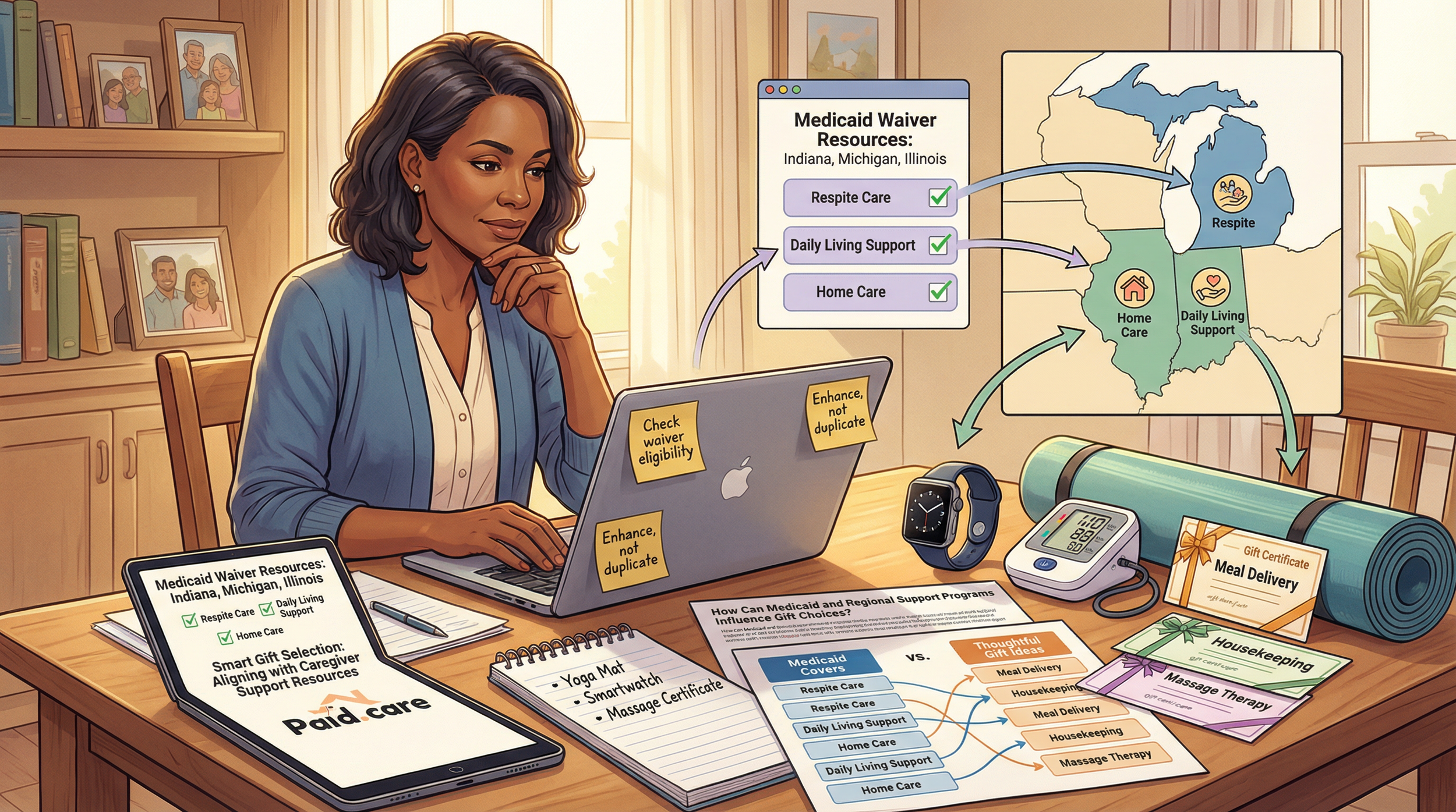
Understanding how Medicaid and regional support programs work can help guide gift selections for caregivers. These programs often provide resources that can enhance the caregiving experience, making it essential to consider their influence when choosing gifts.
Understanding Medicaid Waivers for Caregivers in Indiana, Michigan, and Illinois
Medicaid waivers are designed to provide support for caregivers in specific states, including Indiana, Michigan, and Illinois. These waivers can cover various services, including respite care and support for daily living activities. By understanding the eligibility criteria and benefits of these waivers, gift-givers can select items that align with available resources, ensuring that their gifts are both thoughtful and practical.
Gift Ideas Aligned with Caregiver Support Resources in Target States
When selecting gifts, consider those that can complement resources supported by Medicaid. For example, items that promote health and wellness, such as fitness trackers or health monitoring devices, can be particularly beneficial. By aligning gift choices with caregiver support resources, you can ensure that your gift has a meaningful impact.
What Are Thoughtful Thank You Gifts for Family Caregivers?
Thank-you gifts are a powerful way to express appreciation for the hard work and dedication of family caregivers. These gifts can range from simple tokens of gratitude to more elaborate gestures that convey deep appreciation.
Meaningful Presents to Express Appreciation and Encouragement
Meaningful gifts can include items such as custom-made thank-you cards, personalized photo frames, or even a heartfelt letter expressing your gratitude. These gifts serve as a reminder of the caregiver's importance and can provide encouragement during challenging times. The emotional significance of thank-you gifts cannot be overstated, as they foster a sense of connection and appreciation.
The act of expressing gratitude through gifts is not just about the item itself, but also about how that appreciation is perceived within the caregiver relationship.
Perceived Gratitude in Caregiver Relationships Beyond these straightforward ideas about how gratitude is performed and perceived, our research also lent support for the importance of collaboration in early stages of caring for Discussion of care, contribution, and perceived (in) gratitude in the family caregiver and sibling relationship, 2016
Combining Gift Giving with Emotional Support and Resources
Combining gift-giving with emotional support can enhance the impact of your gesture. Consider including resources such as books on self-care, access to support groups, or subscriptions to wellness apps alongside your gift. This approach not only shows appreciation but also provides caregivers with tools to manage their well-being effectively. By integrating emotional support with thoughtful gifts, you can create a lasting positive impact on their caregiving journey.
To further show your appreciation, consider exploring caregiver resources that offer additional support and guidance.
FAQs
-
The best caregiver appreciation gifts are usually the ones that make daily life easier, more comfortable, or more meaningful. Thoughtful options include meal delivery, a massage or spa gift card, a cozy blanket, a high-quality water bottle, a journal, a caregiver planner, or a simple self-care kit. Practical gifts can be just as meaningful as sentimental ones—especially when they help reduce stress or save time.
-
Both can be valuable, and the best choice depends on the caregiver’s personality and current needs. Practical gifts like grocery gift cards, prepared meals, house-cleaning help, or respite support can directly ease the caregiving load. Sentimental gifts—such as a handwritten note, memory book, or framed family photo—can provide emotional encouragement and remind caregivers that their work is seen and appreciated.
-
Try to avoid gifts that create more work, clutter, or pressure. For example, complicated gadgets, items that require setup or maintenance, or gifts that assume the caregiver has extra free time may not feel helpful. It is also best to avoid overly generic “thank you” items if the caregiver is overwhelmed—something personal, practical, or directly supportive usually has a bigger impact.
-
Meaningful gifts do not need to be expensive. Low-cost ideas include a heartfelt card, a favorite snack basket, coffee or tea, a cozy pair of socks, a reusable tumbler, a printed photo, or offering to handle a specific task like errands or meal prep. Even small acts of support—such as giving the caregiver a few uninterrupted hours to rest—can feel more valuable than a store-bought gift.

