
Filial Responsibility Laws and Caregiver Costs: State-by-State Basics for Family Caregivers

Filial responsibility laws require adult children to support certain parents or dependents under state statutes, potentially creating a legal and financial obligation that affects family caregivers. This article explains what filial responsibility laws are, how they historically arose, and why they matter today for caregiver costs and long-term care planning. Readers will learn how filial statutes can translate into liability, the typical out-of-pocket costs caregivers face, and the state and federal programs that can pay family members for care. The guide also compares state differences—emphasizing Indiana, Michigan, and Illinois—and outlines practical financial and legal planning steps including tax considerations, power of attorney, and guardianship. Finally, it describes how Paid.care can help caregivers assess eligibility and apply for consumer-directed Medicaid waivers, veteran-directed programs, and paid family leave, using tools like a State-by-State Guide and a Pay Calculator. By the end, you should understand the legal risk, the payer options that reduce out-of-pocket burden, and actionable next steps to pursue paid caregiving while protecting family finances.
What Are Filial Responsibility Laws and How Do They Affect Family Caregivers?
Filial responsibility laws are statutes that assign financial duty to adult children for the care and support of indigent parents, and they operate by enabling creditors or providers to seek payment from family members under certain conditions. These laws exist because states historically placed eldercare costs on families when public programs were limited, and they persist as a legal backstop that can intersect with modern long-term care funding. For caregivers, the practical effect is twofold: potential legal claims for unpaid bills and a heightened incentive to pursue public benefits or paid-care programs that shift costs away from private family resources. Understanding how statutes function helps caregivers choose strategies—like qualifying for Medicaid HCBS waivers or documenting care—that reduce enforcement risk and leverage public payer options. The following subsections define the law’s origins and list the states where filial statutes remain on the books, setting up a comparison of enforcement behavior and practical implications for caregivers.
What Is the Definition and History of Filial Responsibility Laws?
Filial responsibility laws are state statutes that permit the recovery of an indigent person's care costs from adult children or other relatives when the person cannot pay. These laws trace back to colonial and 19th-century poor laws designed to prevent public dependency by assigning family support duties, and they remained in many state codes even as social safety nets like Medicaid developed. The mechanism is straightforward: a care provider or a government agency can sue under state law to recover costs, though the exact triggers and defenses vary by jurisdiction. Knowing the law’s origin and statutory structure helps caregivers anticipate whether a bill might lead to a claim and informs choices about documenting need, applying for benefits, and engaging legal counsel when a provider threatens collection.
Which States Have Active Filial Responsibility Laws?
A number of states retain filial responsibility statutes, and enforcement varies widely from rare civil claims to occasional settlements; Indiana, Michigan, and Illinois are among states with such statutes and thus merit close attention from caregivers in those jurisdictions. While some states rarely invoke these laws, others maintain them primarily as leverage in recovery actions connected to long-term care or medical bills, making local enforcement trends an important consideration. Caregivers should check their own state’s statute language and recent case activity to evaluate actual exposure and to determine whether pursuing public benefit enrollment could reduce the risk of a claim. With enforcement uneven, the practical takeaway is to prioritize program eligibility and financial documentation so that public payers, rather than family members, cover long-term care costs when possible.
How Do Filial Responsibility Laws Impact Caregiver Costs and Financial Liability?
Filial responsibility laws can increase caregiver costs by creating the prospect of legal liability for care bills that otherwise might be covered by Medicaid, VA benefits, or private insurance; the effect depends on whether a caregiver can shift those costs through public programs.
The core financial impacts include direct payment obligations for nursing home or medical care, indirect costs such as lost wages from caregiving, and administrative expenses tied to applications and legal defense. Assessing these impacts requires understanding typical expense ranges, how spend-down or asset rules work, and pathways to substitute public payment for private family payment. The next subsections break down representative caregiver costs and explain the legal mechanisms that might transform unpaid bills into enforceable liabilities, and they conclude with practical steps to reduce exposure through program enrollment and documentation.
What Are the Typical Caregiver Costs Under Filial Support Laws?
Caregiver costs commonly include in-home assistance, personal care, respite services, and—if Medicaid is unavailable—nursing facility bills, with expenses varying widely by intensity of need and region. Out-of-pocket monthly costs for personal care can range from modest hourly rates for limited help to several thousand dollars monthly for higher-level support or residential placement; lost income from reduced work hours adds a significant indirect expense. These costs can become the foundation of a filial claim if a provider seeks reimbursement and the family has not secured public benefits or formal caregiving arrangements that authorize paid family caregivers. Knowing these cost drivers helps caregivers prioritize eligibility checks for Medicaid HCBS waivers, veteran-directed programs, and other payer sources that may cover wages for family caregivers.
How Are Adult Children Legally Liable for Parental Care Expenses?
Adult children may become legally liable when a state statute or a provider’s civil claim identifies unpaid care costs and the family lacks an available public payer; liability typically arises through a court judgment or administrative recovery action. The process often begins with a bill or demand, followed by collection attempts and potential litigation; defenses include proving inability to pay, demonstrating that public benefits apply, or showing the parent’s own assets are insufficient. Because enforcement frequency is low in many states, the practical risk centers on whether unpaid bills prompt collection that escalates; caregivers can reduce that risk by documenting financial need, pursuing eligible public programs, and securing legal advice when threatened. Taking proactive steps to enroll a parent in payer programs is usually the most effective way to prevent a private filial claim from becoming a binding financial liability.

What State and Federal Programs Help Family Caregivers Get Paid?
Yes — several state and federal programs enable family members to receive compensation for caregiving, though eligibility and mechanics differ by program type and state. Key program types include Medicaid HCBS waivers with consumer-directed models, veteran-directed care through the VA, and state or employer paid family leave that provides wage replacement for caregiving time. Each pathway has different eligibility triggers, documentation requirements, and rules about whether family members may be paid, so caregivers must match the program type to the care recipient’s eligibility profile. Below is an EAV comparison of common program categories to clarify who qualifies, whether family payment is allowed, and practical application tips to begin the enrollment process.
Different payer programs offer distinct mechanisms for compensating family caregivers and vary on whether they permit family members to be paid.
Educate family caregivers on eligibility and process for getting paid, and guide them to apply for Paid.care's services. The next subsection explains how consumer-directed Medicaid waivers typically operate and the practical steps caregivers face when seeking to be paid through these programs.
How Do Medicaid Waiver Programs Support Paid Family Caregiving?
Medicaid HCBS waivers fund home- and community-based services that let eligible individuals receive care in the community rather than in institutions, and consumer-directed models within many waivers permit the care recipient to hire and pay family caregivers. The waiver process generally involves a needs assessment, financial eligibility determination, and an individualized care plan that specifies services and authorized caregivers; states set program limits and specify whether spouses or primary caregivers may be paid. Application steps usually include a formal assessment, documentation of medical need, and payroll arrangements or financial intermediary setup when family members are employed. Because rules differ by state, caregivers should collect assessment documents, identification, and any medical records likely to speed eligibility determination and caregiver enrollment.
What Other Programs Pay Family Caregivers?
Beyond Medicaid waivers, veteran-directed care, state caregiver subsidies, and paid family leave can provide wages or wage replacement to family caregivers depending on eligibility and program design. The VA offers programs that can fund at-home care or support services for qualifying veterans, sometimes including compensation for family caregivers under specific VA initiatives. Paid family leave programs—whether employer-provided or state-run—offer wage replacement for employees who take time off to care for a relative, though they typically reimburse the employee rather than directly hiring the caregiver. Caregivers should also explore state-specific initiatives and employer benefits that may provide supplemental funds or leave protections that reduce financial strain while caregiving.
How Does Paid.care Help Family Caregivers Navigate Payment and Eligibility?
Paid.care acts as a navigation and application support solution that helps caregivers determine which programs apply, complete enrollment steps, and manage day-to-day payment logistics. The service emphasizes eligibility assistance for Medicaid HCBS waivers, veteran-directed care programs, consumer-directed personal care arrangements, and paid family leave where applicable, and it offers a State-by-State Guide and a Pay Calculator to estimate potential compensation. Paid.care’s stated value propositions include offering Free Care Coaching—so caregivers never pay a penny to Paid.care for coaching—24/7 Support for qualification and process guidance, the Paid.care App for managing care and tracking hours, and claims of Highest Pay Rates in some markets, often over $250/day in Indiana. The following subsections explain a typical eligibility and application flow and how the app supports caregivers in documenting care and payments.
What Is the Eligibility and Application Process with Paid.care?
Paid.care’s eligibility and application workflow begins with an assessment to determine program fit, followed by application assistance and ongoing coaching through approval and payroll setup. Step 1 is an initial eligibility check where Paid.care reviews the care recipient’s payer status (Medicaid, VA, employer leave) and the caregiver’s relationship to the recipient; Step 2 is application support that helps assemble assessments, medical documentation, and financial records required by state or federal programs; Step 3 involves enrollment and setup for payment processing, documentation, and payroll compliance when the caregiver is authorized to be paid. Paid.care highlights tools such as a State-by-State Guide to clarify local rules and a Pay Calculator to estimate caregiver compensation; caregivers should prepare ID, medical assessments, and evidence of relationship to the care recipient to expedite applications.
How Does the Paid.care App Support Caregivers in Managing Care and Payments?
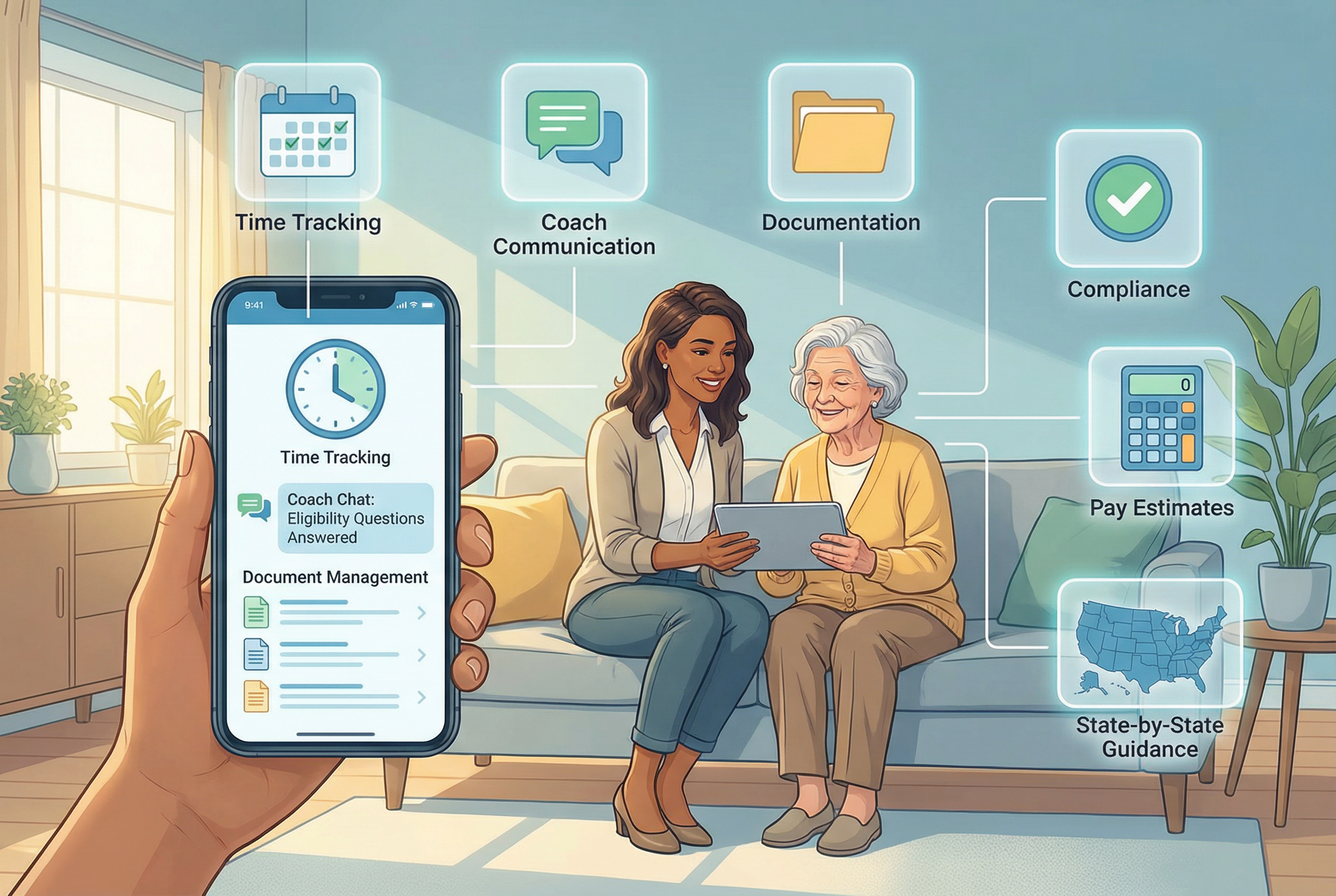
The Paid.care App supports day-to-day management by enabling caregivers to record hours, document care activities, and communicate with care coaches and experts for compliance and coaching needs. Core features include time-tracking to validate paid hours for payroll, secure messaging with Paid.care coaches for eligibility questions, and documentation storage for care plans and assessments that payers require. These functions help caregivers maintain audit-ready records, simplify payroll submission when programs authorize family payment, and provide a centralized place for coaching notes and next steps. By combining tracking, communication, and documentation, the app reduces administrative friction and strengthens evidence needed for program compliance and compensation.
What Are the State-by-State Differences in Filial Responsibility Laws and Caregiver Payment Programs?
State differences matter because filial statutes, enforcement practices, and the availability of caregiver payment programs vary substantially, shaping both legal exposure and routes to being paid for family caregiving. Indiana, Michigan, and Illinois each retain statutory frameworks related to filial responsibility, but enforcement frequency and the interaction with Medicaid waivers differ by state policy and administrative practice. Comparing statutes alongside the state-run waiver and veteran program availability helps caregivers prioritize which applications to pursue and whether to rely on public payers to avoid private liability. The table below summarizes key state distinctions and program highlights for the three primary states where Paid.care operates.
How Do Indiana, Michigan, and Illinois Filial Laws Differ?
Indiana, Michigan, and Illinois each have filial statutes with differences in statutory language and enforcement tendencies, and caregivers should consider both the text of the law and local practices when assessing risk. In some jurisdictions, statutes are older and enforcement is rare, while in others, providers or government agencies may pursue recovery under limited circumstances; understanding these nuances directs whether immediate enrollment in public payer programs is a priority. For caregivers in these states, the practical approach is to assume potential exposure but to focus first on qualifying the parent for Medicaid waivers or veteran benefits that legally change who is responsible for payment. Consulting local legal resources and completing eligibility applications are the most effective ways to reduce the chance that a filial claim results in a judgment against an adult child.
What Are the Key Medicaid Waiver and Payment Programs in These States?
Each state operates specific waivers and HCBS programs—often named for the target population such as aged or disabled waivers—that enable consumer-directed care in which family members may be compensated when explicitly allowed. In Indiana, consumer-directed options and state-specific waivers create clear pathways for family payment and are associated with relatively high caregiver pay in some areas; in Michigan and Illinois, state waiver programs also permit family caregiver payment under defined conditions and with administrative steps to authorize payroll. Caregivers should identify the exact waiver name in their state, verify whether family members are eligible to be hired under that program, and begin the application process with documentation of assessed need and financial eligibility. Starting with an eligibility assessment speeds access to wage-supported caregiving where program rules permit.
What Financial Planning and Legal Considerations Should Family Caregivers Know?
Financial planning and legal steps can reduce liability risk and preserve household finances while enabling paid caregiving when appropriate, including tax strategies, documentation practices, and authority arrangements like power of attorney or guardianship. Caregivers should be aware of common credits or deductions, how to document caregiving expenses for tax or benefit purposes, and when to establish legal authority to manage finances and healthcare decisions for the care recipient. The following table summarizes common benefits and rules, who typically qualifies, and the primary tax or financial implications caregivers should track as part of a broader protection plan.
Review common financial supports and rules, who typically qualifies, and what financial implications caregivers should expect.
What Tax Credits and Financial Aid Are Available for Family Caregivers?
Several tax provisions and financial aid options may apply depending on dependency status, income, and program enrollment; common examples include dependent-related tax benefits and potential deductions for medical expenses when itemizing. Eligibility typically requires meeting IRS dependency tests or program-specific criteria, and careful recordkeeping of caregiving expenses, receipts, and program documentation is critical to substantiate claims. In cases where the caregiver receives wages through a public program, those wages are taxable and require standard payroll reporting; conversely, public payer coverage of care can substantially reduce out-of-pocket spending that might otherwise be claimed as medical expense deductions. Consulting authoritative tax guidance and maintaining clear documentation ensures caregivers maximize available financial supports without risking compliance issues.
How Do Power of Attorney and Guardianship Affect Caregiving Responsibilities?
Power of attorney (POA) and guardianship assign legal authority to manage financial and healthcare decisions for a care recipient and can simplify payment enrollment, benefit coordination, and bill management when in place. A properly executed POA allows an appointed agent to sign application forms, access records, and manage benefits, which streamlines Medicaid or VA enrollment and reduces administrative barriers to getting care paid. Guardianship is a court process that grants broader decision-making authority but is typically more resource-intensive; it may be necessary when the care recipient lacks capacity and no valid POA exists. Establishing appropriate legal authority helps caregivers act on behalf of the care recipient, protect assets, and comply with program requirements that facilitate paid caregiving.
Educate family caregivers on eligibility and process for getting paid, and guide them to apply for Paid.care's services. If you or a family member are exploring paid caregiving, consider using a structured eligibility check and the available state guides and pay estimation tools to evaluate options and begin applications with documentation ready. Paid.care’s combination of eligibility support, a State-by-State Guide, Pay Calculator, free care coaching, 24/7 support, and an app for tracking hours and communicating with experts can help translate program rules into practical steps toward receiving payment while protecting family finances.
FAQs
-
Filial responsibility laws are state laws that can, in limited situations, make adult children financially responsible for their indigent parents’ basic needs or long-term care costs. These laws are not federal, and not every state has them—and even where they exist, they are rarely used. When they are enforced, it’s usually in cases where a parent is unable to pay, and there may be unpaid nursing home or medical bills. The exact rules, defenses, and how often they’re applied vary a lot by state.
-
In theory, yes—in states that have and still enforce these laws, an adult child might be pursued for some of a parent’s unpaid long-term care or medical costs. In practice, it’s relatively uncommon and often depends on factors like:
Whether your state actively enforces its filial law
Your parent’s income and assets, and whether they truly are indigent
Your own ability to pay
Whether Medicaid or other benefits are available or were improperly denied
Because this is state-specific, you’d want to talk to a local elder law attorney to understand the real-world risk where you live.
-
Medicaid is usually the primary payer for long-term care once someone qualifies, and most states don’t try to collect from adult children while a parent is alive. However, in some states that have filial responsibility laws, a facility or provider might consider suing an adult child for unpaid bills if:
The parent doesn’t qualify for Medicaid,
There are unpaid nursing home or medical charges, and
The child is perceived to have sufficient income or assets.
Getting Medicaid applications handled correctly, using written caregiver agreements, and avoiding questionable transfers can help reduce the chance that unpaid balances trigger a filial responsibility claim.
-
There are several proactive steps families can take:
Learn your state’s rules: Check whether your state has a filial responsibility law and whether it’s being enforced.
Plan early for long-term care: Explore Medicaid, VA benefits, long-term care insurance, and other programs before a crisis.
Use clear caregiver contracts if a family member is being paid, so payments are treated as wages, not gifts.
Avoid signing as a “responsible party” on nursing home contracts without understanding what that means—ask if you can sign only as agent under power of attorney.
Keep good records of who paid what for your parent’s care (rent, food, utilities, medical bills).
Early planning and clear paperwork make it easier to show you have been helping, not hiding assets.
-
Because filial responsibility laws and long-term care financing are complex, it’s best to get qualified help. Consider speaking with:
An elder law or Medicaid planning attorney in your state
A local Area Agency on Aging or tribal aging services program
A state health insurance assistance program (SHIP) counselor
A Medicaid caseworker or social worker familiar with long-term care
They can explain how your state’s laws actually work in practice, what benefits your parent may qualify for, and how to structure caregiver pay and care arrangements so you protect both your parent and your own finances as much as possible.

