
Family Caregiver Job Duties: Essential Responsibilities and Daily Activities for Unpaid Caregivers

Family caregivers play a crucial role in supporting elderly or disabled loved ones, often taking on a variety of responsibilities that can be both rewarding and challenging. This article explores the essential duties and daily activities that family caregivers engage in, providing insights into their roles and the support they may need. Understanding these responsibilities is vital for recognizing the importance of caregivers in our communities and the impact they have on the well-being of their loved ones. We will delve into core responsibilities, Medicaid support, legal considerations, and stress management strategies for caregivers.
What Are the Core Responsibilities of Family Caregivers?
Family caregivers are responsible for a wide range of tasks that ensure the well-being of their loved ones. These responsibilities often include personal care tasks, medication management, and mobility assistance. By understanding these core duties, we can appreciate the significant impact caregivers have on the quality of life for those they support.
Which Daily Care Tasks Are Common in Elderly and Disability Support?
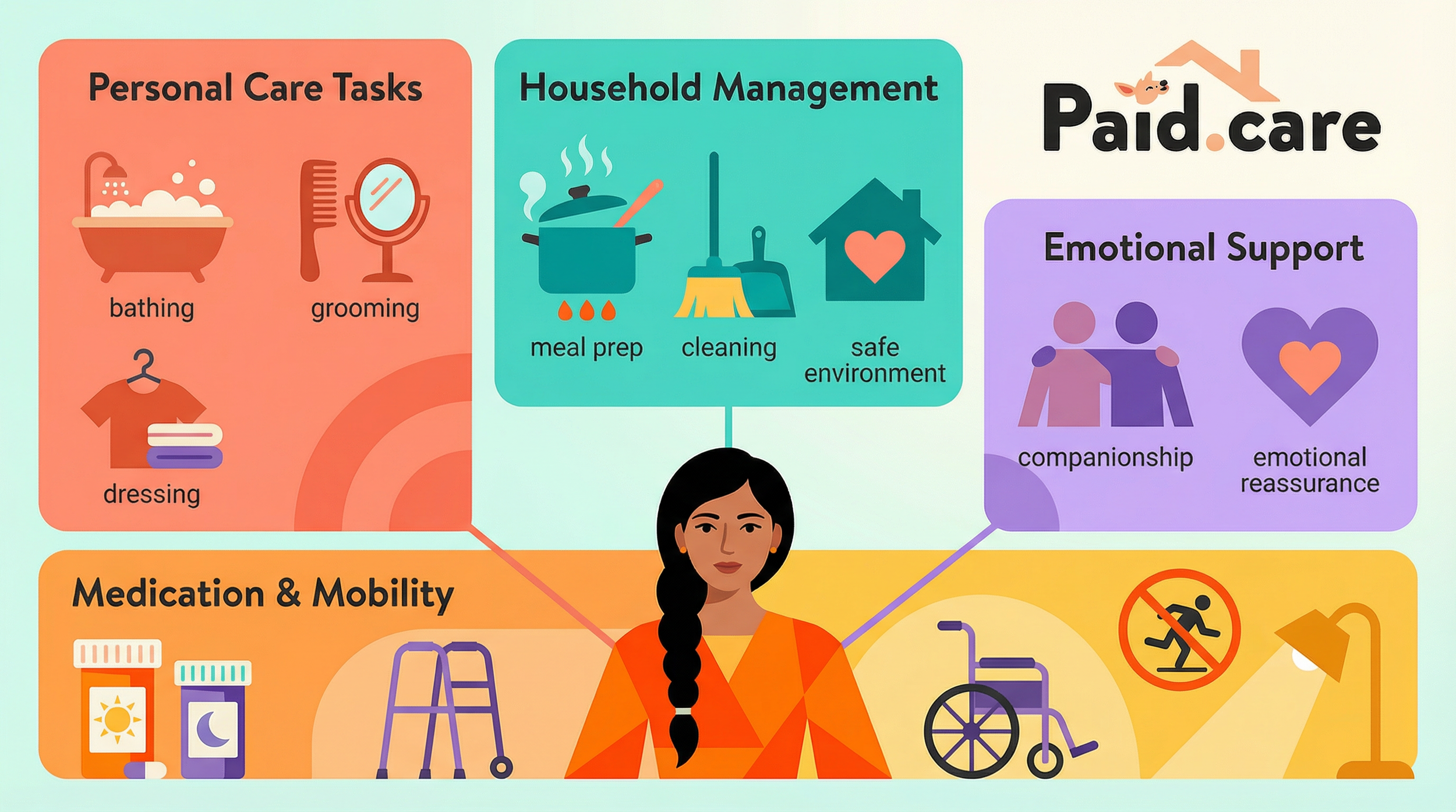
Daily care tasks for family caregivers typically encompass personal care, household management, and emotional support. Common activities include:
Personal Care Tasks: Assisting with bathing, grooming, and dressing to maintain hygiene and dignity.
Household Management: Preparing meals, cleaning, and managing household tasks to ensure a safe and comfortable living environment.
Emotional Support: Providing companionship and emotional reassurance to help alleviate feelings of isolation and anxiety.
These tasks are essential for maintaining the health and happiness of elderly or disabled individuals, highlighting the vital role caregivers play in their daily lives.
How Do Caregivers Manage Medication and Mobility Assistance?
Caregivers often face the challenge of managing medication schedules and providing mobility assistance. Effective management of these aspects is crucial for the health and safety of their loved ones.
Medication Schedules: Caregivers must keep track of medication dosages and timings, ensuring that medications are taken as prescribed to avoid complications.
Mobility Aids: Utilizing tools such as walkers, canes, or wheelchairs helps caregivers assist their loved ones in moving safely and comfortably.
Safety Precautions: Implementing safety measures, such as removing tripping hazards and ensuring proper lighting, is essential to prevent falls and injuries.
By effectively managing these responsibilities, caregivers can significantly enhance the quality of life for those they care for.
How Does Medicaid Support Family Caregivers in Indiana, Michigan, and Illinois?
Medicaid plays a vital role in supporting family caregivers by providing financial assistance and resources. Understanding how Medicaid works in different states can help caregivers access the support they need.
What Are Medicaid Waivers and Eligibility Criteria in These States?
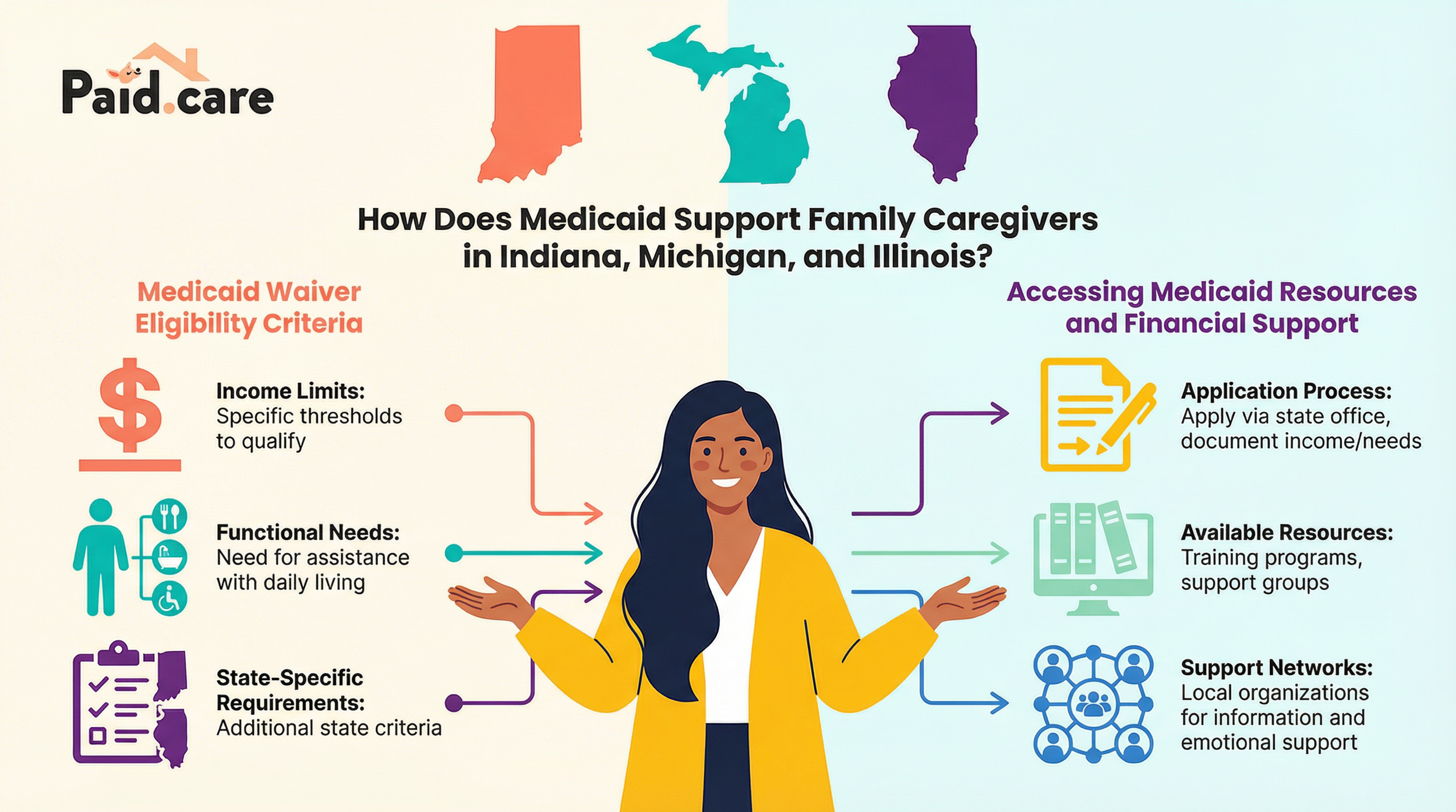
Medicaid waivers are programs that allow states to provide services to individuals who require long-term care while living at home. Eligibility criteria typically include:
Income Limits: Applicants must meet specific income thresholds to qualify for assistance.
Functional Needs: Individuals must demonstrate a need for assistance with daily living activities.
State-Specific Requirements: Each state may have additional criteria that applicants must meet.
These waivers can significantly ease the financial burden on family caregivers, allowing them to focus on providing care.
How Can Caregivers Access Medicaid Resources and Financial Support?
Accessing Medicaid resources involves several steps:
Application Process: Caregivers can apply for Medicaid waivers through their state’s Medicaid office, often requiring documentation of income and care needs.
Available Resources: Many states offer additional resources, such as training programs and support groups, to assist caregivers.
Support Networks: Connecting with local organizations can provide caregivers with valuable information and emotional support.
By navigating these resources, caregivers can find the financial assistance necessary to support their loved ones effectively.
What Legal and Safety Considerations Should Family Caregivers Know?
Family caregivers must be aware of various legal responsibilities and safety measures to protect themselves and their loved ones. Understanding these considerations is crucial for providing safe and compliant care.
Which Documentation and Legal Responsibilities Are Required?
Caregivers should be familiar with the necessary documentation and legal obligations, including:
Types of Documentation: Maintaining records of medical appointments, medications, and care plans is essential for effective caregiving.
Legal Obligations: Caregivers may need to understand power of attorney, guardianship, and other legal arrangements to make informed decisions on behalf of their loved ones.
Consequences of Non-Compliance: Failing to adhere to legal requirements can lead to complications, including loss of benefits or legal repercussions.
Being informed about these responsibilities helps caregivers navigate the complexities of caregiving.
How Can Caregivers Ensure Safety and Compliance in Home Care?
Ensuring safety and compliance in home care involves implementing best practices, such as:
Safety Protocols: Establishing routines for medication administration and emergency procedures can prevent accidents and ensure proper care.
Emergency Procedures: Caregivers should have a plan in place for emergencies, including contact information for healthcare providers and local emergency services.
Compliance Checks: Regularly reviewing care plans and legal documents ensures that caregivers remain compliant with regulations and best practices.
By prioritizing safety and compliance, caregivers can provide a secure environment for their loved ones.
How Can Family Caregivers Manage Stress and Access Training Resources?
Caring for a loved one can be emotionally and physically demanding, making stress management essential for family caregivers. Understanding available resources can help caregivers maintain their well-being.
What Emotional Support and Respite Options Are Available?
Emotional support and respite care options can alleviate caregiver stress. These include:
Types of Emotional Support: Support groups and counseling services provide caregivers with a space to share experiences and receive guidance.
Respite Care Options: Temporary care services allow caregivers to take breaks, ensuring they can recharge and continue providing quality care.
Community Resources: Local organizations often offer workshops and resources tailored to caregiver needs.
Accessing these options can significantly improve caregivers' mental health and overall quality of life.
Which Training Programs Help Improve Caregiver Skills?
Training programs can enhance caregivers' skills and confidence. Key options include:
Types of Training Programs: Workshops on specific caregiving skills, such as medication management and mobility assistance, can be beneficial.
Skills Development: Training helps caregivers learn new techniques and strategies for effective care.
Certification Options: Some programs offer certification, which can enhance a caregiver's qualifications and caregiving effectiveness.
By participating in training programs, caregivers can improve their abilities and provide better support to their loved ones.
FAQs
-
An unpaid family caregiver often helps with a wide range of daily responsibilities that support a loved one’s health, safety, and comfort at home. This can include personal care, meal preparation, medication reminders, transportation, appointment coordination, housekeeping, and emotional support. The exact duties depend on the person’s age, medical needs, mobility, and level of independence.
-
Many family caregivers help with activities such as bathing, dressing, grooming, toileting, mobility assistance, meal prep, and light cleaning. They may also manage grocery shopping, laundry, medication schedules, and transportation to doctor visits or errands. In some families, caregivers also help with companionship and supervision, especially if a loved one has memory issues or needs extra support during the day.
-
Sometimes, but it depends on the situation and the caregiver’s role. Many unpaid caregivers handle non-medical support like reminders, scheduling, and observing changes in symptoms, while trained professionals may handle more complex medical care. If a caregiver is asked to help with medical-related tasks at home, it is important to get clear instructions from the care team so care is safe and appropriate.
-
Organization and realistic routines make a big difference. Caregivers can reduce stress by using a written schedule, tracking medications and appointments, and dividing responsibilities with siblings or other helpers when possible. It is also important to ask for support early, take breaks, and use respite care or community resources when available to help prevent burnout.

