
Advocacy for the Introverted Caregiver: Essential Support and Medicaid Eligibility Guidance

Introverted caregivers play a vital role in providing support to loved ones, yet they often face unique challenges that can impact their well-being and effectiveness. This article explores the specific needs of introverted caregivers, particularly in relation to advocacy and Medicaid eligibility. Readers will learn about the characteristics of introverted caregivers, the stressors they encounter, and the resources available to help them navigate their caregiving responsibilities. By understanding these dynamics, introverted caregivers can better advocate for themselves and their loved ones, ensuring they receive the support they need. The following sections will cover the definition of introverted caregivers, the Medicaid waivers available in Indiana, Michigan, and Illinois, effective caregiving strategies, and resources for legal and advocacy support.
Who Are Introverted Caregivers and What Unique Challenges Do They Face?
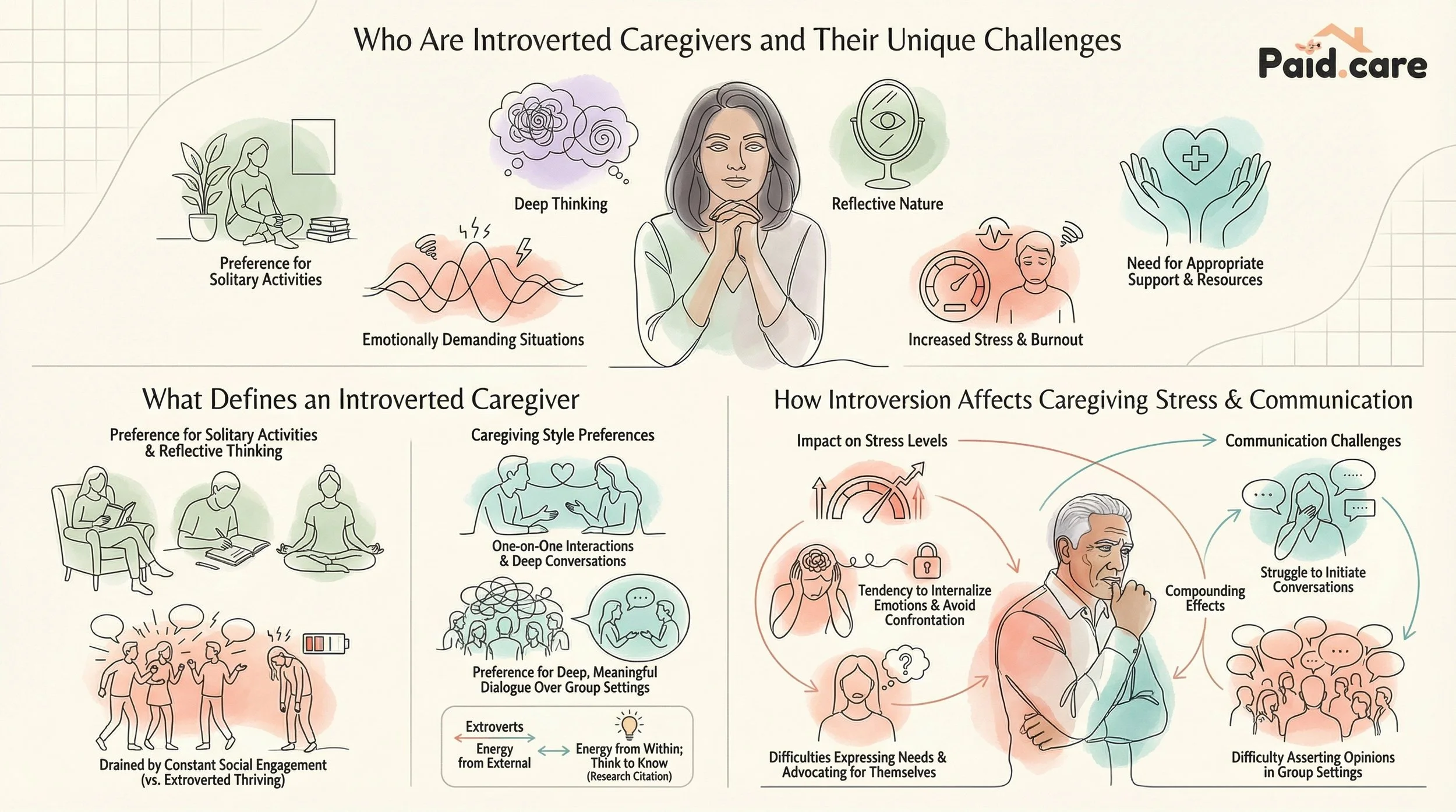
Introverted caregivers are individuals who provide care to others while exhibiting introverted personality traits, such as a preference for solitude and deep thinking. These caregivers often find themselves in emotionally demanding situations, which can lead to increased stress and burnout. Understanding the unique challenges they face is crucial for providing appropriate support and resources.
What Defines an Introverted Caregiver?
An introverted caregiver is characterized by their preference for solitary activities and reflective thinking. Unlike extroverted caregivers, who may thrive in social interactions, introverted caregivers often feel drained by constant social engagement. This distinction can affect their caregiving style, as they may prefer one-on-one interactions and deep conversations over group settings. Recognizing these traits is essential for tailoring support to their needs.
Understanding the fundamental differences in how introverts and extroverts process information and gain energy is key to appreciating the unique needs of introverted caregivers.
Introverted Caregiver Energy & Thought Processes while introverts get their energy from some source within. It is said that extraverts need to talk to know what they are thinking, and introverts need to think to know what they are thinking. Creating Serenity in Chaos: A Unique Course in Self-Care for Caregivers, 2022
How Does Introversion Affect Caregiving Stress and Communication?
Introversion can significantly impact the stress levels and communication styles of caregivers. Research indicates that introverted caregivers may experience higher levels of stress due to their tendency to internalize emotions and avoid confrontation. This can lead to difficulties in expressing their needs and advocating for themselves. Additionally, communication challenges may arise, as introverted caregivers might struggle to initiate conversations or assert their opinions in group settings, further complicating their caregiving roles.
What Medicaid Waivers and Eligibility Criteria Support Caregivers in Indiana, Michigan, and Illinois?
Medicaid waivers provide essential financial support for caregivers, allowing them to access necessary resources and services. Understanding the available programs and eligibility criteria is crucial for introverted caregivers seeking assistance in Indiana, Michigan, and Illinois.
The effectiveness of these waiver programs is often measured by their ability to address the specific care needs of individuals and the resulting impact on caregiver well-being.
Medicaid Eligibility & Caregiver Needs in the United States, where eligibility is based on care needs of individuals with intellectual and developmental disabilities, and the impact of Medicaid waiver services on self-reported caregiver needs. Medicaid long‐term services and supports and caregiving needs of caregivers of individuals with intellectual and developmental disabilities, 2024
Which Medicaid Waiver Programs Are Available in Each State?
In Indiana, the Family Support Waiver and the Community Integration and Habilitation Waiver are available to support caregivers. Michigan offers the Home and Community-Based Services Waiver, while Illinois provides the Supportive Living Program. Each program has specific eligibility requirements, including income limits and care needs assessments, which caregivers must navigate to access support.
How Can Introverted Caregivers Apply for Medicaid Waivers?
Applying for Medicaid waivers can be a complex process, but understanding the steps involved can simplify it. Introverted caregivers should begin by gathering necessary documentation, such as proof of income and medical records. Next, they can complete the application forms, ensuring they accurately represent their caregiving situation. It may also be beneficial to seek assistance from local advocacy organizations that specialize in Medicaid applications to avoid common pitfalls.
What Effective Caregiving Strategies Help Introverted Caregivers Manage Stress and Advocate Successfully?
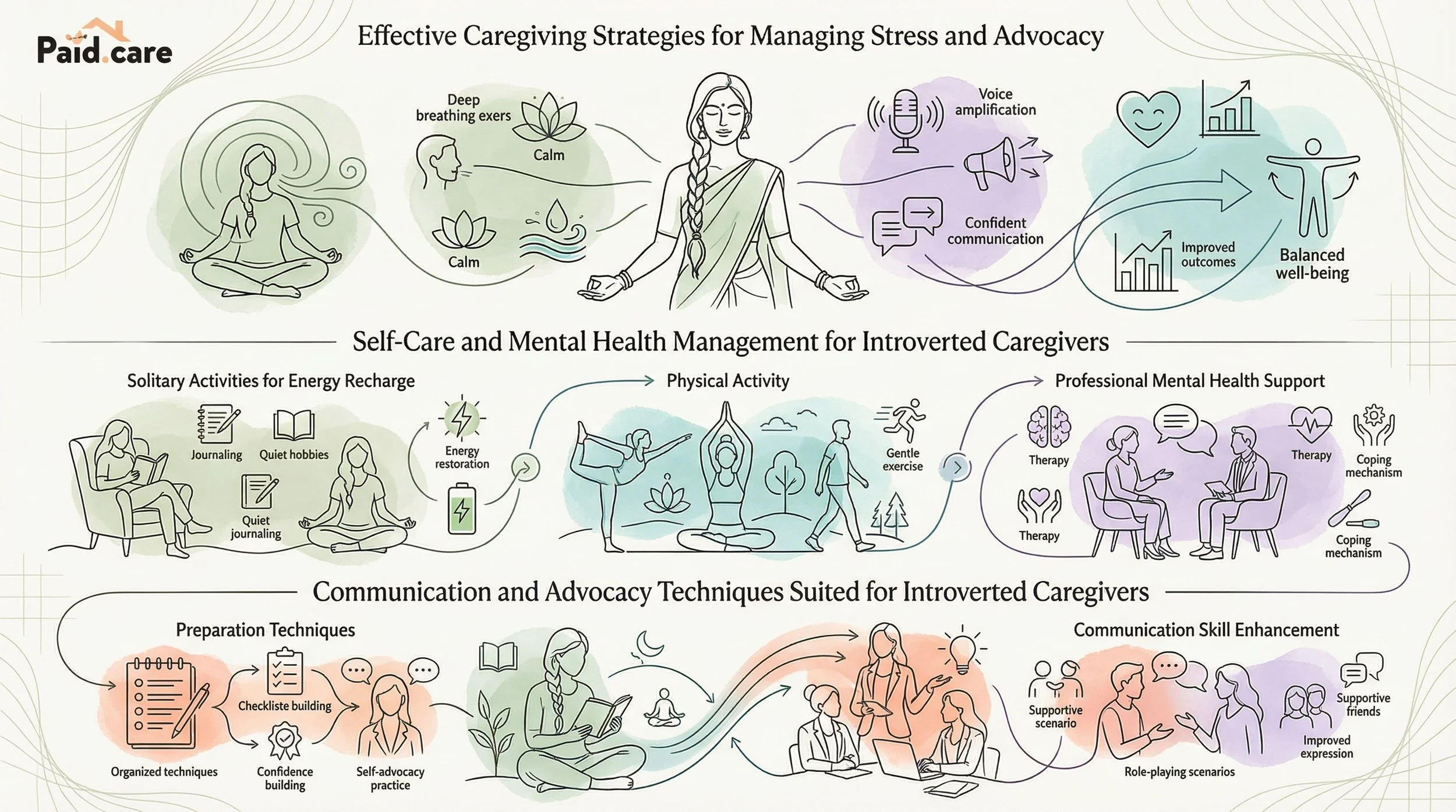
Introverted caregivers can benefit from specific strategies that help them manage stress and effectively advocate for their needs. By implementing these techniques, they can enhance their caregiving experience and improve their overall well-being.
How Can Introverted Caregivers Practice Self-Care and Mental Health Management?
Self-care is essential for introverted caregivers to maintain their mental health. Strategies may include setting aside time for solitary activities, such as reading or meditating, which can help recharge their energy. Additionally, engaging in regular physical activity and seeking support from mental health professionals can provide valuable coping mechanisms for managing stress.
What Communication and Advocacy Techniques Suit Introverted Caregivers?
Effective communication is vital for introverted caregivers to advocate for themselves and their loved ones. Techniques such as preparing talking points before meetings and practicing assertiveness can help them express their needs more confidently. Role-playing scenarios with trusted friends or family members can also enhance their communication skills, making it easier to navigate challenging conversations.
Where Can Introverted Caregivers Find Legal and Advocacy Resources for Unpaid Elder Care?
Accessing legal and advocacy resources is crucial for introverted caregivers who may face challenges in navigating the complexities of elder care. Various organizations and resources are available to support them in their caregiving journey.
What Rights and Support Organizations Are Available for Unpaid Caregivers?
Despite the existence of support organizations, the broader policy landscape often presents challenges in securing adequate social supports for family caregivers.
Advocating for Family Caregiver Social Supports We draw on discussions from the California Task Force on Family Caregiving, which identified that the current policy landscape was incongruent with advocating for additional social supports. What are strategies to advance policies supporting family caregivers? Promising approaches from a statewide task force, K Meyer, 2019
How Do Advocacy Resources Address Introverted Caregiver Needs?
Advocacy resources are increasingly recognizing the unique needs of introverted caregivers. Programs tailored to their preferences, such as one-on-one counseling and online support groups, can provide a comfortable environment for introverted caregivers to seek assistance. These resources help address their specific challenges, ensuring they receive the support necessary to thrive in their caregiving roles.
FAQs
-
Introverted caregivers often find the "loud" nature of advocacy—constant phone calls, assertive medical debates, and public agency navigation—draining and overwhelming. In 2026, advocacy isn't just about being the loudest voice in the room; it’s about preparation. For an introvert, effective advocacy often happens through meticulous documentation, written follow-ups, and the use of "Legacy Contacts" or digital vaults to provide evidence without needing to engage in high-conflict verbal exchanges.
-
As of 2026, the Medicaid income cap for long-term care has risen to $2,982 per month in many states, while asset limits remain strict (often $2,000, with notable exceptions like California's $130,000). For caregivers who find face-to-face financial interrogation stressful, the best strategy is to use the "Neutral Third Party" approach. Hiring an elder law attorney or using a professional Medicaid planner allows the introvert to stay behind the scenes while a professional handles the assertive negotiations with state caseworkers.
-
To avoid the social exhaustion of rushed doctor visits, introverts should pivot to "Asynchronous Advocacy." This means sending a concise bulleted list of concerns via the patient portal 24 hours before an appointment and requesting a written summary of the care plan afterward. By repeating back instructions ("So the next step is X on date Y?"), you ensure clarity and reduce the need for follow-up calls, preserving your limited social energy for direct caregiving.
-
Recent federal updates have introduced stricter "Concurrent Enrollment" monitoring and potential work requirements for certain Medicaid beneficiaries. For the introverted caregiver, this adds a layer of "administrative noise." Use AI-driven caregiving assistants to automate the "community engagement" logs or care diaries required by these new rules. These tools can summarize your caregiving hours into a professional report, allowing you to prove eligibility and meet federal standards without having to manually plead your case to an auditor.

