
Non-Medical Home Care: Services, Costs, and How Paid.care Helps Family Caregivers Get Paid
Key Takeaways
Non-medical home care provides assistance with daily living activities like bathing, meal preparation, light housekeeping, companionship, and transportation—not clinical nursing tasks like wound care or injections.
In 2026, most families pay for non-medical home care through private pay, long-term care insurance, or Medicaid waiver and HCBS programs; traditional Medicare typically does not cover these services.
Paid.care helps family caregivers in Indiana, Michigan, and Illinois get qualified, trained, and paid weekly through state-funded programs for the non-medical care they already provide.
A typical non-medical care day focuses on maintaining independence, preventing falls, supporting emotional well-being, and keeping loved ones safe in familiar surroundings.
Understanding the difference between medical home health care and non-medical home care helps families know when they need a home health nurse versus a personal caregiver—and how both services often work together.
What Is Non-Medical Home Care?
Non-medical home care is in-home assistance with Activities of Daily Living (ADLs) and Instrumental Activities of Daily Living (IADLs) that does not involve clinical interventions. Non-medical caregivers cannot perform clinical tasks such as injections, wound care, or medication administration. Instead, they focus on the practical support that helps people live safely and comfortably at home.
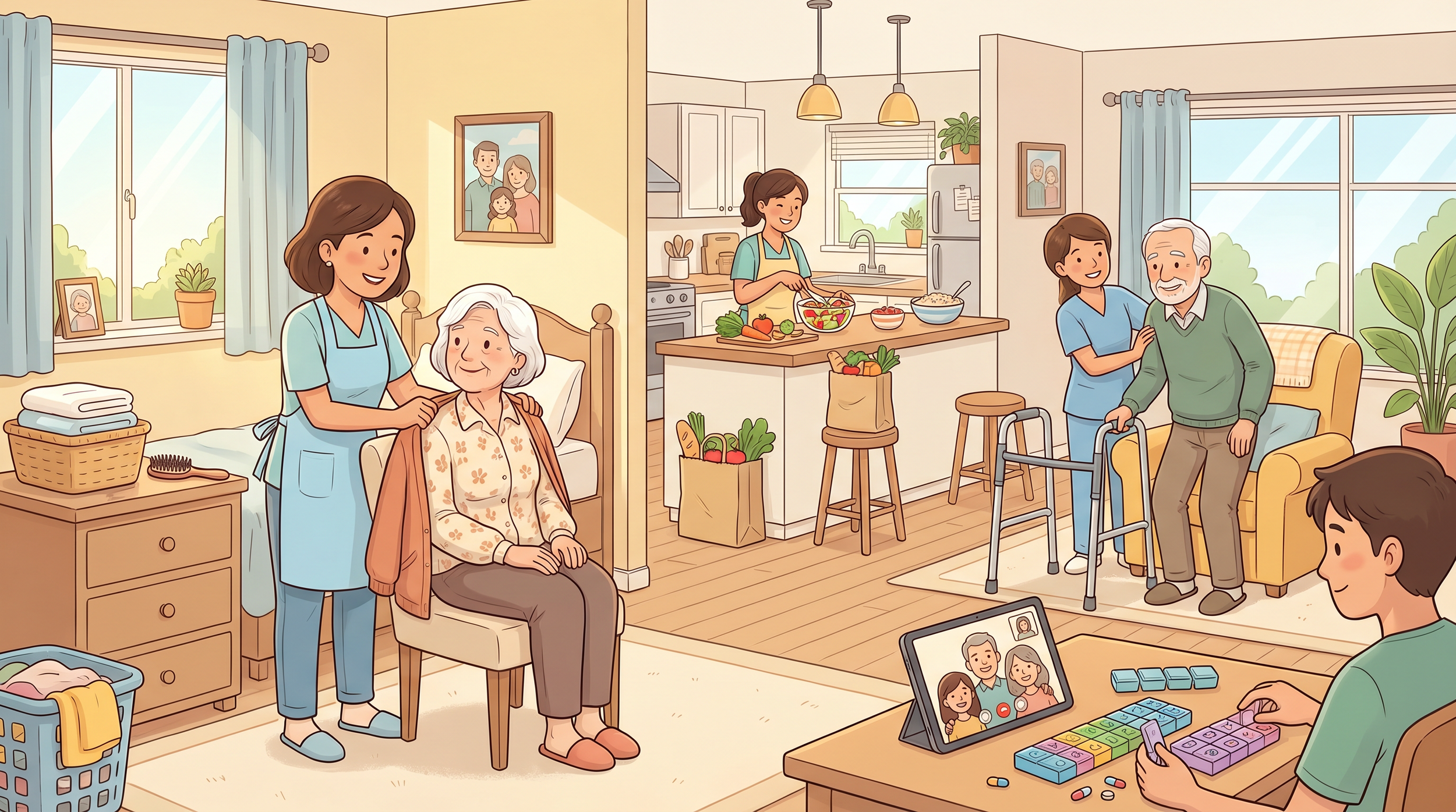
ADLs include bathing, dressing, grooming, toileting, transferring from bed to chair, and eating. IADLs cover meal preparation, laundry, light housekeeping, transportation, grocery shopping, organizing mail, and basic technology help like setting up video calls.
Personal care aides, direct support professionals, home care aides, and sometimes Certified Nursing Assistants (when not performing clinical tasks) typically provide non-medical care services. They may work a few hours per week up to nearly full-time shifts, depending on what families need.
The core goals are straightforward: supporting independence, preventing falls and avoidable hospitalizations, enabling aging in place, and reducing stress and burnout for unpaid family caregivers. Non-medical home care services primarily focus on assisting individuals with activities of daily living, allowing them to maintain independence at home. More than 26% of people over age 60 experience some degree of difficulty completing activities of daily living, highlighting the significant need for these services.
Consider Mary, age 79, in Indianapolis. She lives alone with arthritis and mild balance issues. Her daughter arranges for a caregiver to visit three mornings per week to help with showers, prepare breakfast, and tidy the kitchen. Mary stays in her own home, keeps her routine, and her daughter can focus on work without constant worry.
Non-Medical vs. Medical Home Health Care
Home health care is clinical and involves medical services provided by licensed healthcare professionals, while non-medical home care focuses on lifestyle and functional support, assisting with ADLs and IADLs. Understanding this distinction helps families make informed decisions.
Medical home health services are delivered by Registered Nurses (RNs), licensed practical nurses (LPNs), physical therapists, occupational therapists, speech therapists, and medical social workers. Medical home care is often prescribed by a physician and includes services such as nursing care, medication administration, and physical therapy.
Common medical home health tasks include wound and incision checks after surgery, IV medication administration, catheter care, injections, post-stroke rehabilitation therapy, COPD and heart failure monitoring with vital signs assessment, and medication changes under physician orders.
To qualify for home health care services, individuals generally must meet three criteria, which include being homebound and requiring skilled nursing care. Non-medical home care does not have such strict requirements.
After Surgery or Hospitalization
After a hospital stay, many patients receive both types of care. A home health nurse might visit two to three times per week to assess surgical sites and manage medications, while a non-medical aide covers daily bathing, meal preparation, and light housekeeping. As acute recovery concludes (typically four to eight weeks), nursing visits taper and cease, but non-medical support often continues.
For Long-Term Conditions
Patients with chronic conditions like diabetes, heart failure, or COPD may initially receive frequent medical care visits for disease education and vital sign monitoring. Over months, medical visits become less frequent or stop entirely. Non-medical care services, however, often continue for years—addressing meal preparation for dietary restrictions, medication reminders, fall-risk mitigation, and companionship that prevents disease exacerbation.
Families do not have to choose one or the other. In 2026, many Medicare beneficiaries receive short-term skilled home health while simultaneously relying on privately paid or Medicaid-funded non-medical caregivers for everyday help.
Core Non-Medical Home Care Services (8 Essential Supports)
While personalized care plans vary, most nonmedical home care services fall into eight common categories that families can mix and match based on needs and budgets.
Personal Care (Bathing, Dressing, Grooming, Toileting): Caregivers assist with showers, sponge baths, hair care, oral hygiene, personal grooming, incontinence care, and safe transfers to reduce falls. This support preserves dignity and can be scheduled around the person’s preferred daily routines. Personal hygiene assistance is often the foundation of a care plan.
Mobility Support and Light Exercise: Professional caregivers supervise walks, assist with safe use of walkers or canes, and guide simple exercises recommended by a physical therapist to maintain strength and balance. Caregivers help prevent accidents in the home by identifying hazards and assisting with mobility. Fall prevention is a key outcome.
Healthy Meal Preparation and Hydration: Services include grocery list creation, grocery shopping, cooking low-sodium or diabetic-friendly meals, preparing snacks, and tracking fluids to prevent dehydration. During hot Midwestern summers, hydration support becomes especially important.
Light Housekeeping and Home Organizing: Tasks include dishes, sweeping, vacuuming high-traffic areas, wiping bathrooms, laundry, changing bed linens, and decluttering walkways. Removing loose rugs, cords, and clutter reduces fall hazards significantly.
Medication Reminders and Organization Support: Caregivers can provide medication reminders to clients but typically cannot administer medications or change dosages. They help set up pill boxes and coordinate with family members or a home health nurse if doses are missed or side effects appear.
Transportation and Errands: Non-medical caregivers can provide transportation support, helping older adults attend medical appointments, run errands, and engage in social activities, which is crucial for preventing isolation and promoting mental well-being. Rides to dialysis, pharmacy pickups, bank visits, senior centers, and faith services help maintain routines.
Companionship and Cognitive Engagement: Companion care involves conversation, games, reading newspapers together, helping with video calls to grandchildren, and structured activities for people living with early-stage dementia. Companionship services involve social interaction and emotional support to prevent isolation among clients. Caregivers offer social interaction that reduces feelings of loneliness and isolation among seniors.
Pet and Household Support: Services include dog walking, feeding pets, litter box changes, bringing in mail and packages, trash and recycling, and seasonal tasks like checking smoke detector batteries. Respite care provides short-term relief to family caregivers who need breaks.
Who Benefits Most from Non-Medical Home Care?
Non-medical home care serves a wide range of people across different ages, diagnoses, and life situations—not just those over 80.
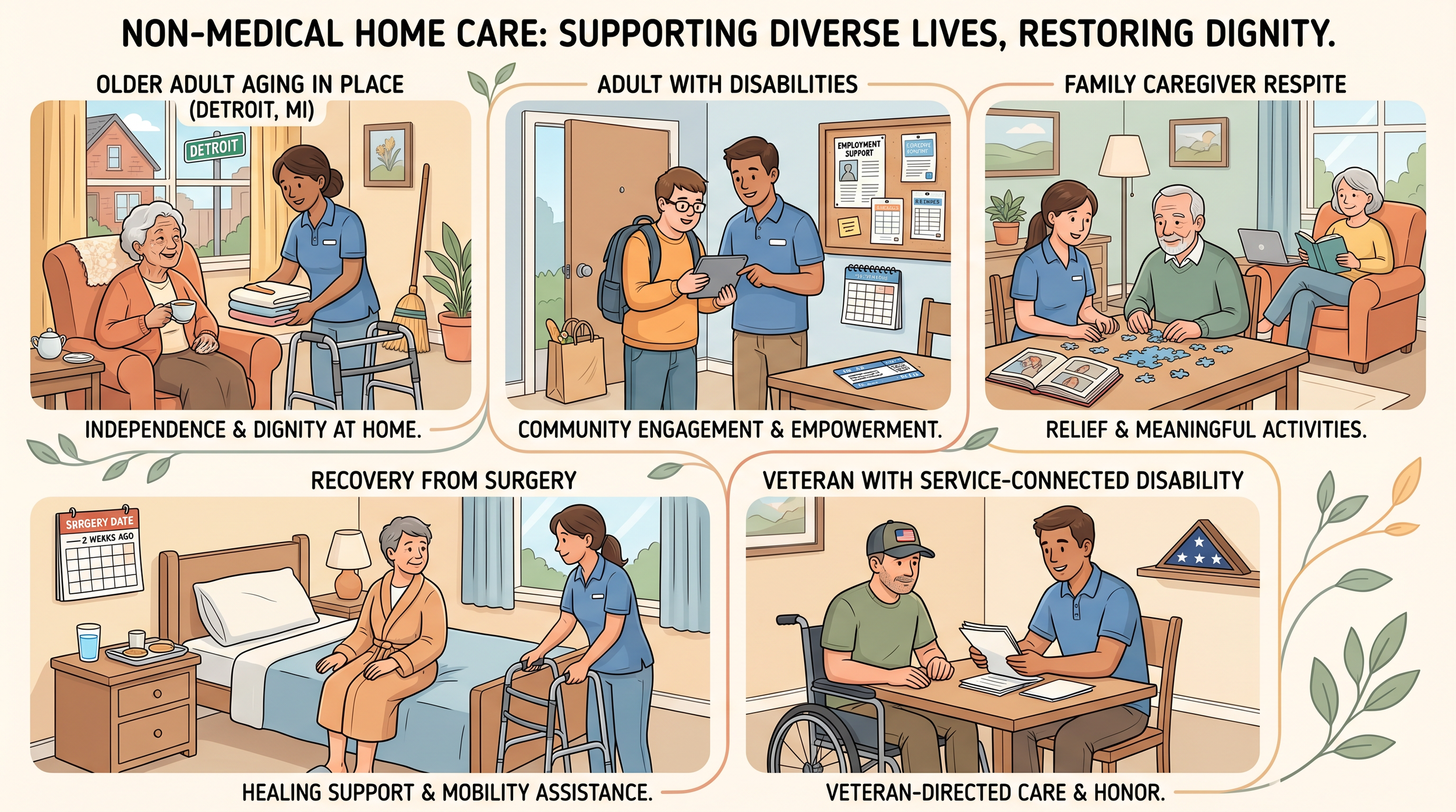
Older adults aging in place: A 78-year-old in Detroit living alone with arthritis and mild balance issues might need help three to four days per week for bathing, housework, and rides to appointments. Non-medical home care services are ideal for individuals who do not require medical care but need assistance with daily tasks, allowing them to maintain independence in their own home.
Adults with disabilities: People with developmental disabilities, traumatic brain injury, spinal cord injury, or chronic mental health conditions may qualify for Medicaid Home and Community Based Services (HCBS) waivers. They often need daily personal care, community outings, and employment-related supports.
Family caregivers of relatives with dementia: Non-medical caregivers provide supervision, redirection, and meaningful activities so spouses or adult children caring for someone with Alzheimer’s disease can sleep, work, or rest without constant worry.
People recovering from surgery or serious illness: Those recovering from joint replacements, cardiac events, or long COVID use non-medical help for a few months to manage meals, mobility, and household tasks once skilled nursing visits from home health agencies reduce.
Veterans and individuals with service-connected disabilities: Veterans benefits may fund veteran-directed or consumer-directed programs that provide non-medical support, keeping veterans home instead of in institutional care.
How Much Does Non-Medical Home Care Cost in 2026?
The national median rate for non-medical home care is approximately $30 per hour, with state-level rates ranging from roughly $21 to $50 depending on location and services offered. Non-medical care is generally less expensive than skilled care, but Medicare rarely pays for it, relying more on private pay or long-term care insurance.
In 2026, many home health agencies in Indiana, Michigan, and Illinois charge in the mid-$20s to low-$30s per hour for standard personal care and companion care. Specialized services for complex behavioral or dementia support typically cost more.
Common billing structures include hourly minimums (often two to four hour visits), weekly hour bundles, and surcharges for nights, weekends, or holidays. For example, 10 hours per week at $28 per hour equals approximately $1,120 monthly, while 40 hours per week would cost approximately $4,480 monthly. Budget is often a deciding factor for many families, as non-medical home care is billed by the hour, and costs can add up quickly if around-the-clock care is required.
Traditional Medicare Parts A and B typically do not pay for ongoing non-medical home care in 2026. Medicare covers skilled home health care only—time-limited and ordered by a physician. Some Medicare Advantage (Part C) plans offer limited supplemental non-medical benefits, such as a few hours per week for high-risk members. Check your specific plan documents.
Non-medical home care services are generally not covered by Medicare, but some long-term care insurance policies, Medicaid, or other insurance plans may provide coverage for these services provided. Medicaid and state HCBS waiver programs can cover non-medical care for eligible low-income seniors and people with disabilities, though each state has specific financial and functional criteria and sometimes waitlists.
Qualification for non-medical home care is generally simpler than for home health care services. Individuals can qualify if they can afford the service out-of-pocket or have long-term care insurance, without needing to be homebound or have a doctor’s note.
Understanding the cost structure and payment options of home care services is crucial to avoid unexpected expenses that could strain your family’s budget.
How Family Caregivers Can Get Paid for Non-Medical Home Care with Paid.care
Many relatives and close friends are already providing non-medical home care for free—often 20 or more hours per week. Certain state Medicaid and waiver programs allow those family caregivers to be compensated for this essential work.
Paid.care is a tech-enabled services platform that helps family caregivers in Indiana, Michigan, and Illinois check eligibility, complete required paperwork, receive caregiver training, and get paid weekly for the non-medical services they already provide through Medicaid, HCBS, and related state-funded programs.
Typical relationships that may be eligible include adult children, spouses (in some programs), siblings, and close friends. Rules differ by program and state, so families should not assume they are ineligible without checking.
Paid.care walks caregivers through these steps:
Quick online eligibility check
Confirming that the care recipient has, or can apply for, Medicaid or a state waiver
Completing background checks and basic training
Setting up the Paid.care mobile app to track hours and daily tasks
Receiving weekly direct deposits for approved caregiving hours
Paid.care offers care coaching and financial coaching to help families build safe care delivery plans, document hours correctly, understand pay rates in their state, and plan for taxes and long-term financial goals as a paid caregiver.
In 2026, many Medicaid consumer-directed programs in the Midwest pay family caregivers hourly rates that often fall in the mid-teens to low-$20s per hour, depending on state and program. Verify current rates through Paid.care’s eligibility check.
How to Choose a Non-Medical Home Care Provider or Program
Families can hire through an agency, select an independent caregiver, or in some states enroll as paid family caregivers themselves through consumer-directed Medicaid programs supported by platforms like Paid.care.
When choosing a non-medical home care provider, it is essential to research local agencies and read client reviews to ensure they have a strong reputation and relevant experience. Check state licensing databases and ask for referrals from hospitals, senior centers, veteran service organizations, and friends. Consulting with health care providers can help assess the specific care needs of your loved one and provide recommendations for reputable agencies.
Questions to ask agencies: What are caregiver training requirements? What background checks processes do you use? How do you handle supervision and nurse oversight? What is your backup plan for call-offs? How do you communicate with families? How are care plans updated?
It is important to interview potential caregivers to assess their compatibility with your loved one, as the relationship between caregiver and recipient is crucial for successful care delivery. Schedule interviews and an introductory visit to observe how the caregiver interacts with the care recipient. Consider whether they respect cultural and religious preferences and how they handle communication challenges such as hearing loss or early dementia.
Ensure that the home care agency is licensed, bonded, and insured, as this compliance with regulations is vital for the safety and security of your loved one. Understand contracts and costs upfront: cancellation policies, minimum hours per week, travel fees to clients homes, holiday rates, and whether the agency can coordinate with Medicaid, VA programs, or employer caregiving benefits.
For families in Indiana, Michigan, and Illinois who are already providing most hands-on care themselves, exploring Paid.care may be more appropriate than hiring an outside agency. This allows the current caregiver to become trained and compensated while keeping the loved one’s familiar routine.
Daily Life with Non-Medical Home Care: What Families Can Expect
A typical day with a non-medical caregiver might begin with a morning arrival, assistance getting out of bed, bathing, dressing, breakfast preparation, medication reminders, and light housekeeping before lunch. Home care provides dedicated attention tailored to an individual’s specific needs and preferences, unlike institutional settings.
Caregivers structure visits around the person’s natural schedule and preferences—whether they’re late risers or early risers, observe religious practices, have favorite TV shows, or feel most energetic at certain times. Seniors can maintain their own routines and make their own choices about meals, bathing, and daily schedules in home care settings.
Non-medical caregivers coordinate with family members and other professionals by leaving notes or app updates about appetite changes, mood shifts, falls, or unusual symptoms that might need a doctor’s attention. This holistic approach ensures nothing falls through the cracks.
Non-medical care improves quality of life in concrete ways: enabling weekly card games with neighbors, visits to a local park in Lansing, Sunday services in Chicago, or video calls with grandchildren in another state. Regular engagement with caregivers has been linked to better mental health and lower rates of depression in seniors.
For family caregivers, the benefits include decreased guilt, more predictable time for work or rest, and reduced risk of burnout. Many agencies and consumer-directed programs like Paid.care help maintain this balance.
FAQs
-
Usage varies widely. Most families start with 4–8 hours per week for light housekeeping and errands, while others arrange 20–40 hours weekly for personal care and supervision, especially for dementia or serious mobility issues. Medicaid and waiver programs often authorize specific hours based on an assessment of the care recipient’s needs. Paid.care helps families in Indiana, Michigan, and Illinois understand and work within those authorizations.
-
Yes. In many states, Medicaid consumer-directed or self-directed programs allow the care recipient to choose a family member or trusted friend as their paid caregiver, subject to eligibility, background checks, and training rules. Paid.care specializes in helping family caregivers in Indiana, Michigan, and Illinois navigate these programs so they can be paid for the non-medical home care they already provide without going through a traditional private duty agency.
-
Some families may be able to deduct certain care-related expenses as medical expenses if the care recipient is certified as chronically ill and meets IRS criteria, and if total medical expenses exceed a set percentage of adjusted gross income. Tax rules change and depend on individual circumstances, so consult a qualified tax professional rather than relying on this article for tax advice.
-
Unlike medical home health care, non-medical home care usually does not require a physician’s order. Families can arrange services privately or through qualifying programs as long as they meet financial and functional requirements. For Medicaid waivers and HCBS programs, states may require a functional assessment or approval process. Paid.care guides families in Indiana, Michigan, and Illinois through those steps.

