
The Caregiver’s Digital Estate Checklist: Essential Guide to Managing Digital Assets and Medicaid Documentation
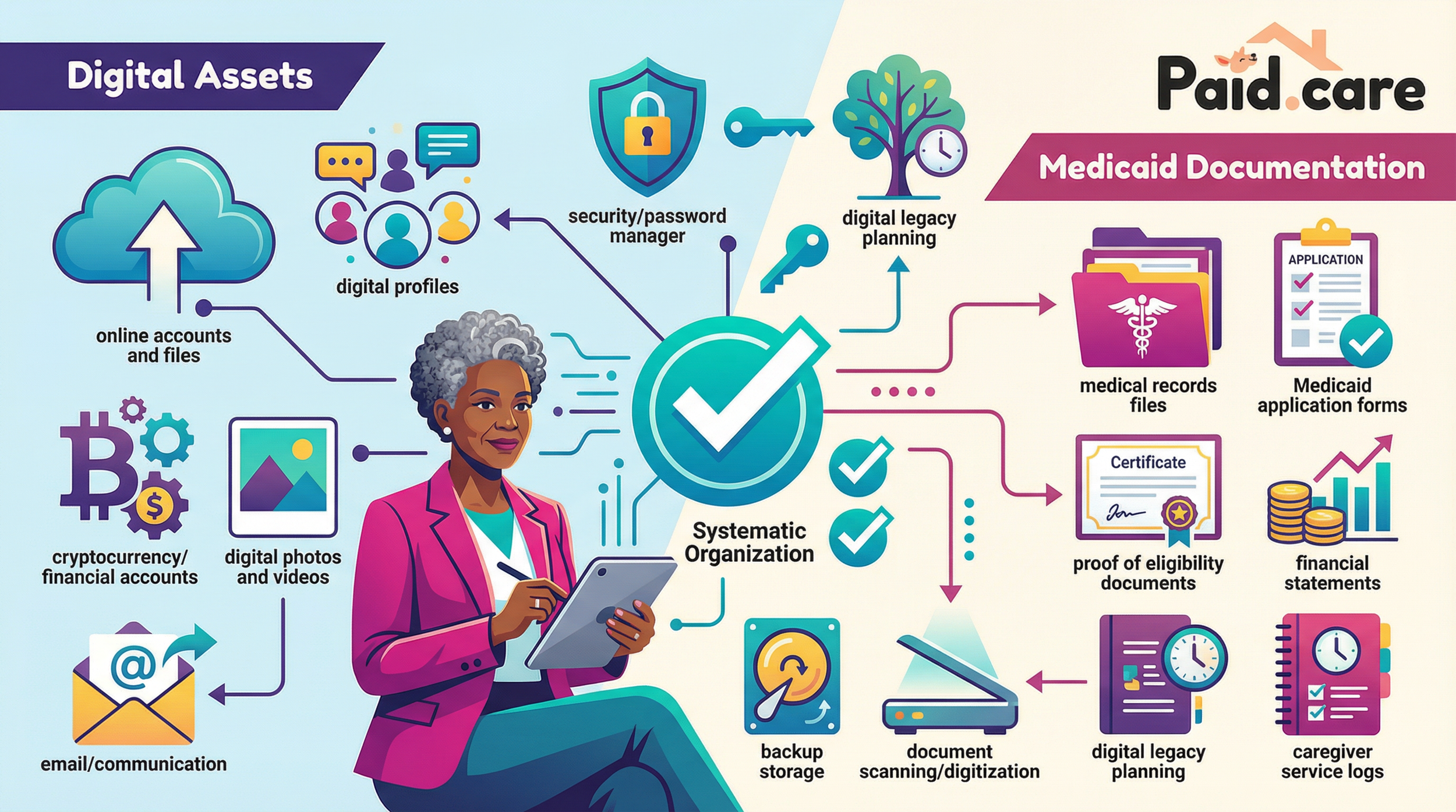
In an increasingly digital world, caregivers face the challenge of managing not only physical assets but also digital ones. A digital estate checklist is essential for caregivers to ensure that all online accounts, digital assets, and necessary documentation are organized and accessible. This guide will provide caregivers with a comprehensive understanding of what a digital estate checklist entails, its importance, and how to effectively manage digital assets and Medicaid documentation. Caregivers often struggle with the complexities of digital estate planning, which can lead to confusion and potential issues in accessing vital information. By following this checklist, caregivers can streamline the process and ensure that they are prepared for any situation. This article will cover the definition of a digital estate checklist, the necessary Medicaid documents, how to create a digital asset inventory, and the legal documents that should be included.
What Is a Digital Estate Checklist and Why Is It Important for Caregivers?
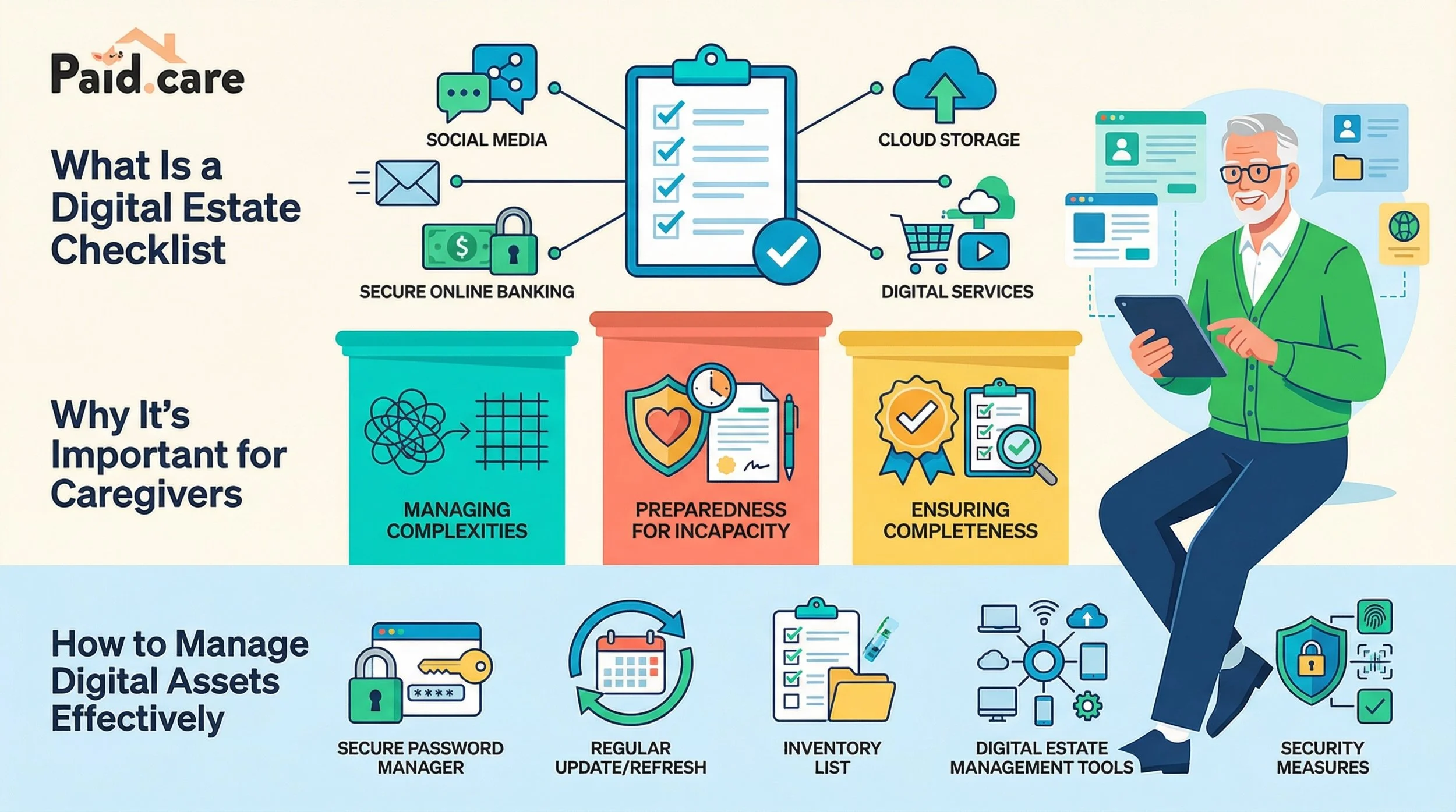
A digital estate checklist is a comprehensive list that outlines all digital assets and online accounts that need to be managed after an individual passes away or becomes incapacitated. This checklist is crucial for caregivers as it helps them navigate the complexities of digital asset management, ensuring that nothing is overlooked. Digital assets can include social media accounts, email accounts, online banking, and other digital services that hold personal or financial information.
The importance of understanding and managing digital assets effectively, especially in cases of death or disability, is further emphasized by recent research.
Digital Asset Planning for Death & Disability fate of their digital assets on death or disability. Our results on financial literacy, digital literacy and financial planning, below, highlight the importance of understanding how to manage digital assets effectively. Managing digital assets on death and disability: An examination of the determinants of digital asset planning literacy, A Steen, 2024
Defining Digital Estate Planning for Elderly and Disabled Care Recipients
Digital estate planning involves organizing and managing digital assets for elderly or disabled individuals. This process is vital as it ensures that caregivers have access to important accounts and information when needed. Examples of digital assets include online banking accounts, social media profiles, and cloud storage services. Proper planning can prevent complications and ensure that caregivers can fulfill their responsibilities effectively.
How Caregivers Manage Digital Assets and Online Accounts Effectively
Caregivers can manage digital assets and online accounts by implementing best practices such as creating a secure password manager, regularly updating passwords, and maintaining an inventory of all accounts. Utilizing tools designed for digital estate management can also enhance organization and security. Additionally, caregivers should consider security measures to protect sensitive information, ensuring that only authorized individuals have access to these accounts.
Which Medicaid Documents Are Needed for Digital Estate Management?
Managing digital estates often requires specific Medicaid documents to ensure compliance and eligibility. Understanding these documents is essential for caregivers to navigate the complexities of Medicaid and digital estate management effectively.
Understanding Medicaid Eligibility Criteria and Required Documentation
To manage digital estates effectively, caregivers must understand the eligibility criteria for Medicaid and the necessary documentation. This includes proof of income, assets, and medical expenses. Caregivers should gather all required documents, such as tax returns, bank statements, and medical records, to facilitate the application process.
How Medicaid Waivers Affect Digital Estate Planning in Indiana, Michigan, and Illinois
Medicaid waivers can significantly impact digital estate planning in states like Indiana, Michigan, and Illinois. These waivers allow individuals to receive services while maintaining their assets, which can complicate digital estate management. Caregivers should familiarize themselves with state-specific regulations and how they affect the planning process to ensure compliance and optimal management of digital assets.
How Do Caregivers Create and Maintain a Digital Asset Inventory?
Creating and maintaining a digital asset inventory is essential for caregivers to manage digital estates effectively. This inventory serves as a comprehensive record of all digital assets and accounts, making it easier to access and manage them when necessary.
Identifying Essential Digital Assets: Passwords, Accounts, and Online Services
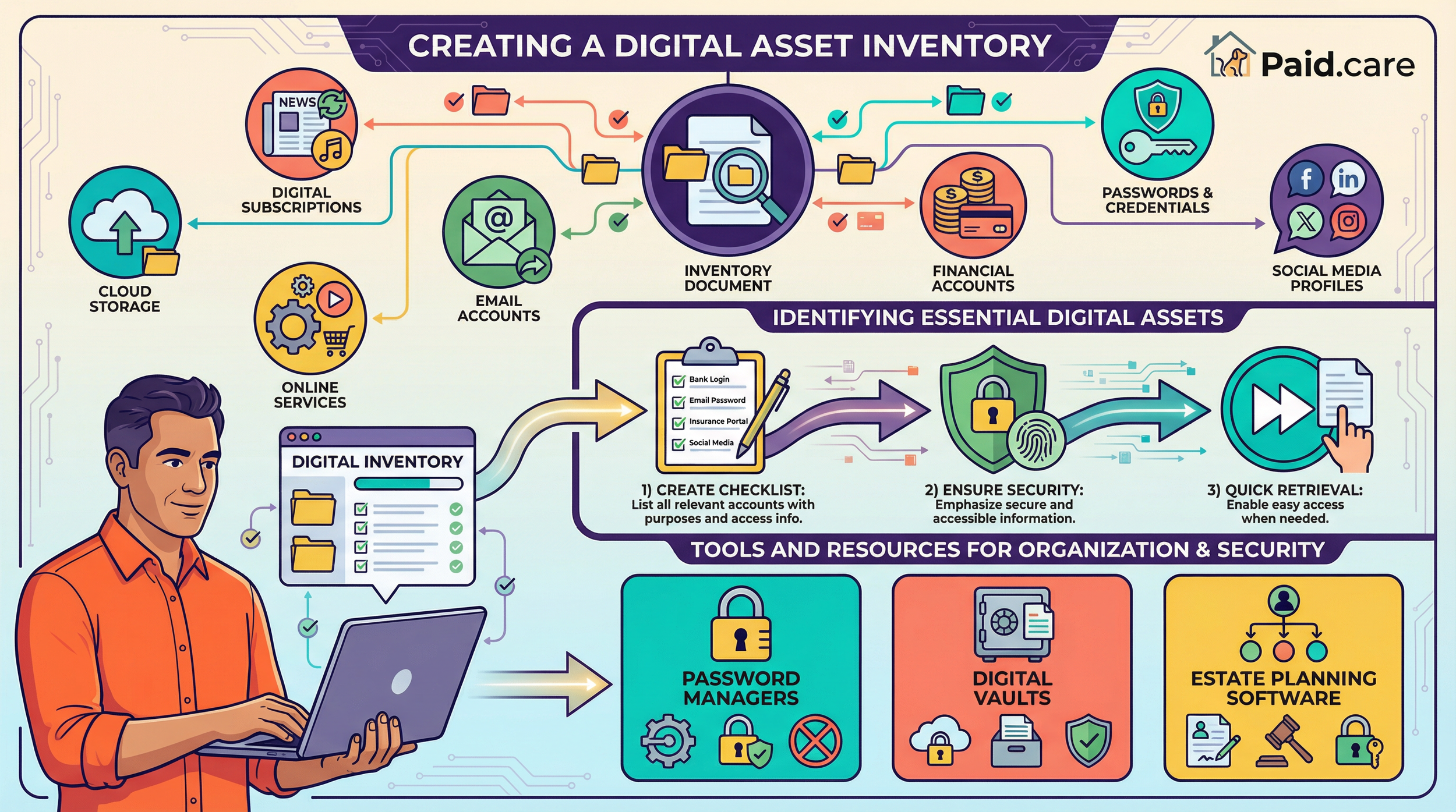
Caregivers should identify essential digital assets, including passwords, accounts, and online services. This can be achieved by creating a checklist that includes all relevant accounts, their purposes, and access information. Ensuring that this information is secure and easily accessible is crucial for effective management.
Tools and Resources for Organizing and Securing Digital Estate Information
Several tools and resources can assist caregivers in organizing and securing digital estate information. Password managers, digital vaults, and estate planning software can streamline the process and enhance security. By utilizing these tools, caregivers can ensure that all digital assets are well-organized and protected from unauthorized access.
What Legal Documents Should Caregivers Include in the Digital Estate Checklist?
Legal documents play a critical role in digital estate management. Caregivers must ensure that they have all necessary legal documents in place to facilitate the management of digital assets.
Power of Attorney, Wills, and Other Key Legal Documents for Caregivers
Key legal documents for caregivers include power of attorney, wills, and advance directives. These documents grant caregivers the authority to make decisions on behalf of the individual and ensure that their wishes are honored. It is essential to keep these documents updated and accessible to avoid complications during the management process.
How to Keep Legal Documents Updated and Accessible for Medicaid Applications
Keeping legal documents updated and accessible is vital for Medicaid applications. Caregivers should regularly review and update these documents to reflect any changes in circumstances or wishes. Storing these documents in a secure yet accessible location ensures that they can be easily retrieved when needed for Medicaid applications or other legal matters.
FAQs
-
A digital estate includes all of a person's online accounts, such as bank portals, social media, email, and cloud storage. For a caregiver, managing these assets is crucial to ensure that bills are paid on time, precious digital photos are preserved, and financial records are available for long-term care planning.
-
Medicaid requires a five-year look-back period to review all financial transactions. Since most modern financial records are paperless, caregivers must have digital access to bank statements, investment accounts, and payment apps like Venmo or PayPal. Missing these digital records can lead to delays or the denial of benefits.
-
No. To legally manage digital assets, you generally need a Durable Power of Attorney that specifically includes a clause for digital property. Without this legal authority, service providers may block your access due to federal privacy laws, even if you have the account passwords.
-
The first step is to create a digital asset inventory. This involves listing every online account, subscription, and device your loved one uses. Once you have a complete list of what exists, you can move on to securing legal permissions and organizing the specific documents needed for Medicaid documentation.

